
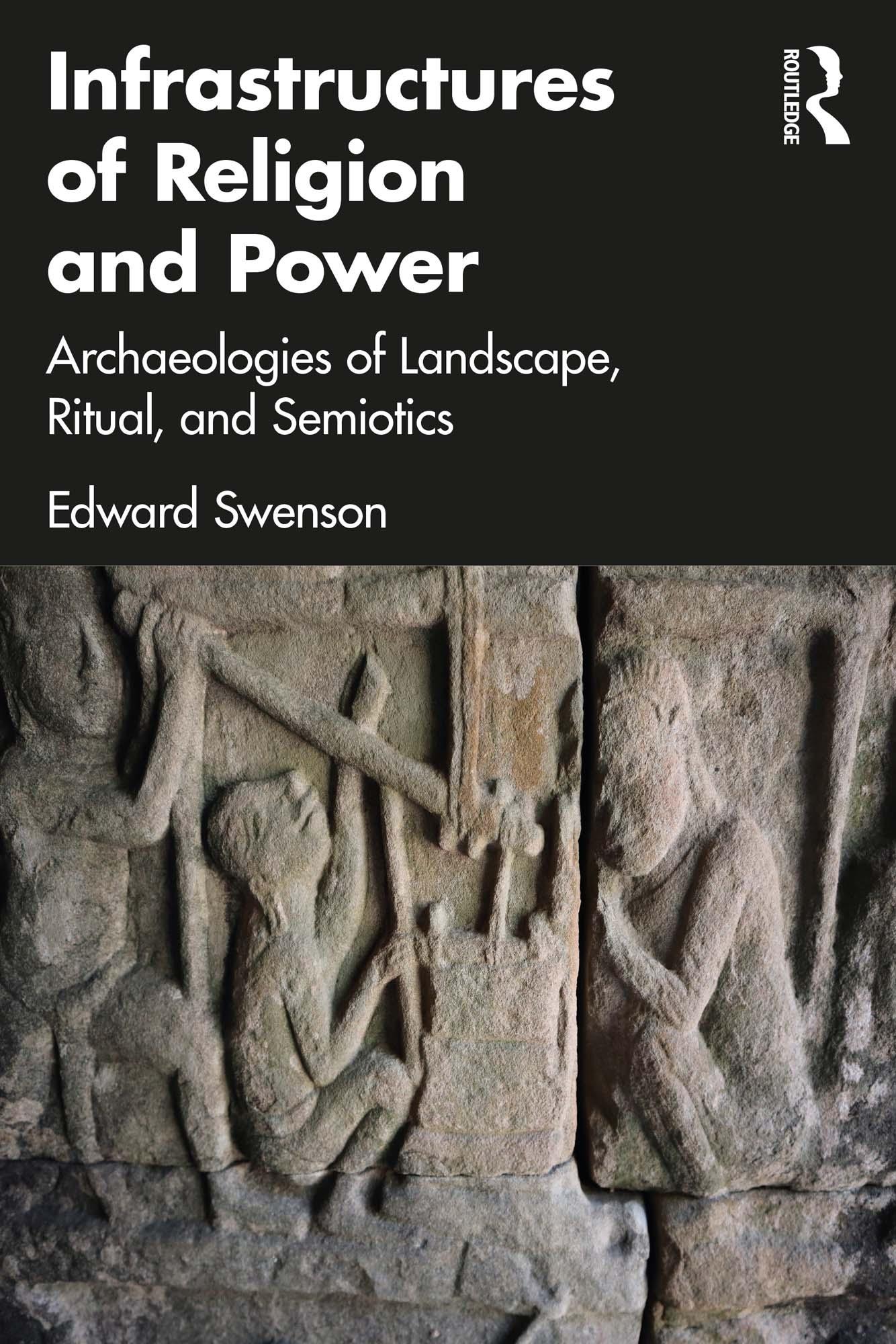
This book explores the central role of religion in place-making and infrastructural projects in ancient polities.
It presents a trilectic approach to archaeological study of religious landscapes that combines Indigenous philosophies with the spatial and semiotic thinking of Lefebvre, Peirce, and proponents of assemblage theories. Case studies from ancient Angkor and the Andes reveal how rituals of place-making activated processes of territorialization and semiosis fundamental to the experience of political worlds that shaped power relations in past societies. The perspectives developed in the book permit a reconstruction of how landscapes were variably conceived, perceived, and lived in the spirit of Henri Lefebvre, and how these registers may have aligned or clashed. In the end, the examination of built environments, infrastructures, and rituals staged within specialized buildings demonstrates how archaeologists can better infer past ontologies, cosmologies, ideologies of time and place, and historically specific political struggles.
The study will appeal to students and researchers interested in ritual, infrastructures, landscape, archaeological theory, political institutions, semiotics, human geography, and the civilizations of the ancient Andes and Angkor.
Zahle einfach mit Karte, Klarna, Apple Pay oder Google Pay. Nicht zufrieden? Du hast immer ein 14-tägiges Widerrufsrecht. Lies mehr in unseren AGB. Hast du Fragen, schreib uns eine E-Mail an hello@memmo.org.
Memmo macht das Lernen einfacher – wo auch immer du bist. Bei uns findest du deine Kursbücher und smarte Lerntools an einem Ort: Zusammenfassungen, Quizzes, Podcasts und Lernkarten. Und Ted, dein Lernbuddy, beantwortet alles, was du wissen möchtest. Über 50.000 Studierende lernen bereits hier – gemacht, damit du schneller lernst und weniger Stress hast.