
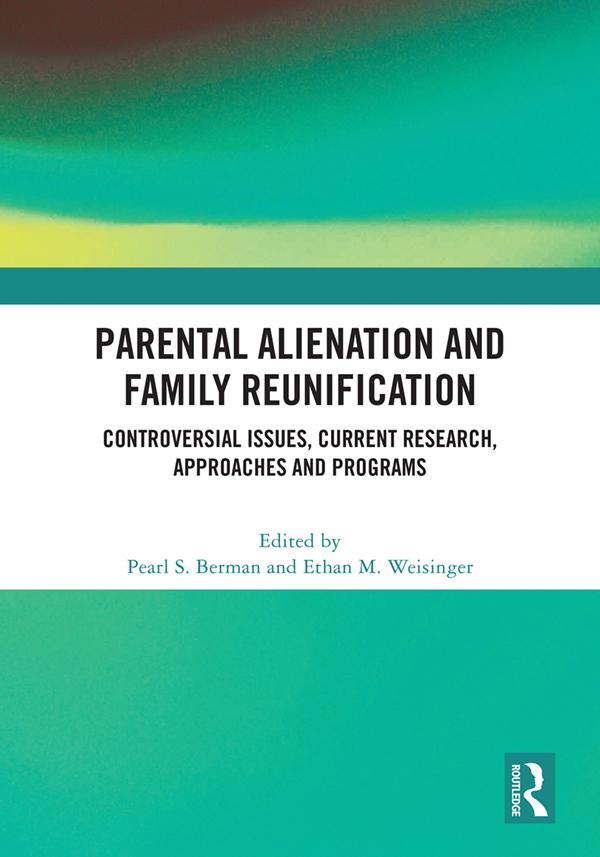
This book on parental alienation and family reunification provides family court professionals with critical background in child development, dynamics present in violent families, and how to evaluate the testimony of experts to ensure it values children’s views, best interests of the children, and follows evidence-based practice.
As laid out in the Child Welfare Information Gateway report, 2020, Family court judges should make decisions per the best interests of the child standard. High conflict custody cases make this complicated, especially when reunification services are requested. In the middle of contentious proceedings, judges oftentimes receive conflicting information from parents. Judges and family law professionals can be lead astray, relying on unproven constructs and instruments not meeting the criteria of reliability and validity. Mandating victimized children into reunification programs that are neither evidence-based nor trauma informed can cause further harm to the children.
This book will be of interest to those working in the family courts, particularly expert witnesses, clinical psychologists, therapists, children’s services workers including social workers, child protection court workers, mental health professionals involved in child custody decisions, and researchers with an interest in parental alienation. The chapters in this book were originally published as a special issue of Journal of Family Trauma, Child Custody & Child Development.
Zahle einfach mit Karte, Klarna, Apple Pay oder Google Pay. Nicht zufrieden? Du hast immer ein 14-tägiges Widerrufsrecht. Lies mehr in unseren AGB. Hast du Fragen, schreib uns eine E-Mail an hello@memmo.org.
Memmo macht das Lernen einfacher – wo auch immer du bist. Bei uns findest du deine Kursbücher und smarte Lerntools an einem Ort: Zusammenfassungen, Quizzes, Podcasts und Lernkarten. Und Ted, dein Lernbuddy, beantwortet alles, was du wissen möchtest. Über 50.000 Studierende lernen bereits hier – gemacht, damit du schneller lernst und weniger Stress hast.