
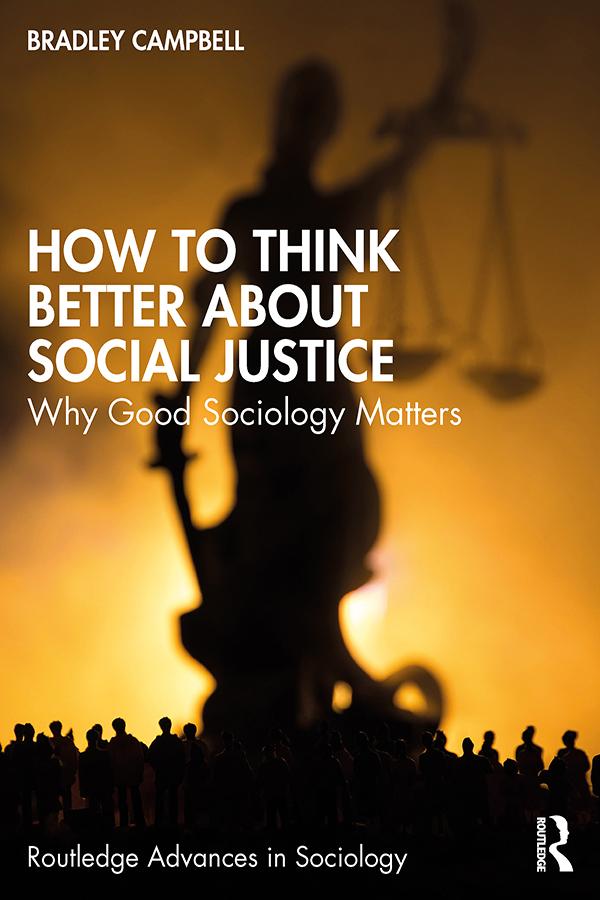
Those who are pursuing social justice too often fail to incorporate the insights of sociology, and when they do make use of sociology, they often draw heavily from claims that are highly contested, unsupported by the evidence, or outright false. This book shows why learning to think sociologically can help us to think better about social justice, pointing us toward possibilities for social change while also calling attention to our limits; providing us with hope, but also making us cautious. Offering a series of tips for thinking better about social justice, with each chapter giving examples of bad sociological thinking and making the case for drawing from a broader range of sociological theory and research to inform social justice efforts, it advocates an approach rooted in intellectual and moral humility, grounded in the normative principles of classical liberalism. A fresh approach to social justice that argues for the importance of sociological understanding of the world in our efforts to change it, How to Think Better About Social Justice will appeal to scholars and students of sociology with interests in social justice issues and the sociology of morality, as well as those working to bring about social change.
Zahle einfach mit Karte, Klarna, Apple Pay oder Google Pay. Nicht zufrieden? Du hast immer ein 14-tägiges Widerrufsrecht. Lies mehr in unseren AGB. Hast du Fragen, schreib uns eine E-Mail an hello@memmo.org.
Memmo macht das Lernen einfacher – wo auch immer du bist. Bei uns findest du deine Kursbücher und smarte Lerntools an einem Ort: Zusammenfassungen, Quizzes, Podcasts und Lernkarten. Und Ted, dein Lernbuddy, beantwortet alles, was du wissen möchtest. Über 50.000 Studierende lernen bereits hier – gemacht, damit du schneller lernst und weniger Stress hast.