
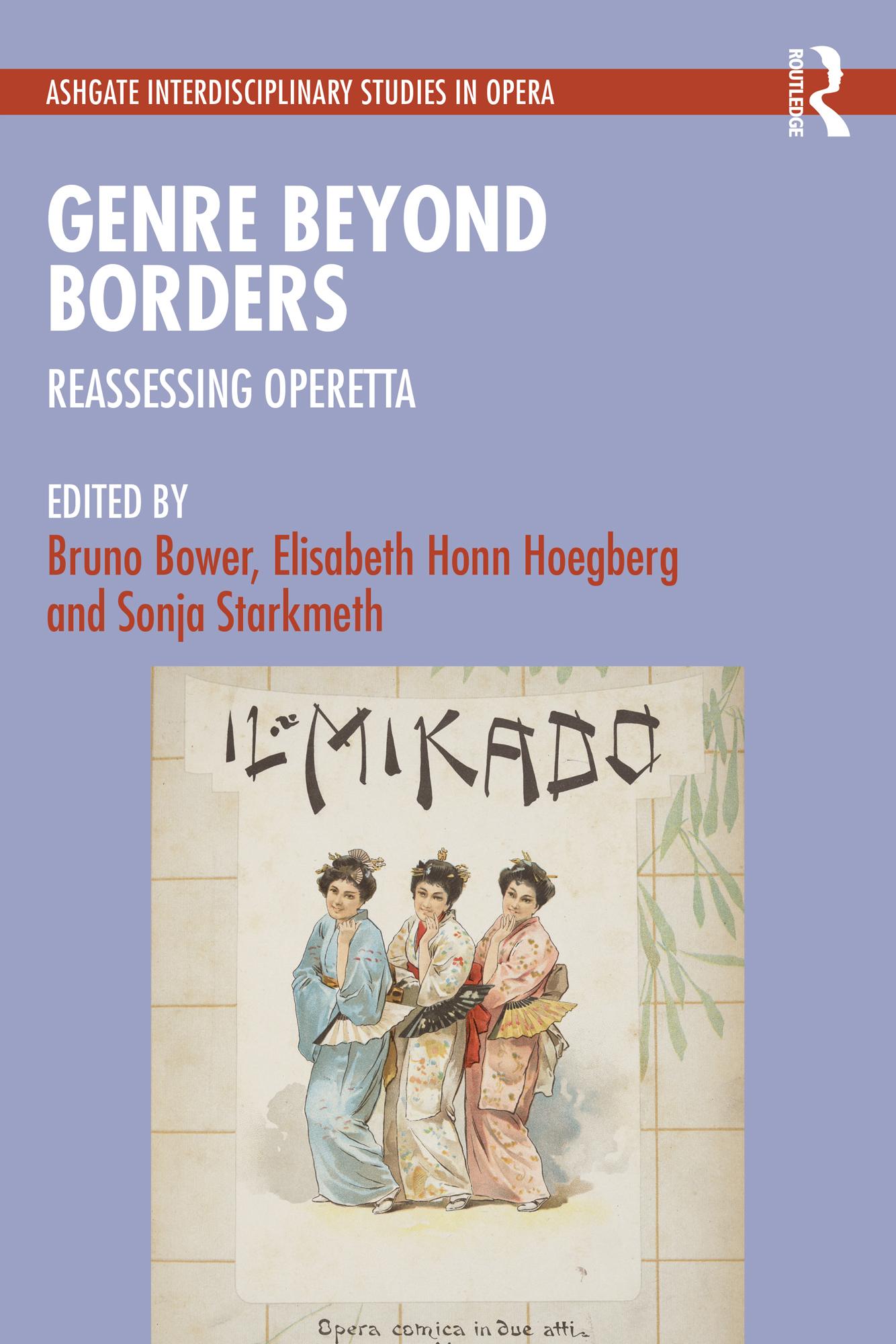
This book offers an innovative approach to understanding operetta, drawing attention to its malleability and resistance to boundaries. These shows have traversed (and continue to traverse) with ease the national borders which might superficially define them, or draw on features from many other genres without fundamentally changing in tone or approach. The chapters move from nineteenth-century London and Paris to twentieth-century North America, South America and Europe to present-day Australia. Some offer fresh understandings of familiar composers, such as Johann Strauss or Gilbert and Sullivan, while others examine works or composers that are less well-known. The chapter on Socialist operetta in Czechoslovakia in particular will almost certainly be a revelation to anyone from Western Europe or the US, where operetta is often understood to be a bourgeois phenomenon. As a summary of the current state of the field, this collection showcases the many possible pathways for future scholars who wish to explore it.
Zahle einfach mit Karte, Klarna, Apple Pay oder Google Pay. Nicht zufrieden? Du hast immer ein 14-tägiges Widerrufsrecht. Lies mehr in unseren AGB. Hast du Fragen, schreib uns eine E-Mail an hello@memmo.org.
Memmo macht das Lernen einfacher – wo auch immer du bist. Bei uns findest du deine Kursbücher und smarte Lerntools an einem Ort: Zusammenfassungen, Quizzes, Podcasts und Lernkarten. Und Ted, dein Lernbuddy, beantwortet alles, was du wissen möchtest. Über 50.000 Studierende lernen bereits hier – gemacht, damit du schneller lernst und weniger Stress hast.