
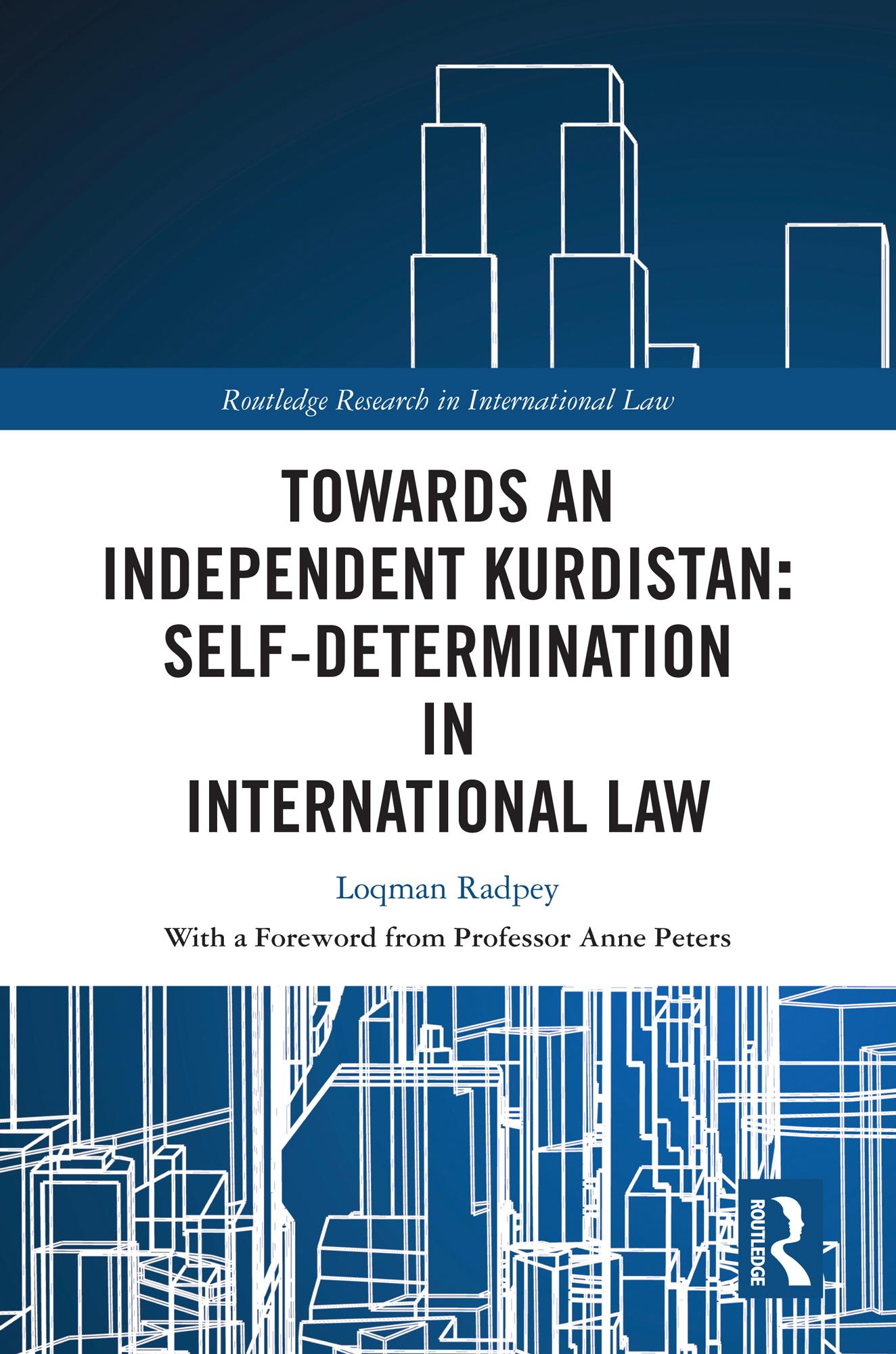
Kurdistan is among the world’s most notorious cases of self-determination denied, and the reasons why this outcome remains unachieved reveal as much about the biases of international law as they do about the merits of the case for Kurdistan. On the centenary of the Treaty of Lausanne, 24 July 1923, the last of the international instruments establishing the new international order after World War I, this book explores the potential blind spots of international law regarding its differential application in the Middle East. Tracing self-determination over the past century, the work explores how the law applies to Kurdish aspirations and to what extent the Kurds can rely upon the current law of self-determination to achieve internationally recognised statehood.
The book offers an exhaustive historico-legal analysis of changing international legal concepts and geopolitical upheaval, providing a blueprint for Kurdish self-determination in international law. Shedding light on the law’s structural biases, it represents a comprehensive historico-legal account of Kurdish aspirations for territorial independence within international law literature, offering a guide to relevant legal problems. It will be of interest to students and academics focused on international law, specifically, peoplehood, statehood, secession, human rights law, political science, and anthropology. Moreover, policymakers, government officials working in peace and conflict, research and advocacy institutes, think tanks, as well as scholars of international relations, historians, political scientists, regional specialists, diplomats, and non-governmental organisation activists will find it a useful reference. The book also illuminates the human rights status of the Kurds in their host states, making it relevant to scholars and activists. Its findings have implications extending beyond Kurdistan to self-determination struggles in Scotland, Catalonia, Ukraine, and elsewhere.
Zahle einfach mit Karte, Klarna, Apple Pay oder Google Pay. Nicht zufrieden? Du hast immer ein 14-tägiges Widerrufsrecht. Lies mehr in unseren AGB. Hast du Fragen, schreib uns eine E-Mail an hello@memmo.org.
Memmo macht das Lernen einfacher – wo auch immer du bist. Bei uns findest du deine Kursbücher und smarte Lerntools an einem Ort: Zusammenfassungen, Quizzes, Podcasts und Lernkarten. Und Ted, dein Lernbuddy, beantwortet alles, was du wissen möchtest. Über 50.000 Studierende lernen bereits hier – gemacht, damit du schneller lernst und weniger Stress hast.