
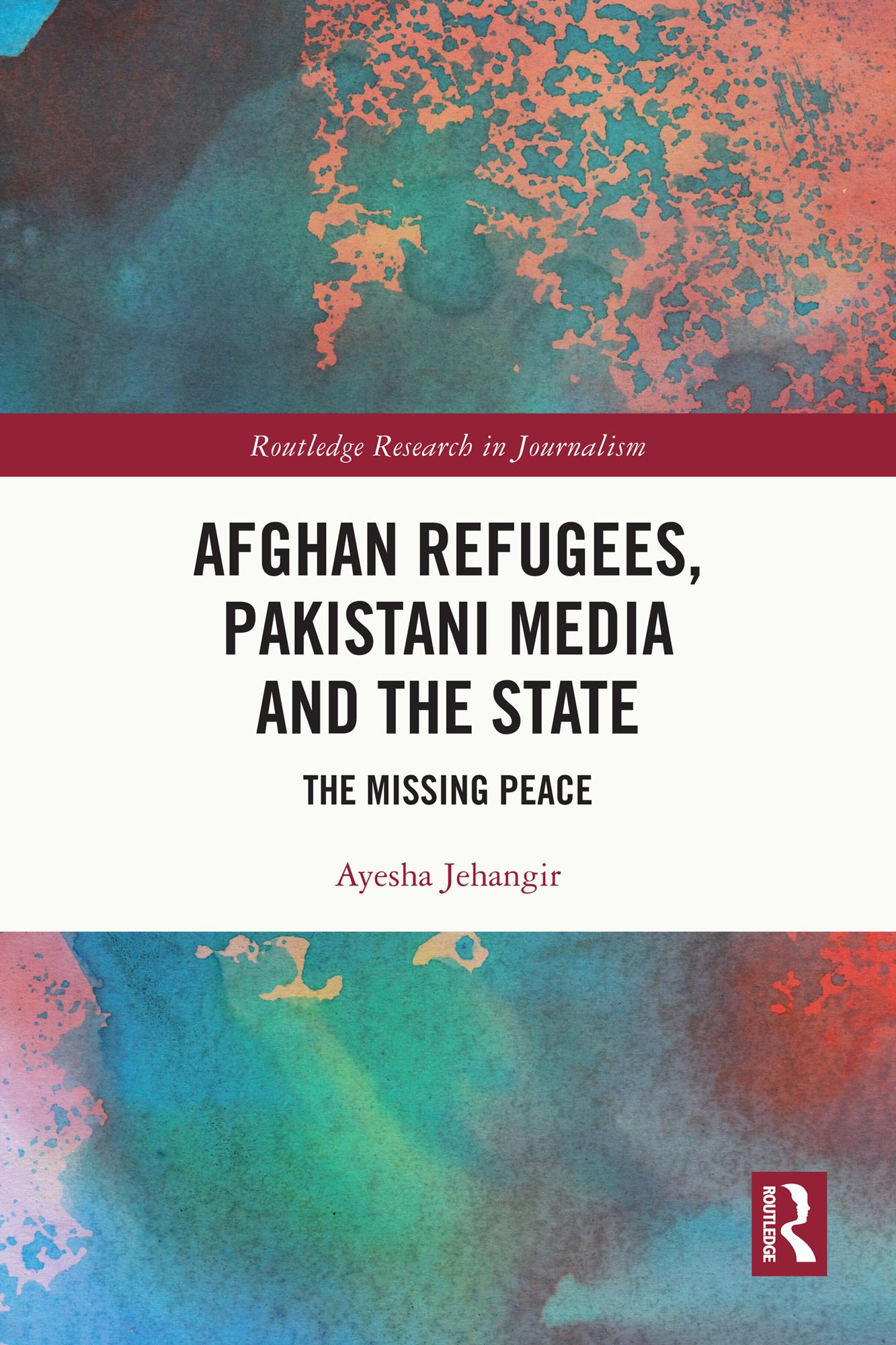
Drawing on the frameworks of peace journalism, this book offers new insights into the Pakistani media coverage of Afghan refugees and their forced repatriation from Pakistan. Based on a three-year-study, the author examines the political, social and economic forces that influence and govern the reporting practices of journalists covering the protracted refugee conflict between Pakistan and Afghanistan.
Through a critical discourse analysis of the structures of journalistic iterability of Afghan refugees in Pakistan, the author distils four dominant and three emerging frames, and proposes a new teleological turn for peace journalism as deliberative practice, that is to say practice that by promoting transparency and accountability (recognition) and challenging dominant power-proposed narratives and perspectives (resistance) encourages public engagement and participation (cosmopolitan solidarity). The author also privileges an analytical approach that conceptualises the nexus between digital witnessing and peace journalism through the paradigm of cosmopolitanism.
The author finds routinely accommodated media narratives of security that represent Afghan refugees as a ‘threat’, a ‘burden’ and the ‘other’ that, through reinforcement, have become an incontestable reality for the public in Pakistan. This book will appeal to those interested in studying and practicing journalism as a conscientious communicative practice that elicits the very public it seeks to inform.
Zahle einfach mit Karte, Klarna, Apple Pay oder Google Pay. Nicht zufrieden? Du hast immer ein 14-tägiges Widerrufsrecht. Lies mehr in unseren AGB. Hast du Fragen, schreib uns eine E-Mail an hello@memmo.org.
Memmo macht das Lernen einfacher – wo auch immer du bist. Bei uns findest du deine Kursbücher und smarte Lerntools an einem Ort: Zusammenfassungen, Quizzes, Podcasts und Lernkarten. Und Ted, dein Lernbuddy, beantwortet alles, was du wissen möchtest. Über 50.000 Studierende lernen bereits hier – gemacht, damit du schneller lernst und weniger Stress hast.