
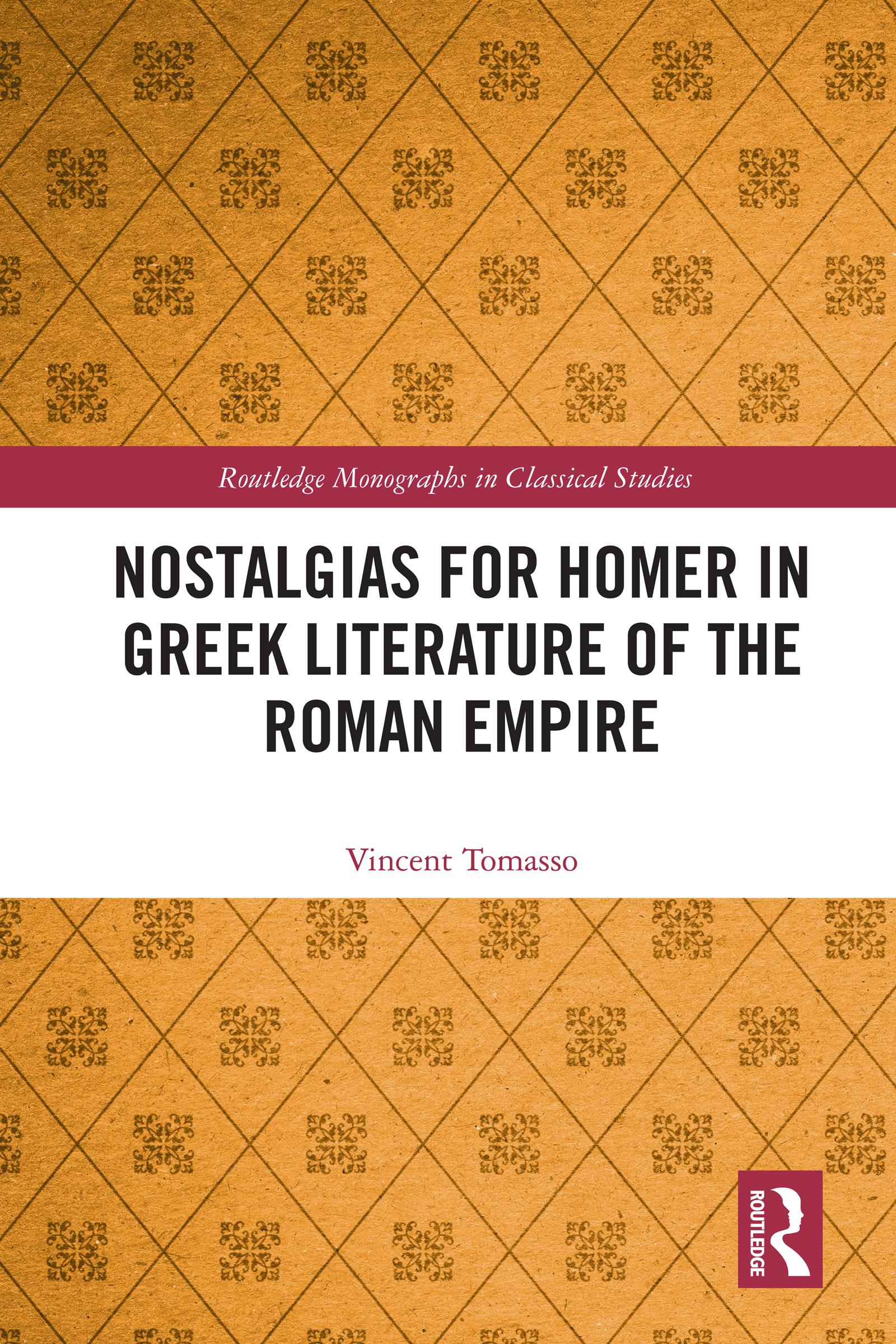
This volume investigates how versions of Trojan War narratives written in Greek in the first through fifth centuries C.E. created nostalgias for audiences.
In ancient education, the Iliad and the Odyssey were used as models through which students learned Greek language and literature. This, combined with the ruling elite’s financial encouragement of re-creations of the Greek literature of the past, created a culture of nostalgia. This book explores the different responses to this climate, particularly in the case of the third-century C.E. poet Quintus of Smyrna’s epic Posthomerica. Positioning itself as a sequel to the Iliad and a prequel to the Odyssey, the Posthomerica is unique in its middle-of-the-road response to nostalgia for Homer’s epics. This book contrasts Quintus’ poem with other responses to nostalgia for Homeric narratives in Greek literature of the Roman Empire. Some authors contradict pivotal events of the Iliad and Odyssey, such as the first-century orator Dio Chrysostom’s Trojan Speech, which claims that the Trojan hero Hector did not in fact die, contrary to the Iliad’s account. Others re-created Homeric narratives but did not contradict them, improvising some elements and adding others. Quintus strikes a compromise in his epic, re-imagining Homeric narrative by introducing new characters and scenarios, while at the same time retaining the Iliad and Odyssey’s aesthetics.
Nostalgias for Homer in Greek Literature of the Roman Empire is of interest to students and scholars working on Homeric reception and the Greek literature of the Roman Empire, as well as those interested in classical literature and reception more broadly.
Zahle einfach mit Karte, Klarna, Apple Pay oder Google Pay. Nicht zufrieden? Du hast immer ein 14-tägiges Widerrufsrecht. Lies mehr in unseren AGB. Hast du Fragen, schreib uns eine E-Mail an hello@memmo.org.
Memmo macht das Lernen einfacher – wo auch immer du bist. Bei uns findest du deine Kursbücher und smarte Lerntools an einem Ort: Zusammenfassungen, Quizzes, Podcasts und Lernkarten. Und Ted, dein Lernbuddy, beantwortet alles, was du wissen möchtest. Über 50.000 Studierende lernen bereits hier – gemacht, damit du schneller lernst und weniger Stress hast.