
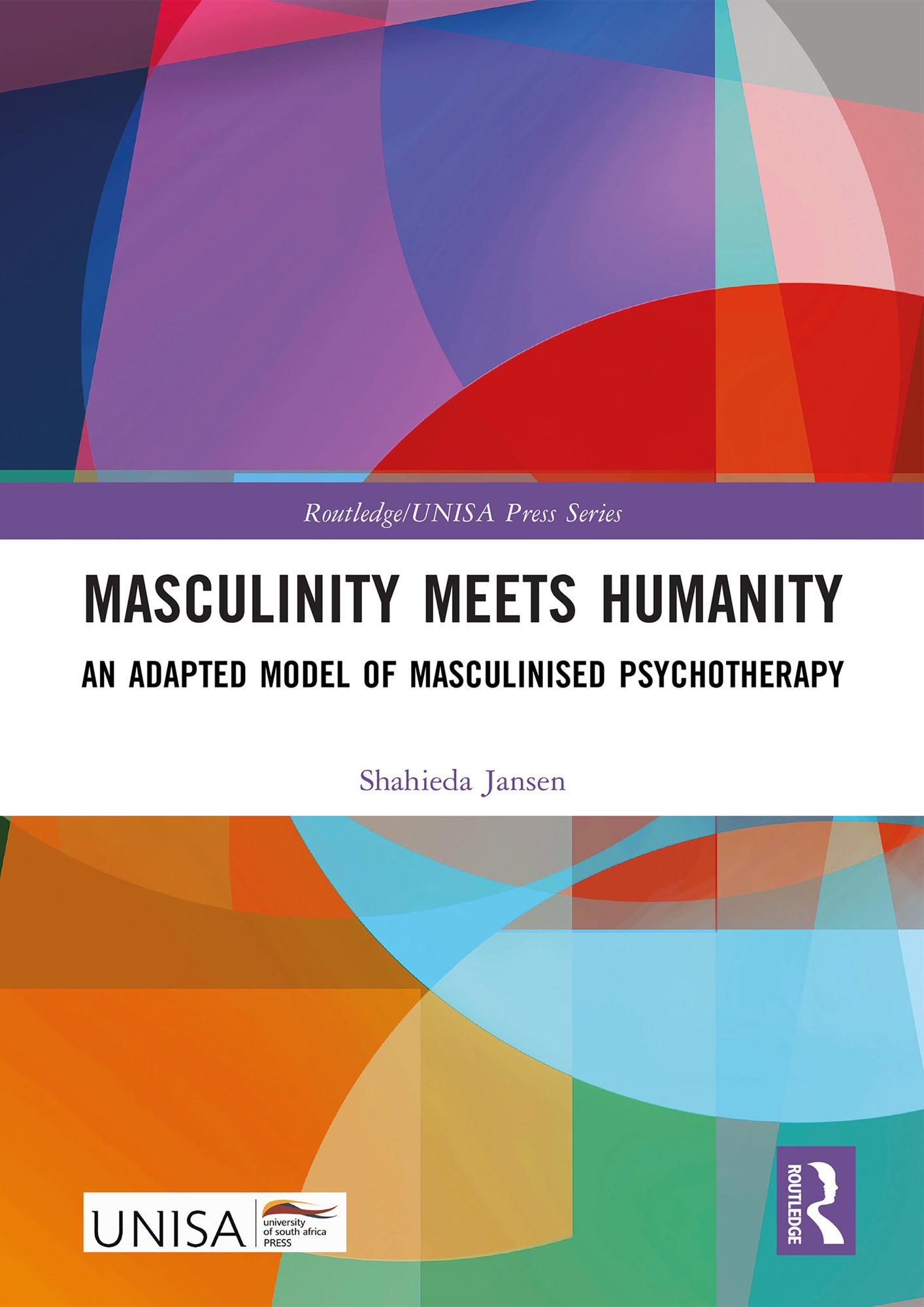
In this book the author, a clinical psychologist, reflects on her psychotherapy experiences with male clients as she debunks the myth of male alexithymia, the inability to recognise and express emotions. Men are apparently disengaged from wellness practices as they are perceived to be reluctant to seek mental health care.
An ubuntu-inspired personhood discourse of trust, empathy and transformation theoretically underpins the author’s clinical practice. The integration of the culturally familiar philosophy of ubuntu challenges the hegemony of strictly modern Western psychological discourses and theories. Although the book is not a manual for how to do therapy with men, neither a panacea for all male related challenges, it can ignite empathic insights and kindle gender sensitive responses to male concerns, locally and internationally. Women, who are frequently the targets of gender-based violence primarily committed by men, may play a significant role in the rehabilitation and healing of men. Men are usually excluded from psychosocial interventions, but this book makes the case that prioritsing the wellbeing of boys and men is critical to creating a society that is safe for everyone—men, women, children, and the broader public.
Print editions not for sale in Sub-Saharan Africa.
Zahle einfach mit Karte, Klarna, Apple Pay oder Google Pay. Nicht zufrieden? Du hast immer ein 14-tägiges Widerrufsrecht. Lies mehr in unseren AGB. Hast du Fragen, schreib uns eine E-Mail an hello@memmo.org.
Memmo macht das Lernen einfacher – wo auch immer du bist. Bei uns findest du deine Kursbücher und smarte Lerntools an einem Ort: Zusammenfassungen, Quizzes, Podcasts und Lernkarten. Und Ted, dein Lernbuddy, beantwortet alles, was du wissen möchtest. Über 50.000 Studierende lernen bereits hier – gemacht, damit du schneller lernst und weniger Stress hast.