
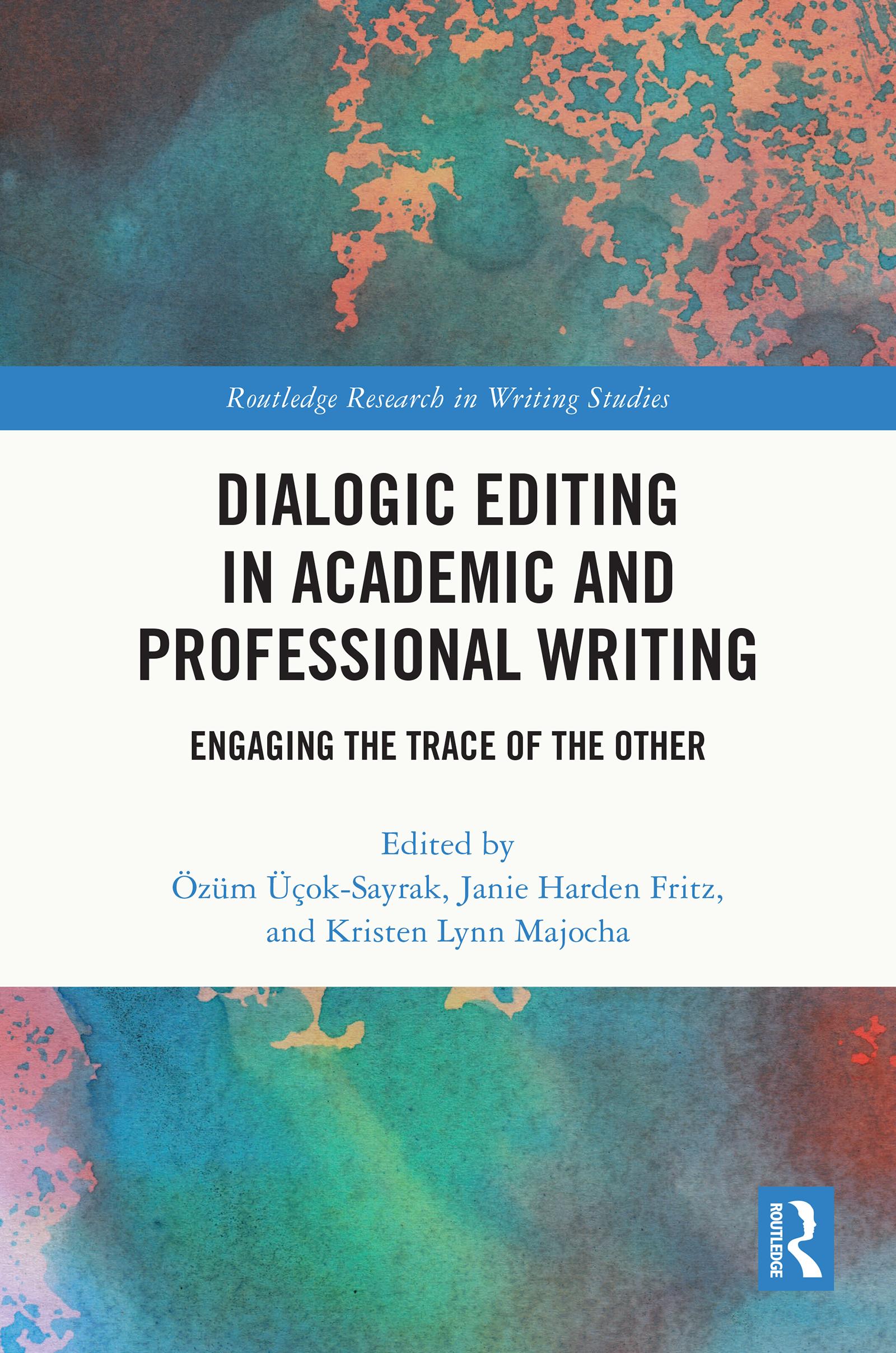
This book brings attention to the communicative process of editing as a dialogic experience that is attentive to the voice of the Other and underlines an ethical turn for the editing process.
The volume focuses on an essential, yet undertheorized, aspect of the communicative practice of editing by reading and receiving the voice of the Other and offering feedback toward assisting the text to find a voice without turning it into the voice of the editor. Utilizing the theoretical and philosophical frameworks of a diverse group of leading scholars and philosophers, contributors to this volume explore the editing process as connected to communication ethics that calls for discernment of what matters.
With its philosophical underpinnings, this book will especially be of interest to researchers and students in multiple disciplines in humanities and the social sciences, including communication studies, dialogue studies, philosophy, literature, composition studies, education, history, anthropology, psychology, sociology, religious studies, and political science.
Zahle einfach mit Karte, Klarna, Apple Pay oder Google Pay. Nicht zufrieden? Du hast immer ein 14-tägiges Widerrufsrecht. Lies mehr in unseren AGB. Hast du Fragen, schreib uns eine E-Mail an hello@memmo.org.
Memmo macht das Lernen einfacher – wo auch immer du bist. Bei uns findest du deine Kursbücher und smarte Lerntools an einem Ort: Zusammenfassungen, Quizzes, Podcasts und Lernkarten. Und Ted, dein Lernbuddy, beantwortet alles, was du wissen möchtest. Über 50.000 Studierende lernen bereits hier – gemacht, damit du schneller lernst und weniger Stress hast.