
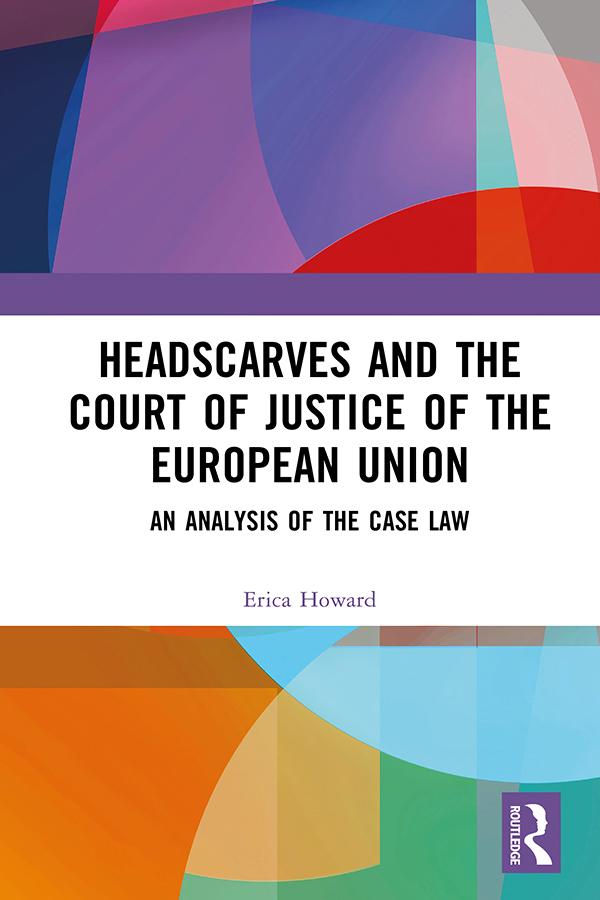
This book contains an in-depth examination of the Islamic headscarf cases of the Court of Justice of the European Union (CJEU) and places these against the background of the Islamophobia existing across Europe. It assesses how EU law can best protect women who want to wear headscarves at work for religious reasons and why this protection is important not only for the women themselves but also for the EU, taking into account its values as laid down in the Treaties, the Charter of Fundamental Rights of the EU and in the anti-discrimination Directives. It puts forward arguments for a finding that workplace neutrality bans constitute direct religion or belief discrimination and examines the way that the justification test for indirect discrimination has been applied by the CJEU. The work suggests that such bans could be more successfully challenged as gender and/or racial or ethnic origin discrimination, because the protection against these forms of discrimination is stronger. It also suggests that a claim for intersectional discrimination – on the grounds of gender, racial and ethnic origin, and religion or belief – should be possible in EU anti-discrimination law. The book will be of interest to academics, researchers and policy-makers working in the areas of equality and non-discrimination law, EU law and law and religion.
Zahle einfach mit Karte, Klarna, Apple Pay oder Google Pay. Nicht zufrieden? Du hast immer ein 14-tägiges Widerrufsrecht. Lies mehr in unseren AGB. Hast du Fragen, schreib uns eine E-Mail an hello@memmo.org.
Memmo macht das Lernen einfacher – wo auch immer du bist. Bei uns findest du deine Kursbücher und smarte Lerntools an einem Ort: Zusammenfassungen, Quizzes, Podcasts und Lernkarten. Und Ted, dein Lernbuddy, beantwortet alles, was du wissen möchtest. Über 50.000 Studierende lernen bereits hier – gemacht, damit du schneller lernst und weniger Stress hast.