
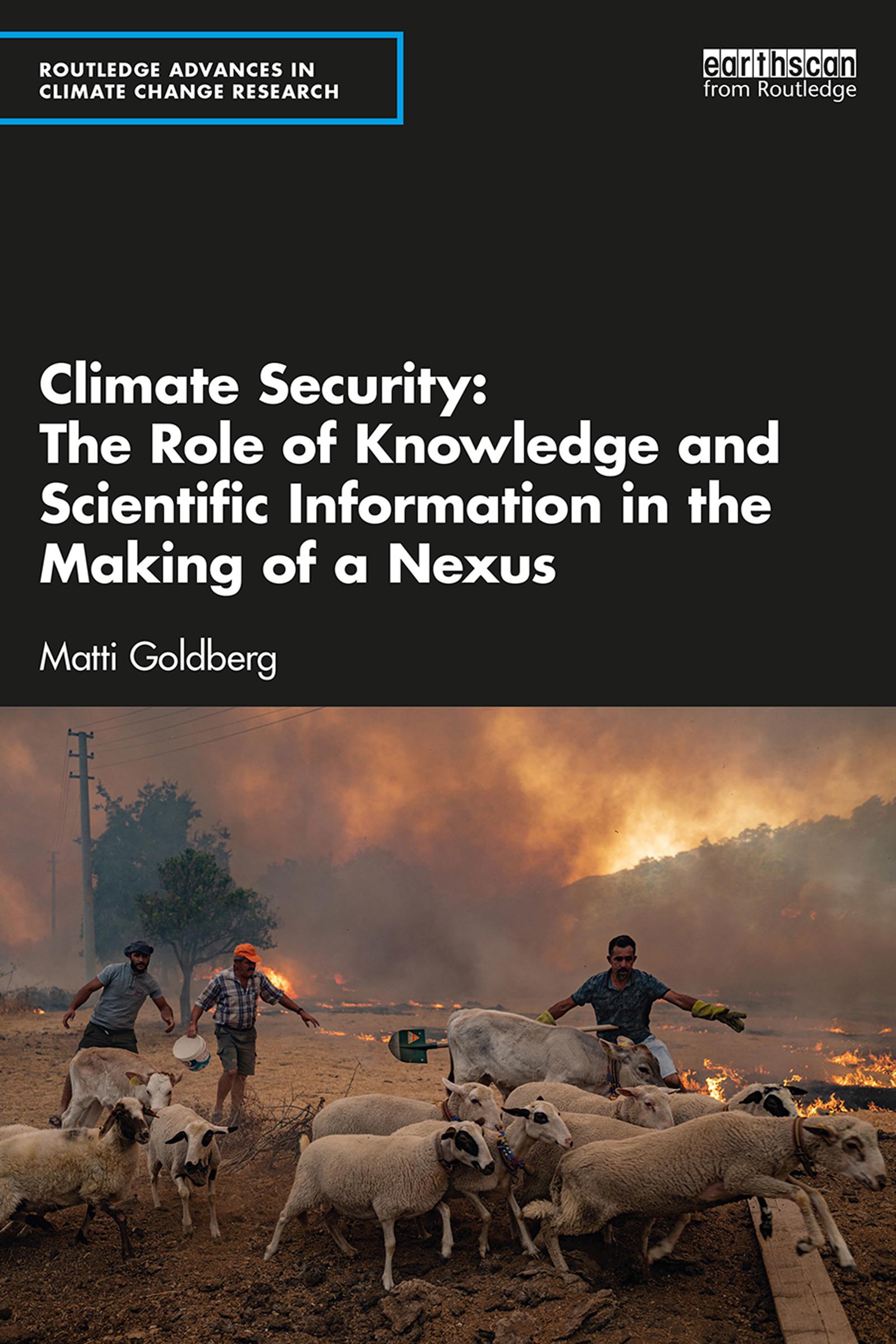
This book presents an empirical study of the role of knowledge in the making of the climate-security nexus.
Climate change might give the Soviet Union a competitive advantage in the Cold War. Extreme droughts contributed to wars in Darfur, Syria or Yemen. Melting sea ice creates geopolitical risks. Russia’s climate-destroying hydrocarbons enabled its invasion of Ukraine. These are just some of the many ways in which climate change and conflicts have been linked into a climate-security nexus. In this innovative book, Matti Goldberg considers how such connections are constructed and asks to what extent they are driven by evidence and science. Goldberg describes the tools used to present the wars of Darfur and Syria as “climate wars” and considers the fragmented role of the sciences in those presentations as well as the resulting patterns of influence and marginalization of impacted populations. The author also highlights how the international community can better integrate the situations of people at the frontlines of climate change into policymaking and, based on an analysis of the dynamic nature of power, identifies potential entry points for positive change.
This book is a must-read for researchers interested in climate-security links, in science-policy interfaces, and in the formation of nexuses of issues in international politics. It is also of interest to practitioners working on the climate-security nexus and science-policy interfaces.
Zahle einfach mit Karte, Klarna, Apple Pay oder Google Pay. Nicht zufrieden? Du hast immer ein 14-tägiges Widerrufsrecht. Lies mehr in unseren AGB. Hast du Fragen, schreib uns eine E-Mail an hello@memmo.org.
Memmo macht das Lernen einfacher – wo auch immer du bist. Bei uns findest du deine Kursbücher und smarte Lerntools an einem Ort: Zusammenfassungen, Quizzes, Podcasts und Lernkarten. Und Ted, dein Lernbuddy, beantwortet alles, was du wissen möchtest. Über 50.000 Studierende lernen bereits hier – gemacht, damit du schneller lernst und weniger Stress hast.