
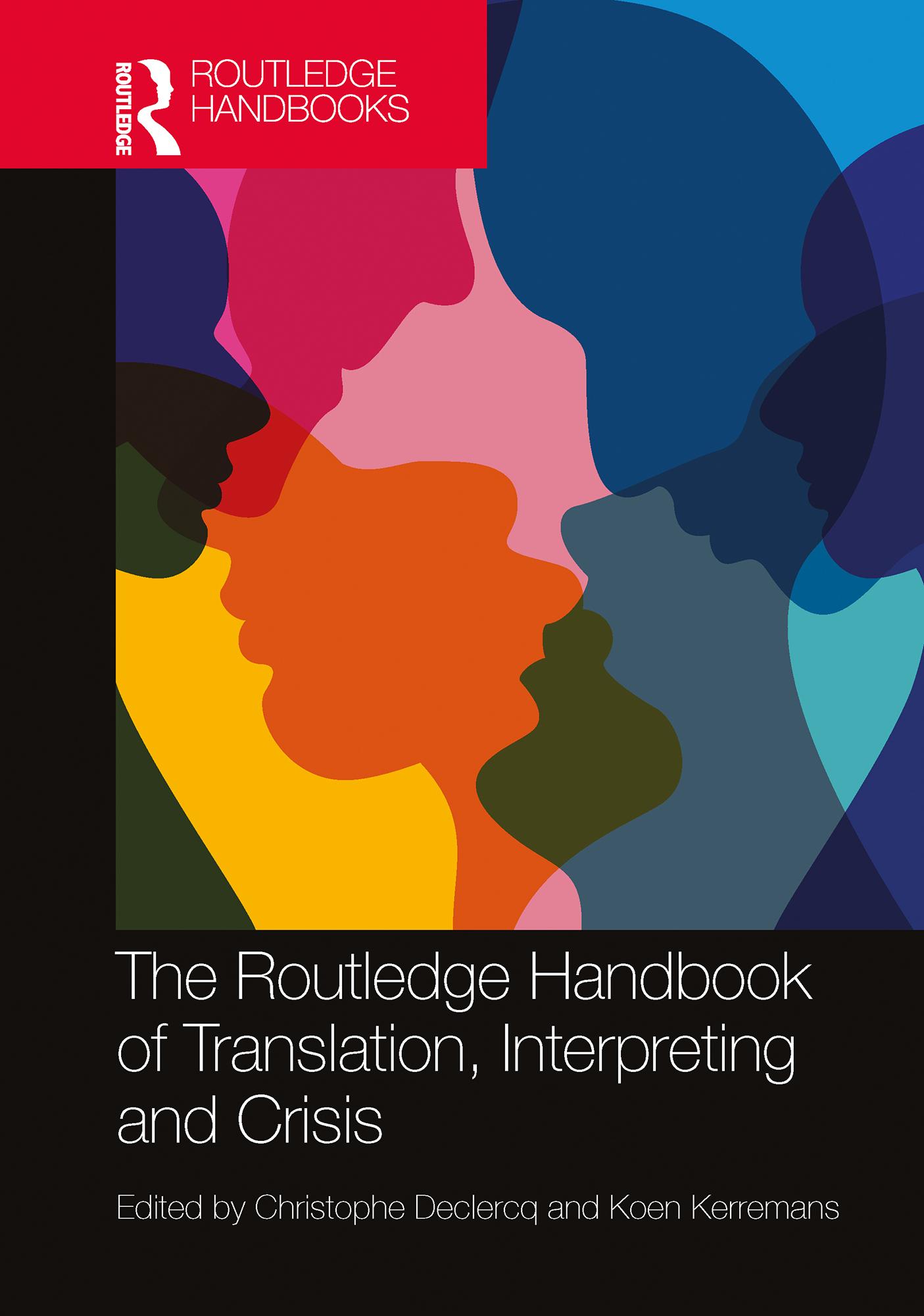
This handbook offers a broad-ranging overview of the study of translating and interpreting in conflict and crisis settings and takes the field in new directions.
Covering a wide selection of multimodal contexts that build on the fundamentals of translation, interpreting, and their in-between hybrid forms of mediation, the handbook is divided into four parts. The opening part covers perspectives on policy and practices, whether contemporary or historical, and cases truly span the globe, from Peru and Brazil, over Belgium and Sierra Leone, to Australia, Japan, and Hong Kong. International developments require profound considerations about the professionalisation of access to language in times of crises, not least in contexts of humanitarian negotiation or conflict zone interpreting–these form the second part. The subsequent part deals with spheres of community in which language needs are positioned within frames of agency, positionality, and trust, and the challenges that these face. The contributions build on cases where interpreters act as catalysts for translation needs in settings of humanitarian aid and beyond. The final part considers language strategies and solutions in crises.
This handbook is the essential guide to translation and interpreting in conflict and crisis settings for advanced students and researchers of translation and interpreting studies and will be of wide interest in peace studies, political science, and beyond.
Zahle einfach mit Karte, Klarna, Apple Pay oder Google Pay. Nicht zufrieden? Du hast immer ein 14-tägiges Widerrufsrecht. Lies mehr in unseren AGB. Hast du Fragen, schreib uns eine E-Mail an hello@memmo.org.
Memmo macht das Lernen einfacher – wo auch immer du bist. Bei uns findest du deine Kursbücher und smarte Lerntools an einem Ort: Zusammenfassungen, Quizzes, Podcasts und Lernkarten. Und Ted, dein Lernbuddy, beantwortet alles, was du wissen möchtest. Über 50.000 Studierende lernen bereits hier – gemacht, damit du schneller lernst und weniger Stress hast.