
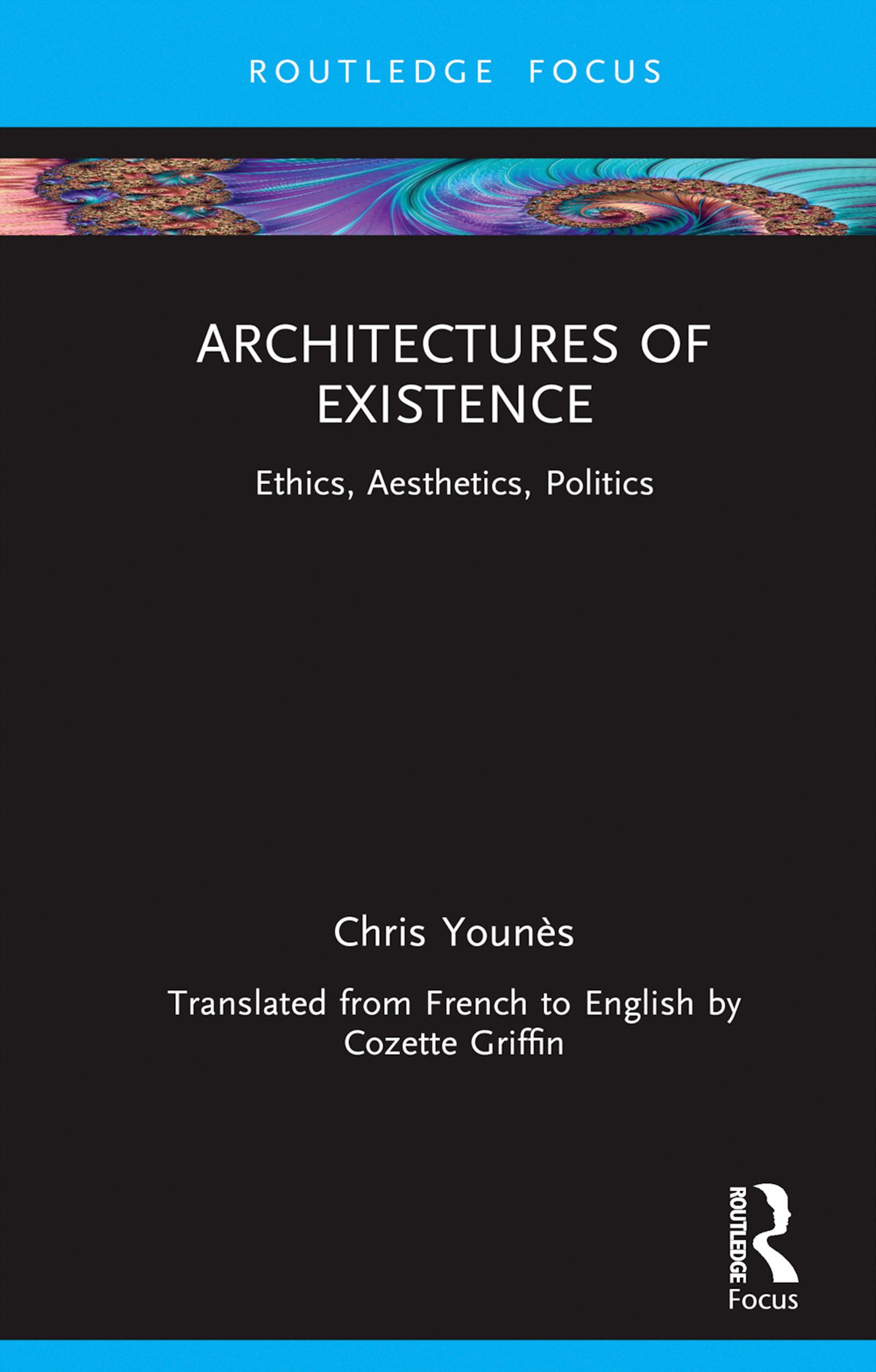
Architectures of Existence proposes that philosophical thinking (ecosophical thinking) can inform the way we engage with our world and its inhabitants, as architects, designers and planners, but also as individuals, as people, and as a society.
In Art et existence, Maldiney states: "For us, to inhabit is to exist". This book aims to unfold, extend, articulate and thicken this postulate by interweaving architecture, city, landscape, literature and philosophy. It takes up the synergistic lines of long-term research carried out from an ecosophical perspective. Such an attitude explores an art of existing in multiplicity, singularity and openness, manifesting the critical dimension through a reinterpretation of the knotting of the trajectories of time, humanity and its becoming. Insisting on what is between things and beings as well as on what is happening, regenerating, recycling, reviving, saving, diversifying, sparing, recreating, meditating: and so caring. These are all eco-rhythms of a different type between human and non-human, to consider ourselves in the world. In an era of uncertainty and climate threats, this book develops the margins of possibility offered by the subject of architecture.
This book will be of interest to researchers and students of architecture, urban planning and philosophy.
Zahle einfach mit Karte, Klarna, Apple Pay oder Google Pay. Nicht zufrieden? Du hast immer ein 14-tägiges Widerrufsrecht. Lies mehr in unseren AGB. Hast du Fragen, schreib uns eine E-Mail an hello@memmo.org.
Memmo macht das Lernen einfacher – wo auch immer du bist. Bei uns findest du deine Kursbücher und smarte Lerntools an einem Ort: Zusammenfassungen, Quizzes, Podcasts und Lernkarten. Und Ted, dein Lernbuddy, beantwortet alles, was du wissen möchtest. Über 50.000 Studierende lernen bereits hier – gemacht, damit du schneller lernst und weniger Stress hast.