
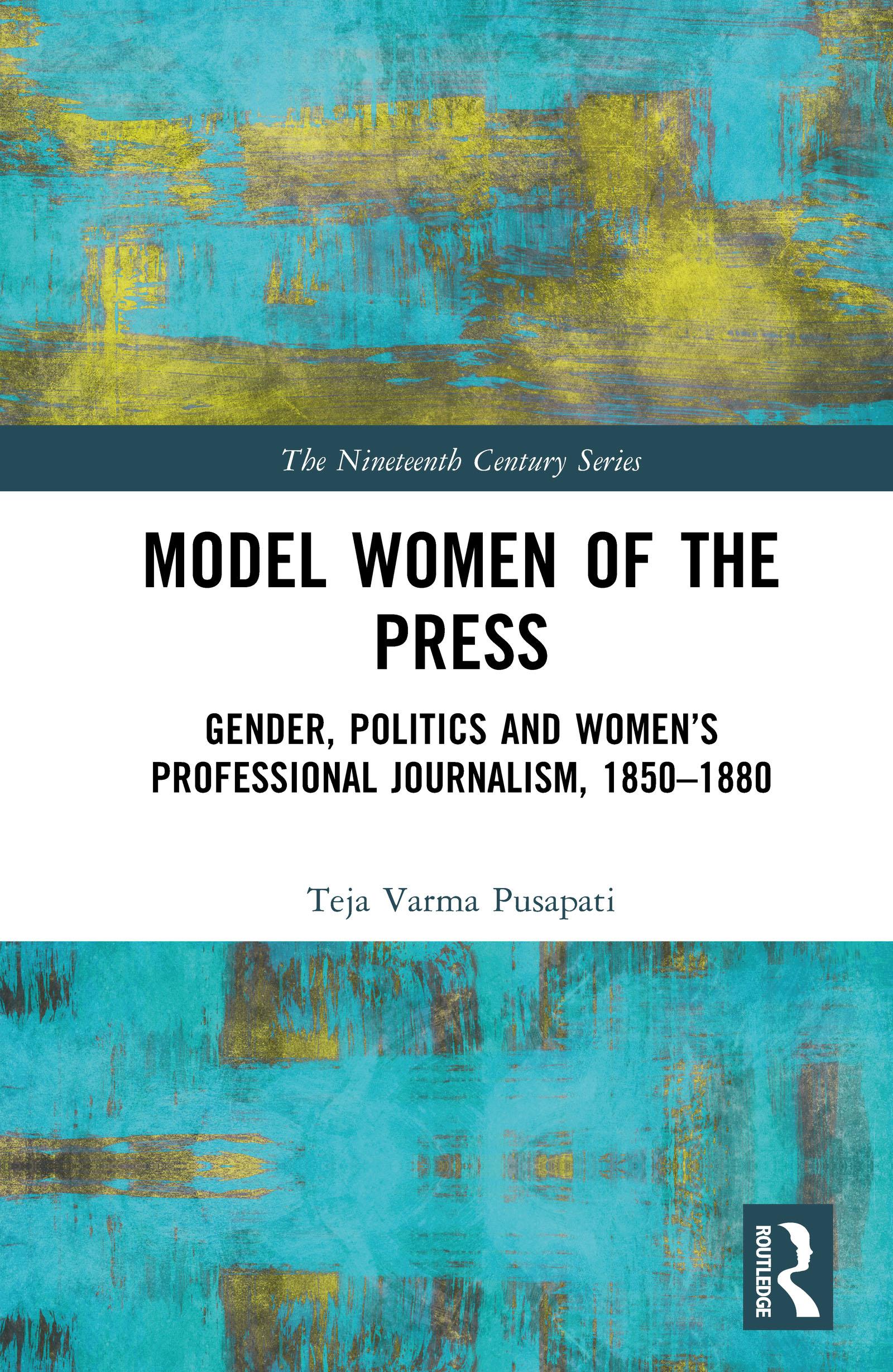
This book offers the first extended account of the mid-century rise of ‘model women of the press’: women who not only stormed the male bastions of social and political journalism but also presented themselves as upholders of the highest standards of professional journalistic practice. They broke the codes of anonymity in several ways, including signing articles in their own names and developing distinctly female personae. They proved, by example, women’s fitness for conventionally masculine lines of journalism. By placing Victorian women’s serious, high-minded journalism firmly within the context of ‘the widening sphere’ of female professions in mid-nineteenth-century England, the book shows how a wide range of women writers, including leading Victorian feminists and female reformers, contributed to the professionalization of women’s authorship. Drawing on extensive archival research and close analysis of a wide range of printed texts, from Victorian newspapers and periodicals to autobiographies, memoirs, and fiction, this book elucidates several aspects of Victorian women’s journalism that have been previously ignored: the market interest of the feminist English Woman’s Journal; the ability of women like Eliza Meteyard and Frances Power Cobbe to write consistently on serious social and political issues in mainstream periodicals; Harriet Ward’s astonishing reportage from the war fields of South Africa; and Harriet Martineau’s reports on Famine-devastated Ireland and her role as a transatlantic commentator on American abolitionism. The study also offers the first focused account of the figure of the female professional journalist in Victorian novels, showing how these texts move away from the dominant myth of the author as a solitary genius to present the female journalist as a collaborator who adapts her writing to fit various newspapers and periodicals, and works closely with male editors and peers. In examining the rise of the Victorian woman writer as a serious social and political journalist, this book adds to current critical understanding of female political expression, authorial agency, and cultural authority in nineteenth-century England.
Zahle einfach mit Karte, Klarna, Apple Pay oder Google Pay. Nicht zufrieden? Du hast immer ein 14-tägiges Widerrufsrecht. Lies mehr in unseren AGB. Hast du Fragen, schreib uns eine E-Mail an hello@memmo.org.
Memmo macht das Lernen einfacher – wo auch immer du bist. Bei uns findest du deine Kursbücher und smarte Lerntools an einem Ort: Zusammenfassungen, Quizzes, Podcasts und Lernkarten. Und Ted, dein Lernbuddy, beantwortet alles, was du wissen möchtest. Über 50.000 Studierende lernen bereits hier – gemacht, damit du schneller lernst und weniger Stress hast.