
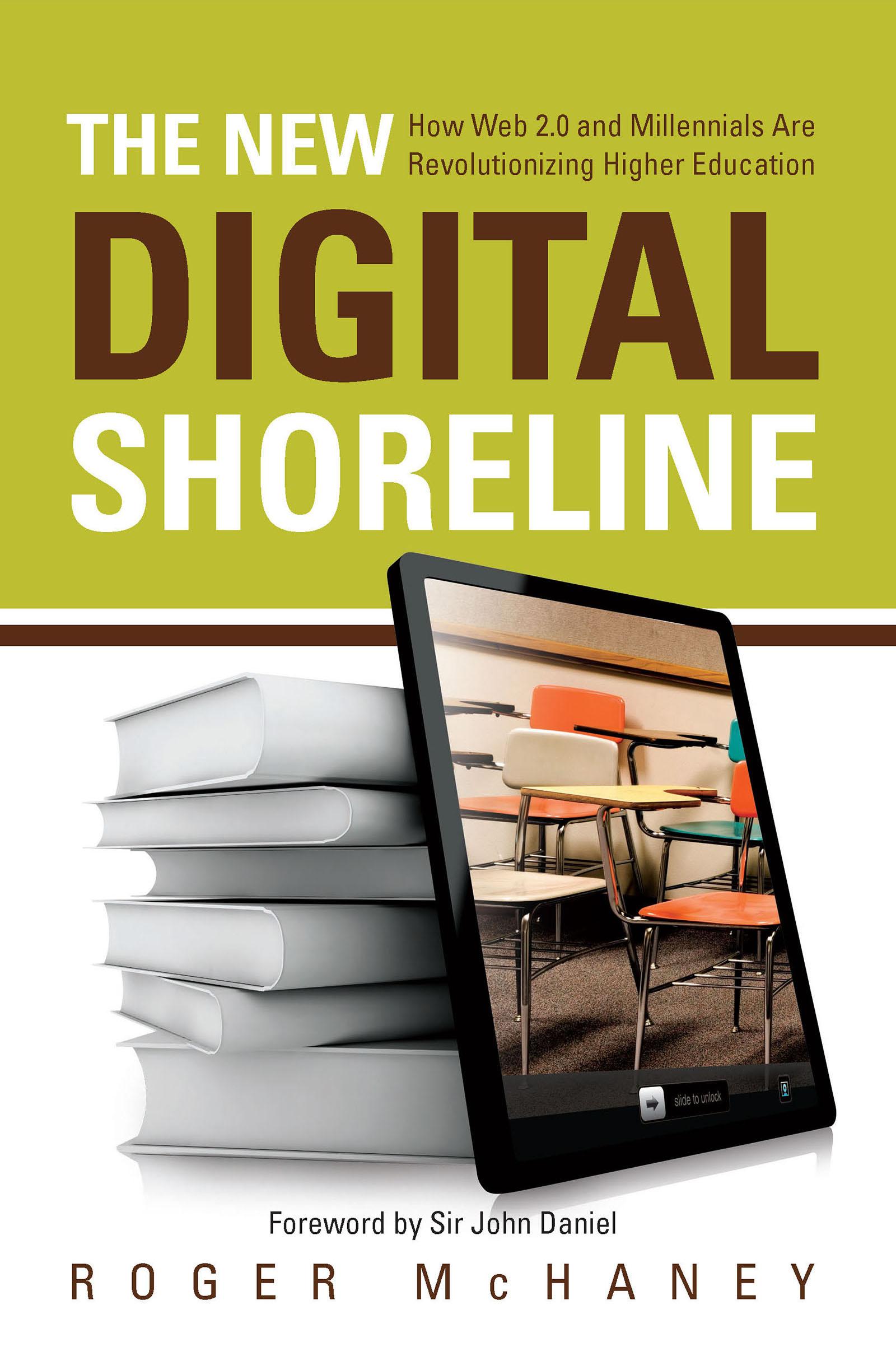
Two seismic forces beyond our control – the advent of Web 2.0 and the inexorable influx of tech-savvy Millennials on campus – are shaping what Roger McHaney calls “The New Digital Shoreline” of higher education. Failure to chart its contours, and adapt, poses a major threat to higher education as we know it.These forces demand that we as educators reconsider the learning theories, pedagogies, and practices on which we have depended, and modify our interactions with students and peers—all without sacrificing good teaching, or lowering standards, to improve student outcomes. Achieving these goals requires understanding how the indigenous population of this new shoreline is different. These students aren’t necessarily smarter or technologically superior, but they do have different expectations. Their approaches to learning are shaped by social networking and other forms of convenient, computer-enabled and mobile communication devices; by instant access to an over-abundance of information; by technologies that have conferred the ability to personalize and customize their world to a degree never seen before; and by time-shifting and time-slicing.As well as understanding students’ assumptions and expectations, we have no option but to familiarize ourselves with the characteristics and applications of Web 2.0—essentially a new mind set about how to use Internet technologies around the concepts of social computing, social media, content sharing, filtering, and user experience.Roger McHaney not only deftly analyzes how Web 2.0 is shaping the attitudes and motivations of today’s students, but guides us through the topography of existing and emerging digital media, environments, applications, platforms and devices – not least the impact of e-readers and tablets on the future of the textbook – and the potential they have for disrupting teacher-student relationships; and, if appropriately used, for engaging students in their learning.This book argues for nothing less than a reinvention of higher education to meet these new realities. Just adding technology to our teaching practices will not suffice. McHaney calls for a complete rethinking of our practice of teaching to meet the needs of this emerging world and envisioning ourselves as connected, co-learners with our students.
Zahle einfach mit Karte, Klarna, Apple Pay oder Google Pay. Nicht zufrieden? Du hast immer ein 14-tägiges Widerrufsrecht. Lies mehr in unseren AGB. Hast du Fragen, schreib uns eine E-Mail an hello@memmo.org.
Memmo macht das Lernen einfacher – wo auch immer du bist. Bei uns findest du deine Kursbücher und smarte Lerntools an einem Ort: Zusammenfassungen, Quizzes, Podcasts und Lernkarten. Und Ted, dein Lernbuddy, beantwortet alles, was du wissen möchtest. Über 50.000 Studierende lernen bereits hier – gemacht, damit du schneller lernst und weniger Stress hast.