
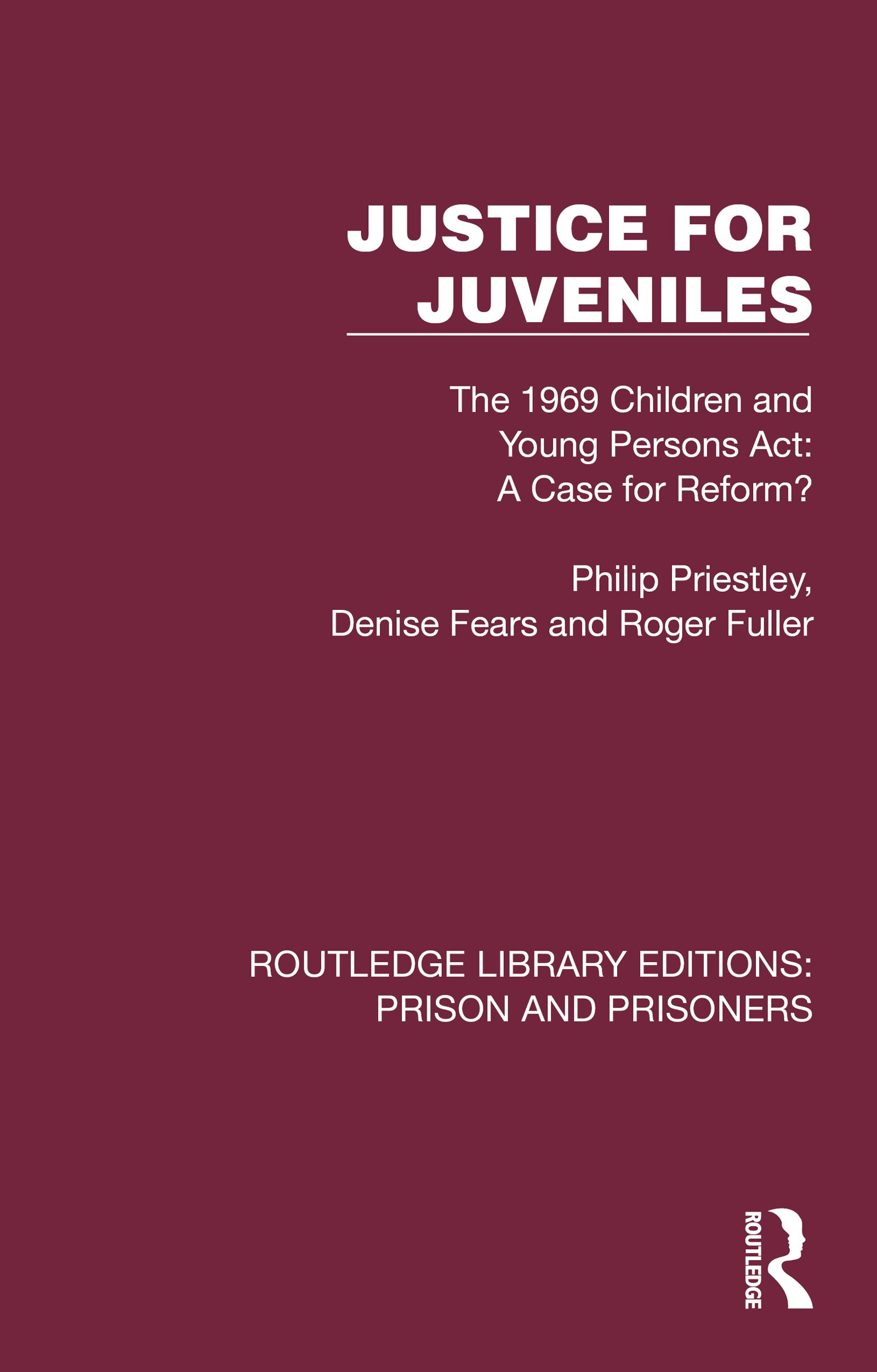
The working of the 1969 Children and Young Persons Act was the subject of much debate in the 1970s. Discussion had been strong on opinion and short on facts; this book, originally published in 1977, supplied some much-needed evidence, based on the results of a research project funded by the Home Office Research Unit. It also discusses the origins of the Act and its consequences for children and their families.
The authors describe the way in which two groups of children were dealt with by the police, social workers, probation officers and juvenile courts during the first three months of 1972. Their findings depict a system which decides what to do with ‘children in trouble’ mainly on the basis of their offence behaviour rather than on assessments of their personal needs – a ‘judicial’ rather than ‘welfare’ system of the kind envisaged in the legislation. As a result of these observations, the authors conclude that ‘the idea of the juvenile court has been tried and found wanting, and that it suffers from the congenital defects which fresh applications of money or manpower will fail to cure.’ They recommend the abolition of the juvenile court and the raising of the age of criminal responsibility, proposing a number of controversial alternatives based on principles of non-intervention.
Zahle einfach mit Karte, Klarna, Apple Pay oder Google Pay. Nicht zufrieden? Du hast immer ein 14-tägiges Widerrufsrecht. Lies mehr in unseren AGB. Hast du Fragen, schreib uns eine E-Mail an hello@memmo.org.
Memmo macht das Lernen einfacher – wo auch immer du bist. Bei uns findest du deine Kursbücher und smarte Lerntools an einem Ort: Zusammenfassungen, Quizzes, Podcasts und Lernkarten. Und Ted, dein Lernbuddy, beantwortet alles, was du wissen möchtest. Über 50.000 Studierende lernen bereits hier – gemacht, damit du schneller lernst und weniger Stress hast.