
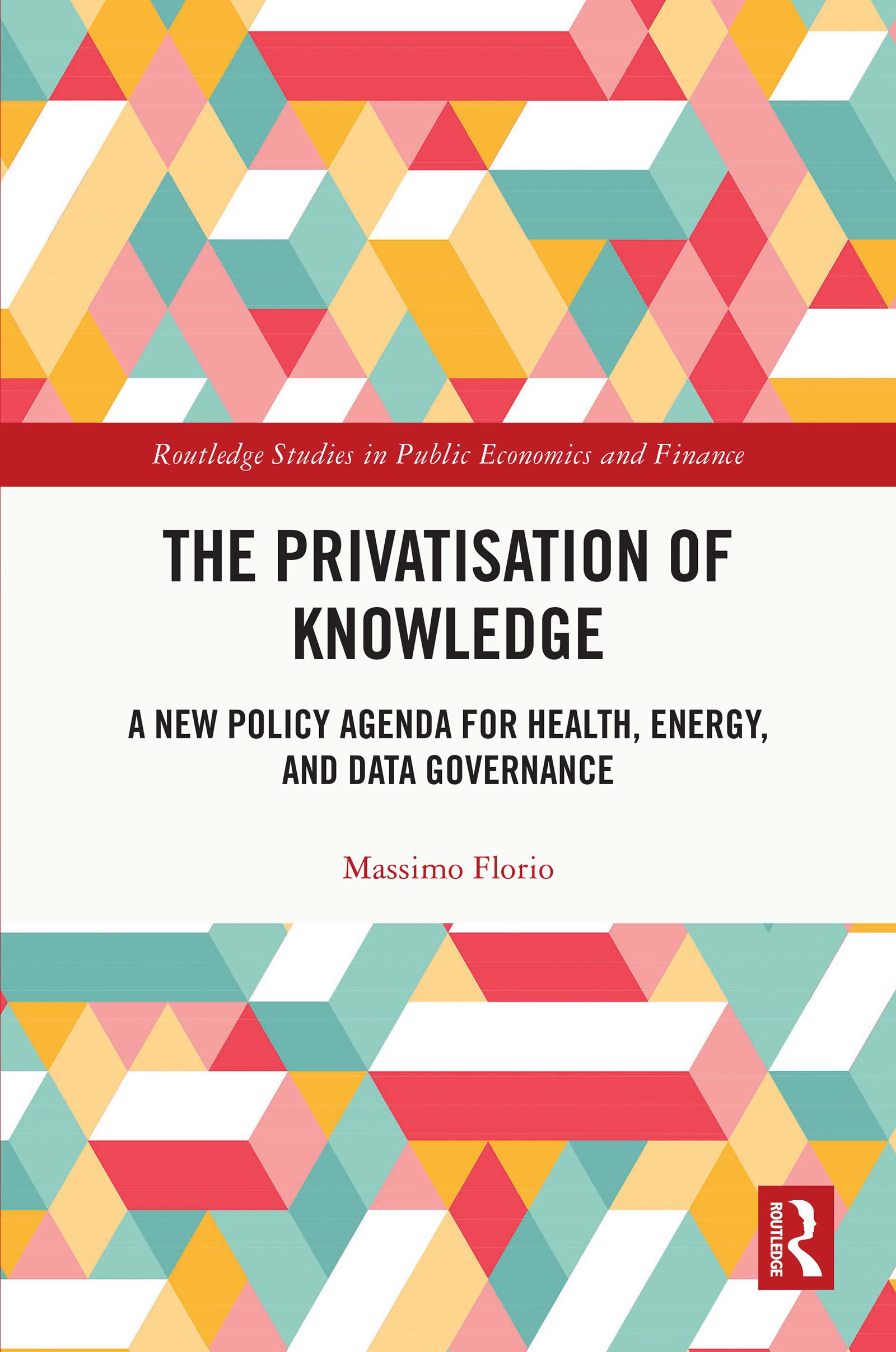
This book deals with the emergence of intellectual monopolies. It explores different ways of producing knowledge, thus showing alternatives to the current dominant paradigm which is based on turning knowledge produced collectively into intangible assets, owned by a few leading corporations. It discusses a paradox: knowledge creation by government-sponsored research infrastructures (RI) or by non-profit institutions, including universities, is increasingly appearing in the form of "open science" - ideas and data are widely available in the public domain. However, such knowledge is privatised downstream by new oligopolies. These oligopolies, such as the Tech Giants, are protected by legislation on intellectual property rights that restricts further access to knowledge. This process contributes to increasing social inequality.
The book suggests alternative policy options to counteract this process: the design of new players with a public mission and a coalition of governments as patient investors for the long-term benefit not just of the citizens of one jurisdiction but for creating global public goods. Proposals are presented for launching European R&D infrastructures related to three major long-term challenges: health risks, climate change and Big Data governance. These knowledge-intensive enterprises should offer innovation as a public good, for example in new biomedical fields underinvested by private firms, disruptive ‘green’ technologies, digital platforms based on transparent users’ ownership of data.
Offering a balanced combination of theories and practical applications including interesting case studies, the book will appeal to students, scholars and researchers of public economics and governance. It will also find an audience among policymakers, practitioners and government officials.
Zahle einfach mit Karte, Klarna, Apple Pay oder Google Pay. Nicht zufrieden? Du hast immer ein 14-tägiges Widerrufsrecht. Lies mehr in unseren AGB. Hast du Fragen, schreib uns eine E-Mail an hello@memmo.org.
Memmo macht das Lernen einfacher – wo auch immer du bist. Bei uns findest du deine Kursbücher und smarte Lerntools an einem Ort: Zusammenfassungen, Quizzes, Podcasts und Lernkarten. Und Ted, dein Lernbuddy, beantwortet alles, was du wissen möchtest. Über 50.000 Studierende lernen bereits hier – gemacht, damit du schneller lernst und weniger Stress hast.