
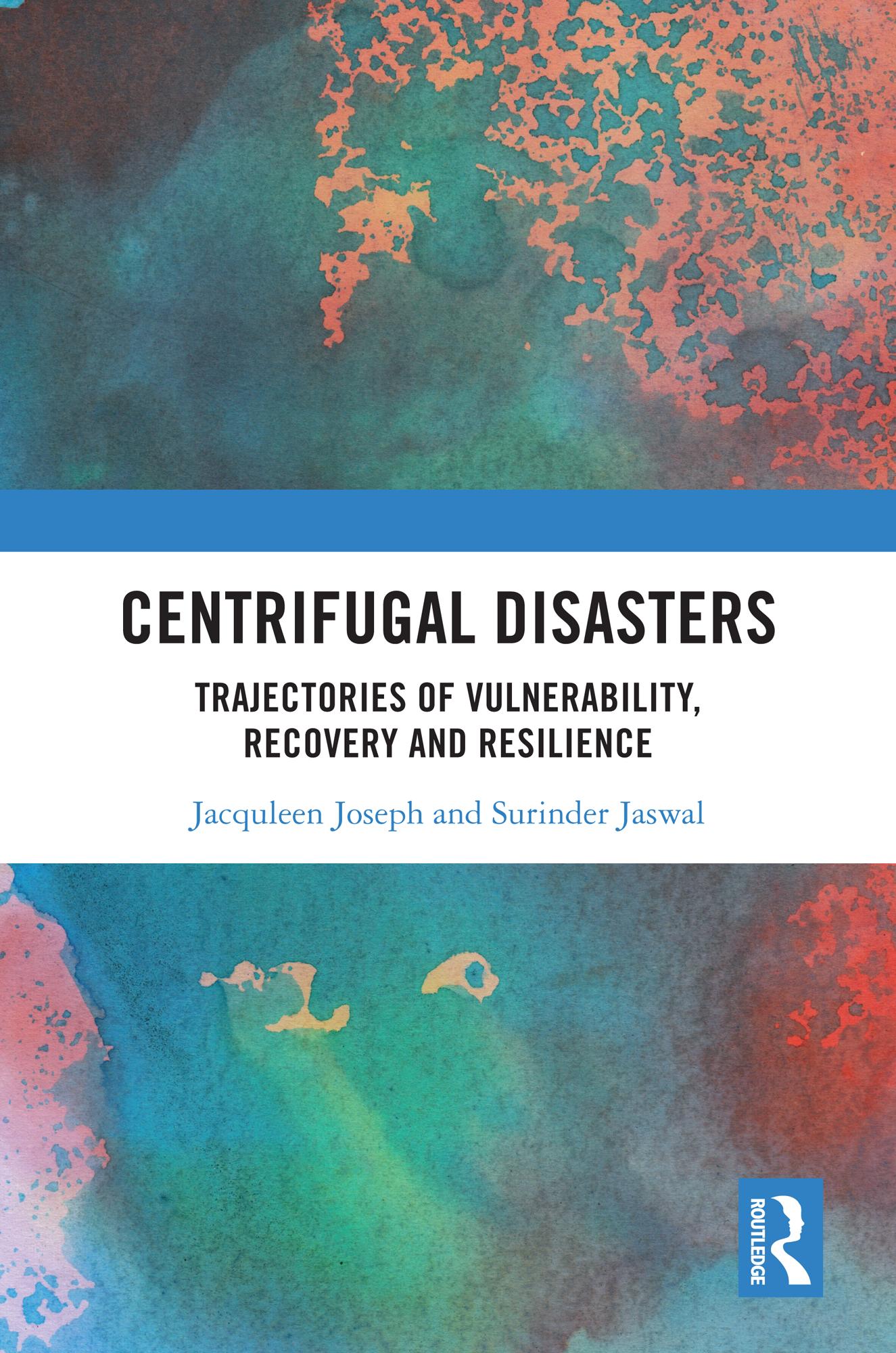
This book focuses on centrifugal disasters that impact a group of seemingly unconnected people congregated temporarily often by chance, unlike centripetal disasters that strike an extant community of people. In India as well as in South Asia, centrifugal disasters have increased significantly in the last few decades; however, the research remains limited as such incidents are often categorized as accidents. The book documents three such major disaster events–– the 26/11 terror attacks and the 13/7 blasts in Mumbai and the hospital fire in Kolkata–– and analyzes the lived and felt experiences of the survivors and their families.
Drawing on the authors’ experience of working with survivors, first responders (police, health workers), as well as policymakers, the book suggests a model of disaster intervention that bridges academia and praxis expertise. Besides providing a rights framework for disaster interventions, it also explores the moral and ethical considerations around disaster interventions.
This important book will be of interest to students and practitioners of disaster management, including first responders and those working in public management, risk management, hazards and disasters, emergency response, terrorism, and political violence. It will also be useful to mental health professionals, social workers, psychologists, civil society organizations, as well as bureaucrats and policymakers.
Zahle einfach mit Karte, Klarna, Apple Pay oder Google Pay. Nicht zufrieden? Du hast immer ein 14-tägiges Widerrufsrecht. Lies mehr in unseren AGB. Hast du Fragen, schreib uns eine E-Mail an hello@memmo.org.
Memmo macht das Lernen einfacher – wo auch immer du bist. Bei uns findest du deine Kursbücher und smarte Lerntools an einem Ort: Zusammenfassungen, Quizzes, Podcasts und Lernkarten. Und Ted, dein Lernbuddy, beantwortet alles, was du wissen möchtest. Über 50.000 Studierende lernen bereits hier – gemacht, damit du schneller lernst und weniger Stress hast.