
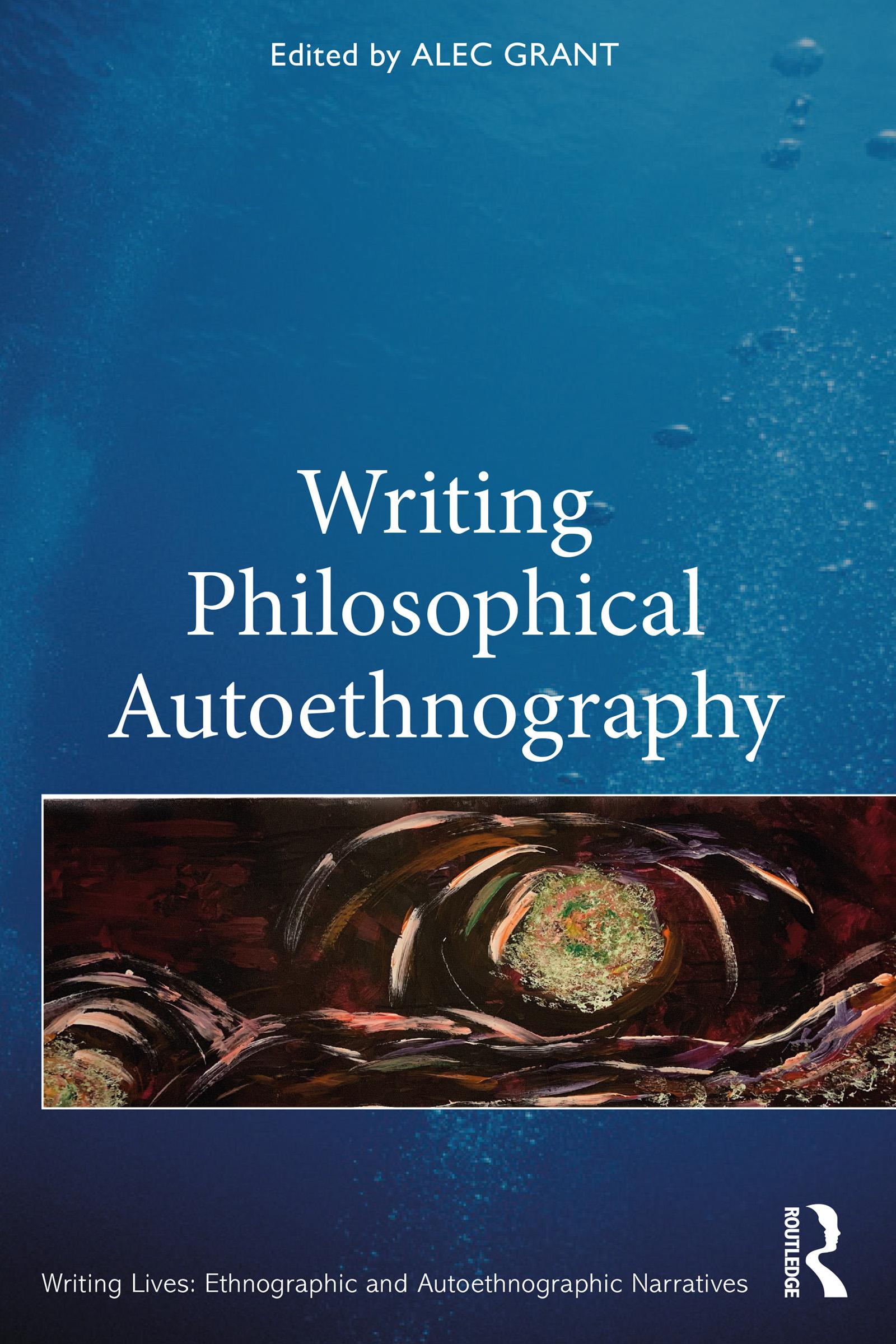
Writing Philosophical Autoethnography is the result of Alec Grant’s vision of bringing the disciplines of philosophy and autoethnography together. This is the first volume of narrative autoethnographic work in which invited contributing authors were charged with exploring their issues, concerns, and topics about human society, culture, and the material world through an explicitly philosophical lens.
Each chapter, while written autoethnographically, showcases sustained engagement with philosophical arguments, ideas, concepts, theories, and corresponding ethical positions. Unlike much other autoethnographic work, within which philosophical ideas often appear to be "grafted on" or supplementary, the philosophical basis of the work in this volume is fundamental to its shifting content, focus, and context. The narratives in this book, from scholars working in a range of disciplines in the humanities and human sciences, function as narrative, conceptual, and analytical exemplars to act as a guide for autoethnographers in their own writing, and suggest future directions for making autoethnography more philosophically rigorous.
This book is suitable for students and scholars of autoethnography and qualitative methods in a range of disciplines, including the humanities, social and human sciences, communication studies, and education.
Zahle einfach mit Karte, Klarna, Apple Pay oder Google Pay. Nicht zufrieden? Du hast immer ein 14-tägiges Widerrufsrecht. Lies mehr in unseren AGB. Hast du Fragen, schreib uns eine E-Mail an hello@memmo.org.
Memmo macht das Lernen einfacher – wo auch immer du bist. Bei uns findest du deine Kursbücher und smarte Lerntools an einem Ort: Zusammenfassungen, Quizzes, Podcasts und Lernkarten. Und Ted, dein Lernbuddy, beantwortet alles, was du wissen möchtest. Über 50.000 Studierende lernen bereits hier – gemacht, damit du schneller lernst und weniger Stress hast.