
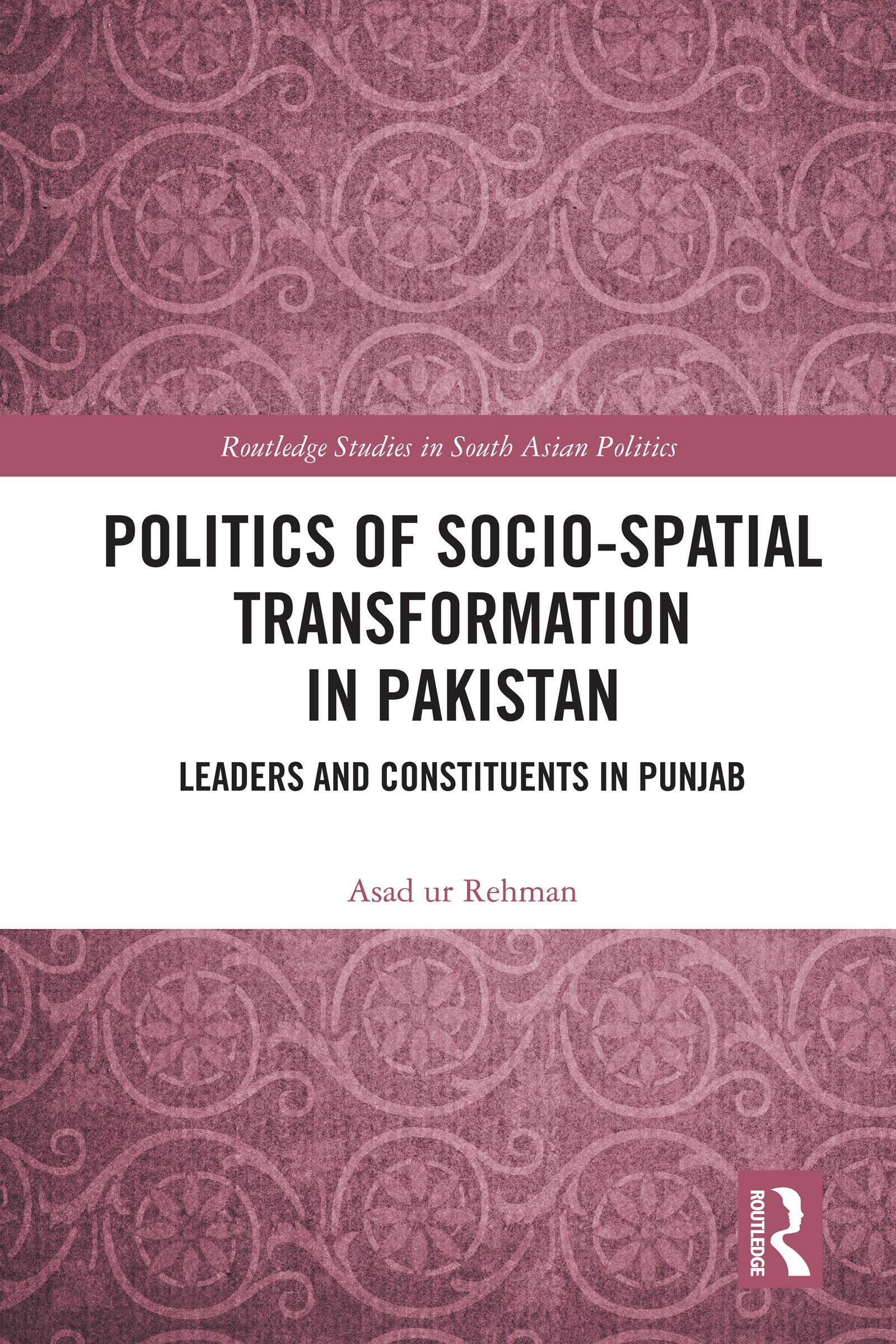
Politics of Socio-Spatial Transformation in Pakistan analyses the relationship between socio-spatial transformation, styles of leadership and nature of constituents in Pakistan. It examines the way social change influences politics and leadership in its most populated province.
Offering a unique viewpoint to study the relationship between politics and social change by examining the nature of relationship between leaders and their constituents, the author introduces the concept of Gradients of Engagements. The book describes the way values of engagement (Talluq) and styles of leadership mediate engagements among politicians, citizens and state bureaucracy in villages and small towns of Pakistani Punjab. Starting with the mapping of socio-economic and spatio-demographic non-metropolitan locales, the book illustrates the centrality of the processes of "rurbanization" and "governmentalization". It points out how political leaders mediate these processes, personal and public demands of their constituents’ invoking claims or representativeness and public service. The author breaks engagements between leaders and constituents into four gradients of representation (elections), public service delivery (development), everyday problem-solving (governance) and collective action, thus providing a contextualized and grounded comprehension of the process democratization and its substantive and performative aspects. In addition to providing a historical sketch of economic development, evolution of social organization and development of political institutions in Punjab, the book includes an ethnography of political elites and study of everyday political engagements to show how the styles of leadership mediates the process of institutional development and public service delivery in "rurban" Punjab.
A novel contribution to the study of political processes such as state formation, collective action, representation, and citizenship in a comparative manner embedded in space and informed by cultural meanings, the book will be of interest to researchers studying South Asian, Pakistan and Punjab/Sikh studies, Development Studies and Urban Studies.
Zahle einfach mit Karte, Klarna, Apple Pay oder Google Pay. Nicht zufrieden? Du hast immer ein 14-tägiges Widerrufsrecht. Lies mehr in unseren AGB. Hast du Fragen, schreib uns eine E-Mail an hello@memmo.org.
Memmo macht das Lernen einfacher – wo auch immer du bist. Bei uns findest du deine Kursbücher und smarte Lerntools an einem Ort: Zusammenfassungen, Quizzes, Podcasts und Lernkarten. Und Ted, dein Lernbuddy, beantwortet alles, was du wissen möchtest. Über 50.000 Studierende lernen bereits hier – gemacht, damit du schneller lernst und weniger Stress hast.