
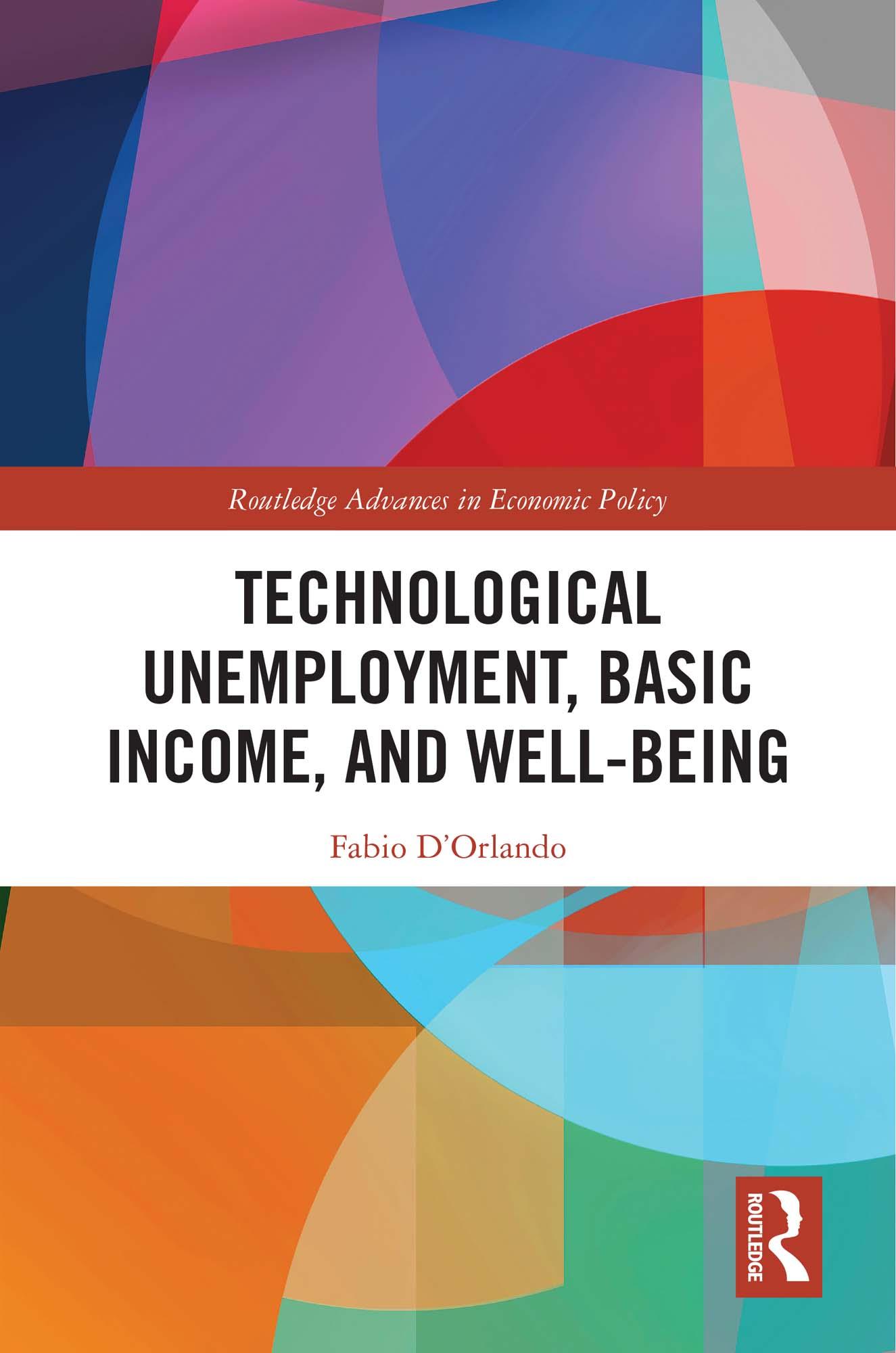
The main novelty of the Fourth Industrial Revolution is the entry of robots and Artificial Intelligence into the production process. This phenomenon could potentially generate high levels of unemployment, or even full unemployment, and therefore calls for innovative public policies.
This book adopts an agnostic position on the size of the future impact of technological progress on employment but proposes a thought experiment built on a full unemployment scenario, which focuses on the consequences that these policies might have for people’s well-being, with particular reference to the provision of a universal Basic Income (UBI). Relying on some of the principles and models of Behavioral and Happiness Economics, it is argued that implementing a UBI that does not change over time may increase well-being inequality. A policy mix that combines a rising basic income with other measures is therefore recommended.
This book marks a significant contribution to the literature on economic policy, labor economics, the economics of well-being and happiness, and behavioral economics.
Zahle einfach mit Karte, Klarna, Apple Pay oder Google Pay. Nicht zufrieden? Du hast immer ein 14-tägiges Widerrufsrecht. Lies mehr in unseren AGB. Hast du Fragen, schreib uns eine E-Mail an hello@memmo.org.
Memmo macht das Lernen einfacher – wo auch immer du bist. Bei uns findest du deine Kursbücher und smarte Lerntools an einem Ort: Zusammenfassungen, Quizzes, Podcasts und Lernkarten. Und Ted, dein Lernbuddy, beantwortet alles, was du wissen möchtest. Über 50.000 Studierende lernen bereits hier – gemacht, damit du schneller lernst und weniger Stress hast.