
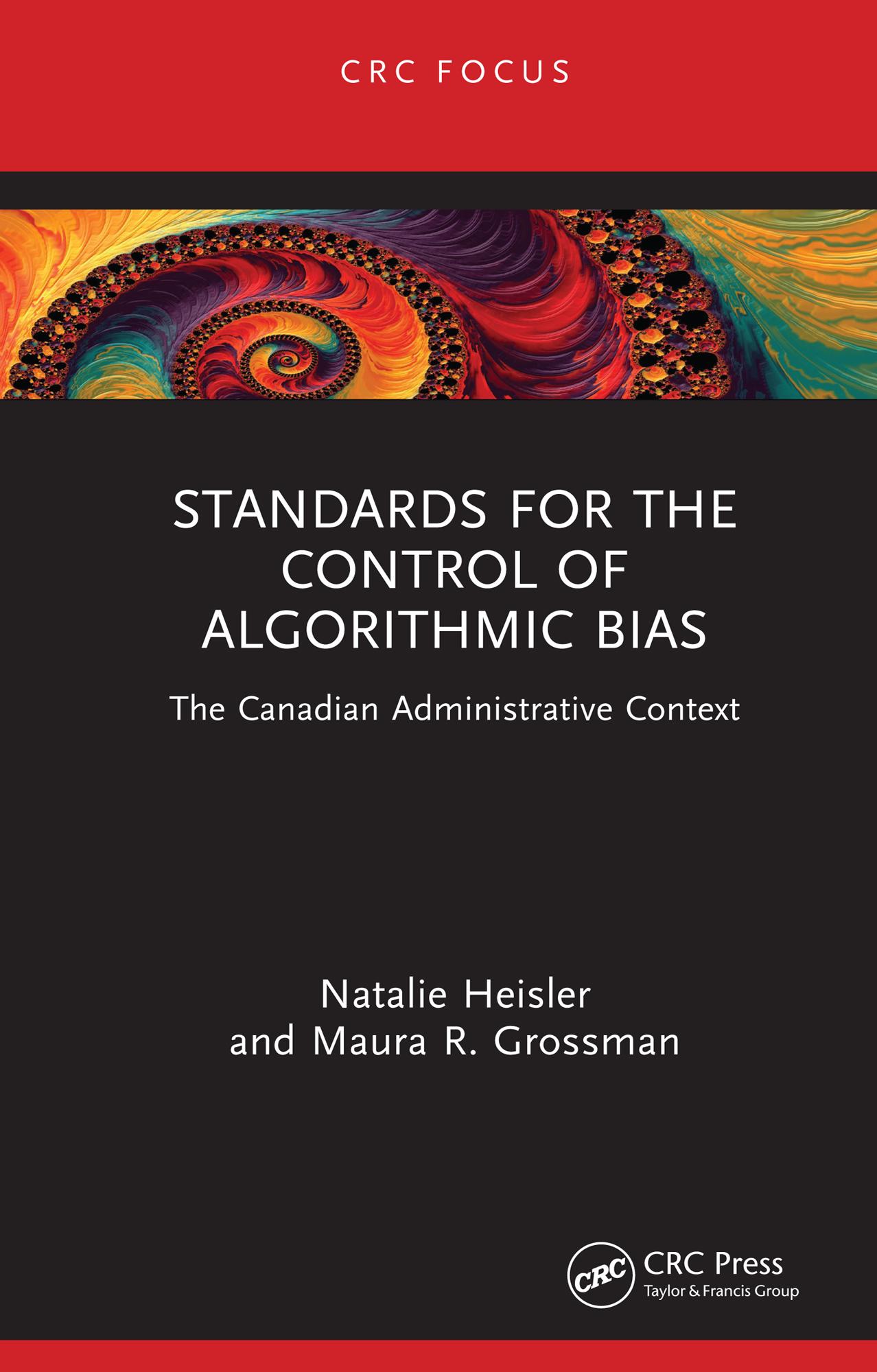
Governments around the world use machine learning in automated decision-making systems for a broad range of functions. However, algorithmic bias in machine learning can result in automated decisions that produce disparate impact and may compromise Charter guarantees of substantive equality. This book seeks to answer the question: what standards should be applied to machine learning to mitigate disparate impact in government use of automated decision-making?
The regulatory landscape for automated decision-making, in Canada and across the world, is far from settled. Legislative and policy models are emerging, and the role of standards is evolving to support regulatory objectives. While acknowledging the contributions of leading standards development organizations, the authors argue that the rationale for standards must come from the law and that implementing such standards would help to reduce future complaints by, and would proactively enable human rights protections for, those subject to automated decision-making. The book presents a proposed standards framework for automated decision-making and provides recommendations for its implementation in the context of the government of Canada’s Directive on Automated Decision-Making.
As such, this book can assist public agencies around the world in developing and deploying automated decision-making systems equitably as well as being of interest to businesses that utilize automated decision-making processes.
Zahle einfach mit Karte, Klarna, Apple Pay oder Google Pay. Nicht zufrieden? Du hast immer ein 14-tägiges Widerrufsrecht. Lies mehr in unseren AGB. Hast du Fragen, schreib uns eine E-Mail an hello@memmo.org.
Memmo macht das Lernen einfacher – wo auch immer du bist. Bei uns findest du deine Kursbücher und smarte Lerntools an einem Ort: Zusammenfassungen, Quizzes, Podcasts und Lernkarten. Und Ted, dein Lernbuddy, beantwortet alles, was du wissen möchtest. Über 50.000 Studierende lernen bereits hier – gemacht, damit du schneller lernst und weniger Stress hast.