
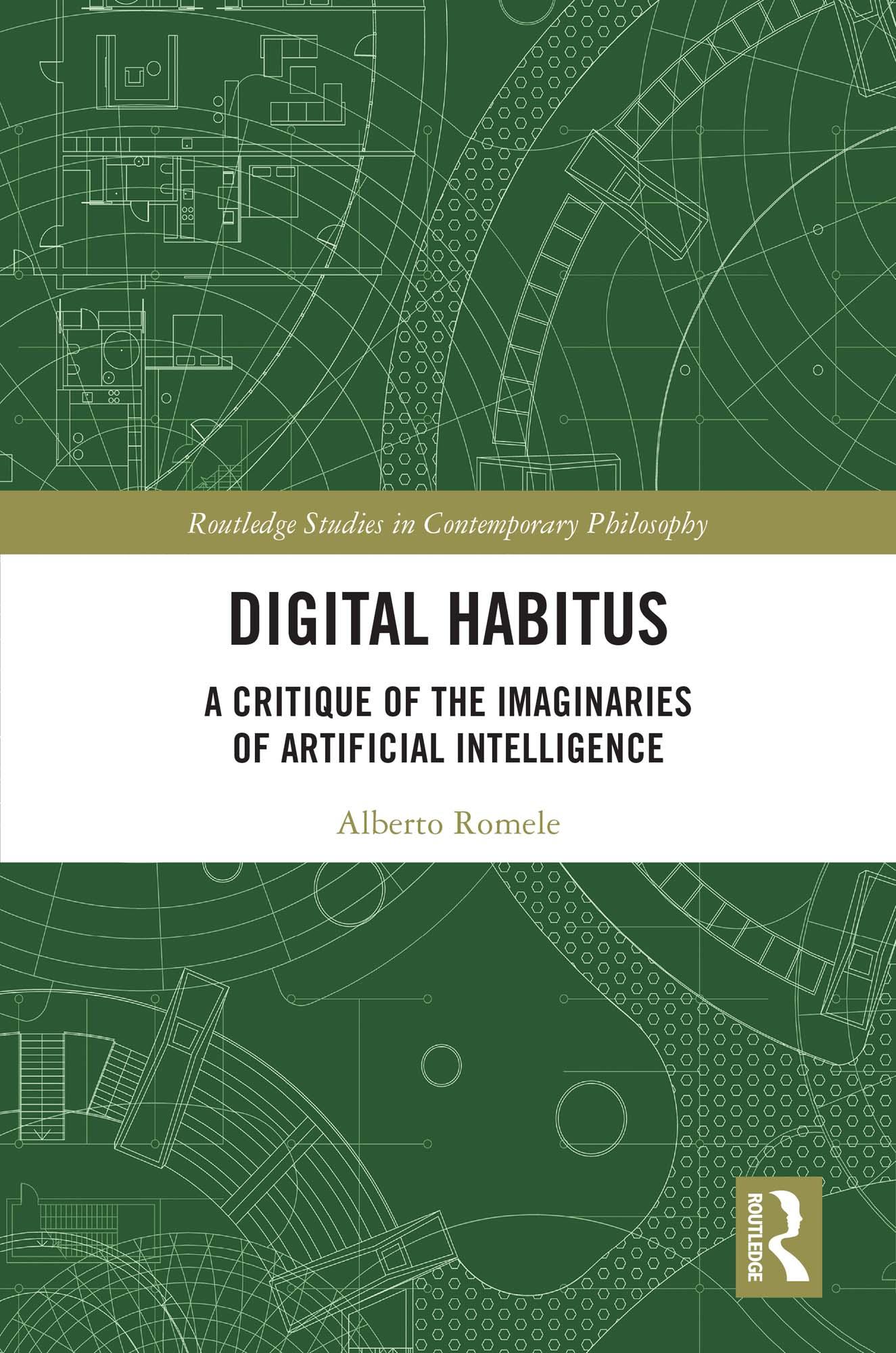
This book proposes a new theoretical framework for approaching the causes and effects that digital technologies and the imaginaries related to them have on the processes of self-interpretation and subjectivation.
It formulates three main theses. First, it argues that today’s digital technologies, which are primarily based on artificial intelligence (AI) algorithms and big data are formidable habitus machines: they offer increasingly personalized services, but these machines are actually indifferent to individuals and their personalities. Second, this book contends that the effectiveness of these machines does not depend solely on their concrete capacity to classify the social world. It also depends on the expectations, hopes, fears, and imaginaries that we have concerning these technologies and their capacities. This cultural habitus—a worldview, or world picture—leads us to believe in the concrete effectiveness of AI and its potential for our societies. Third, the author takes this Bourdieusian notion of habitus and connects it to current “empirical turn” in philosophy of technology. He contends that, by looking too closely at the things themselves, many philosophers of technology have deprived themselves of the possibility to study the symbolic conditions of possibility in which single technological artifacts are always embedded.
Digital Habitus will appeal to scholars and students working in philosophy of technology, the ethics of artificial intelligence, media studies, and science and technology studies.
Zahle einfach mit Karte, Klarna, Apple Pay oder Google Pay. Nicht zufrieden? Du hast immer ein 14-tägiges Widerrufsrecht. Lies mehr in unseren AGB. Hast du Fragen, schreib uns eine E-Mail an hello@memmo.org.
Memmo macht das Lernen einfacher – wo auch immer du bist. Bei uns findest du deine Kursbücher und smarte Lerntools an einem Ort: Zusammenfassungen, Quizzes, Podcasts und Lernkarten. Und Ted, dein Lernbuddy, beantwortet alles, was du wissen möchtest. Über 50.000 Studierende lernen bereits hier – gemacht, damit du schneller lernst und weniger Stress hast.