
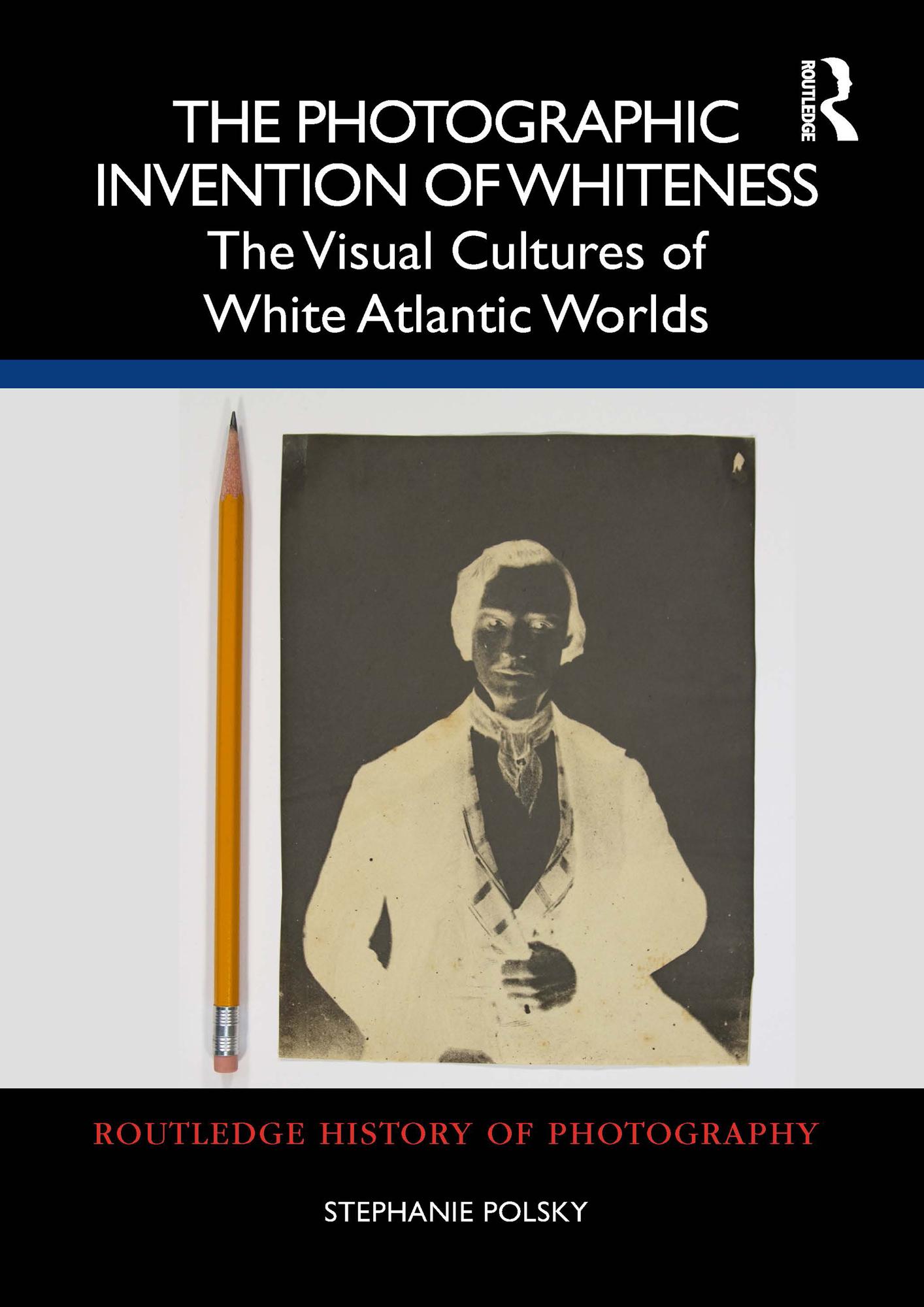
Focusing on the creation of the concept of Whiteness, this study links early photographic imagery to the development and exploitation that were common in the colonial Atlantic World of the mid-to-late nineteenth century.
With the advent of the daguerreotype in the mid-nineteenth century, White European settlers could imagine themselves as a supra-national community, where the attainment of wealth was rapidly becoming accessible through colonisation. Their dispersal throughout the colonial territories made possible the advent of a new representative type of Whiteness that eventually merged with the portrayal of modernity itself. Over time, the colonisation of the Atlantic World became synonymous with fascination itself within a European mind fixated upon both a racially subordinated world and the technical media through which it was represented. In the intervening centuries, images have acted as a medium of the imaginary, allowing for ideas around classification and the measurement of value to travel and to situate themselves as universal means. Contemporary societies still grapple with the residues of race, gender, class, and sexuality first established by the contrived mores of this representational medium, and those who were racialised by the camera as objects of fascination, curiosity, or concern have remained so well into the post-digital era.
The book will be of interest to scholars working in history of photography, art history, colonialism, and critical race theory.
Zahle einfach mit Karte, Klarna, Apple Pay oder Google Pay. Nicht zufrieden? Du hast immer ein 14-tägiges Widerrufsrecht. Lies mehr in unseren AGB. Hast du Fragen, schreib uns eine E-Mail an hello@memmo.org.
Memmo macht das Lernen einfacher – wo auch immer du bist. Bei uns findest du deine Kursbücher und smarte Lerntools an einem Ort: Zusammenfassungen, Quizzes, Podcasts und Lernkarten. Und Ted, dein Lernbuddy, beantwortet alles, was du wissen möchtest. Über 50.000 Studierende lernen bereits hier – gemacht, damit du schneller lernst und weniger Stress hast.