
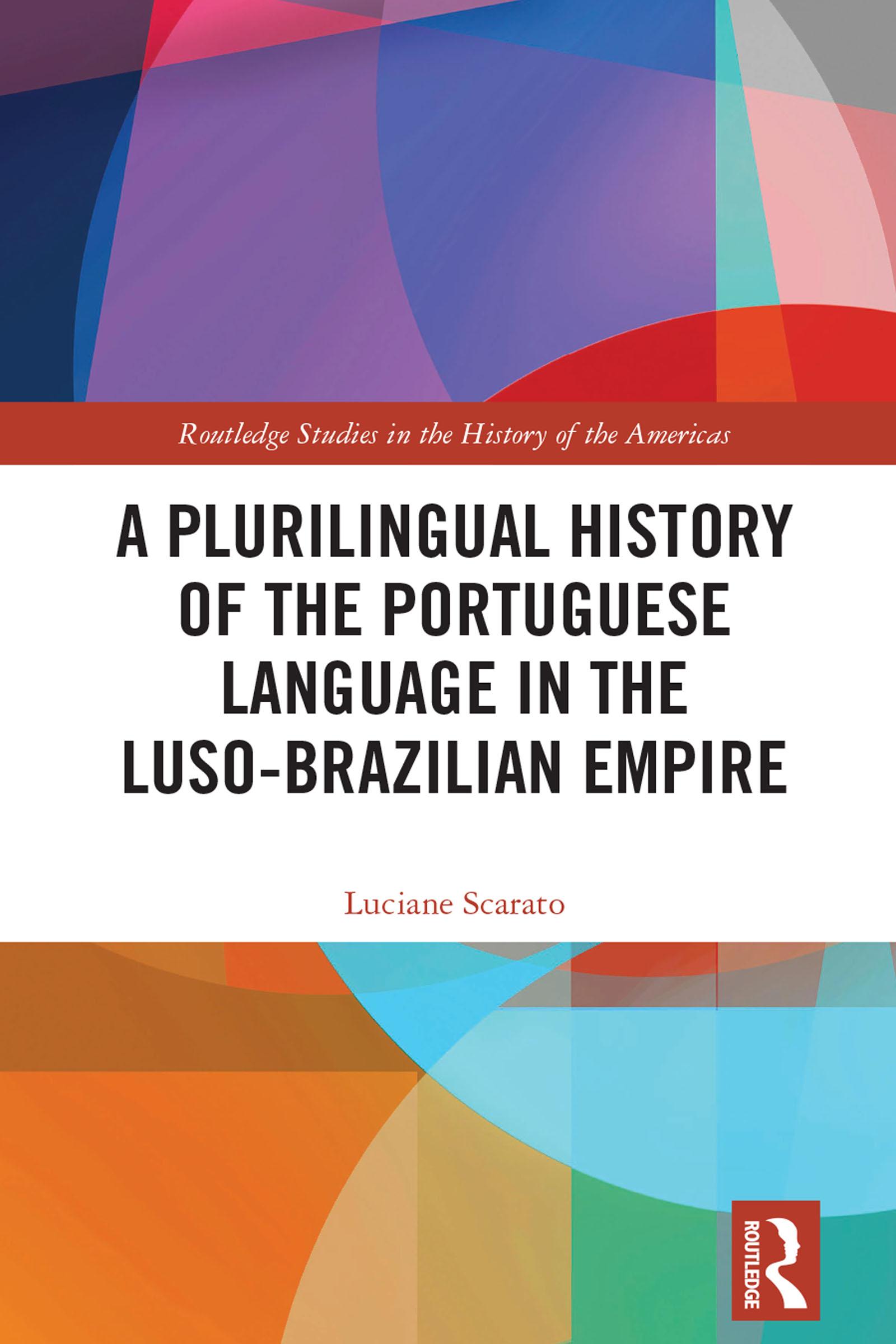
This book investigates the diverse ways in which the Portuguese language expanded in Brazil, despite the multilingual landscape that predominated before and after the arrival of the Europeans and the African diaspora.
Challenging the assumption that the prevalence of Portuguese was a natural consequence and foregone conclusion of colonisation, the book argues that the language’s expansion was as much a result of state intervention as of individual agency. The growth of the Portuguese language was a tumultuous process that mirrored the power relations and conflicts between Amerindian, European, African, and mestizo actors who shaped, standardised, and promoted the language within and beyond state institutions. Knowing Portuguese became an identification sign of being Brazilian. However, a significant number of languages disappeared along the way, and the book highlights that virtual language homogeneity does not imply social equality. Portuguese’s variants place speakers on different social levels that justify domination and inequality. This research tells the history of a victorious language and other languages that left their mark on Brazilian Portuguese.
A Plurilingual History of the Portuguese Language in the Luso-Brazilian Empire is a useful resource for scholars interested in the history and standardisation of languages, Portuguese and Brazilian history, and the impacts of colonisation.
Zahle einfach mit Karte, Klarna, Apple Pay oder Google Pay. Nicht zufrieden? Du hast immer ein 14-tägiges Widerrufsrecht. Lies mehr in unseren AGB. Hast du Fragen, schreib uns eine E-Mail an hello@memmo.org.
Memmo macht das Lernen einfacher – wo auch immer du bist. Bei uns findest du deine Kursbücher und smarte Lerntools an einem Ort: Zusammenfassungen, Quizzes, Podcasts und Lernkarten. Und Ted, dein Lernbuddy, beantwortet alles, was du wissen möchtest. Über 50.000 Studierende lernen bereits hier – gemacht, damit du schneller lernst und weniger Stress hast.