
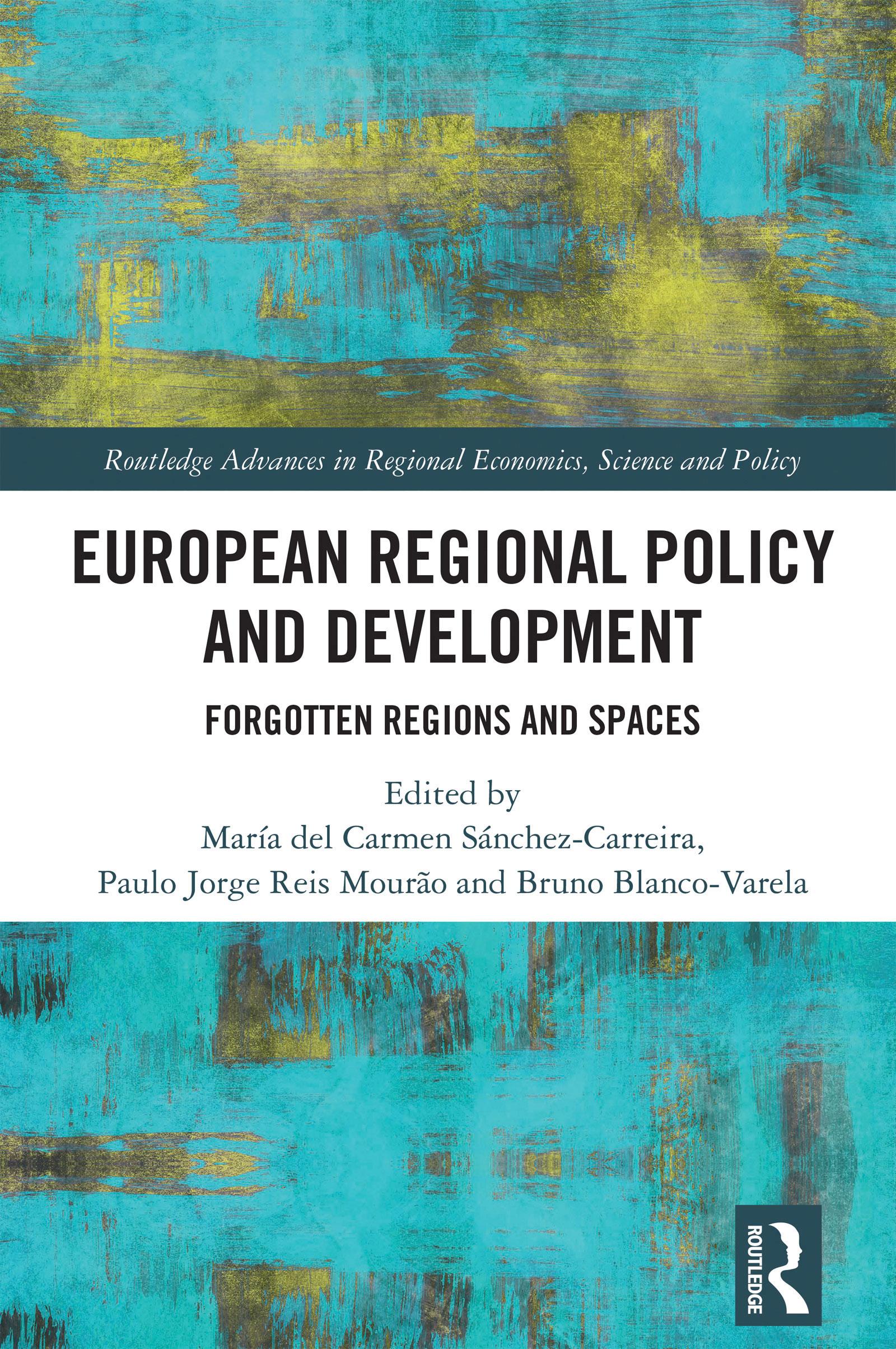
The shortcomings of traditional regional policies led to a major policy. Thus, regions have become more active in the design and implementation of policies, following a bottom-up approach and involving the participation of the local community in strategic planning, as opposed to the traditional top-down method. This book addresses regional development theories and policies, with a special focus on forgotten places, and raises emerging questions about recent theoretical advances, as well as trends and challenges in the field.
It examines two main and related issues: the crucial role of regional actors for development and the role of Forgotten Spaces. It emphasizes the spatial/territorial approaches from different theoretical perspectives, underlining place-based approaches and compares the experiences of both successful and failed cases, attempting to identify lessons and policy recommendations, as well as adding empirical evidence to this field. The different cases presented, which focus on Forgotten Spaces, allow the reader to assess the role of different actors for regional development as well as some sectoral approaches. While there is a clear focus on European countries with different geographical, institutional and sociocultural characteristics, the book also examines good and bad examples of regional development and policies related to forgotten places from different regions worldwide, including developed and developing countries.
The book benefits from contributions from over 20 authors from different nationalities, and a rich diversity of case studies, approaches and methods of discussion. The authors discuss practical examples and more complex theoretical approaches, involving techniques of spatial analysis, spatial econometrics, social networks, content analysis as well as regional planning techniques. The book will appeal to an interdisciplinary audience and will provide academicians, politicians, and policy designers with original and detailed analyses.
Zahle einfach mit Karte, Klarna, Apple Pay oder Google Pay. Nicht zufrieden? Du hast immer ein 14-tägiges Widerrufsrecht. Lies mehr in unseren AGB. Hast du Fragen, schreib uns eine E-Mail an hello@memmo.org.
Memmo macht das Lernen einfacher – wo auch immer du bist. Bei uns findest du deine Kursbücher und smarte Lerntools an einem Ort: Zusammenfassungen, Quizzes, Podcasts und Lernkarten. Und Ted, dein Lernbuddy, beantwortet alles, was du wissen möchtest. Über 50.000 Studierende lernen bereits hier – gemacht, damit du schneller lernst und weniger Stress hast.