
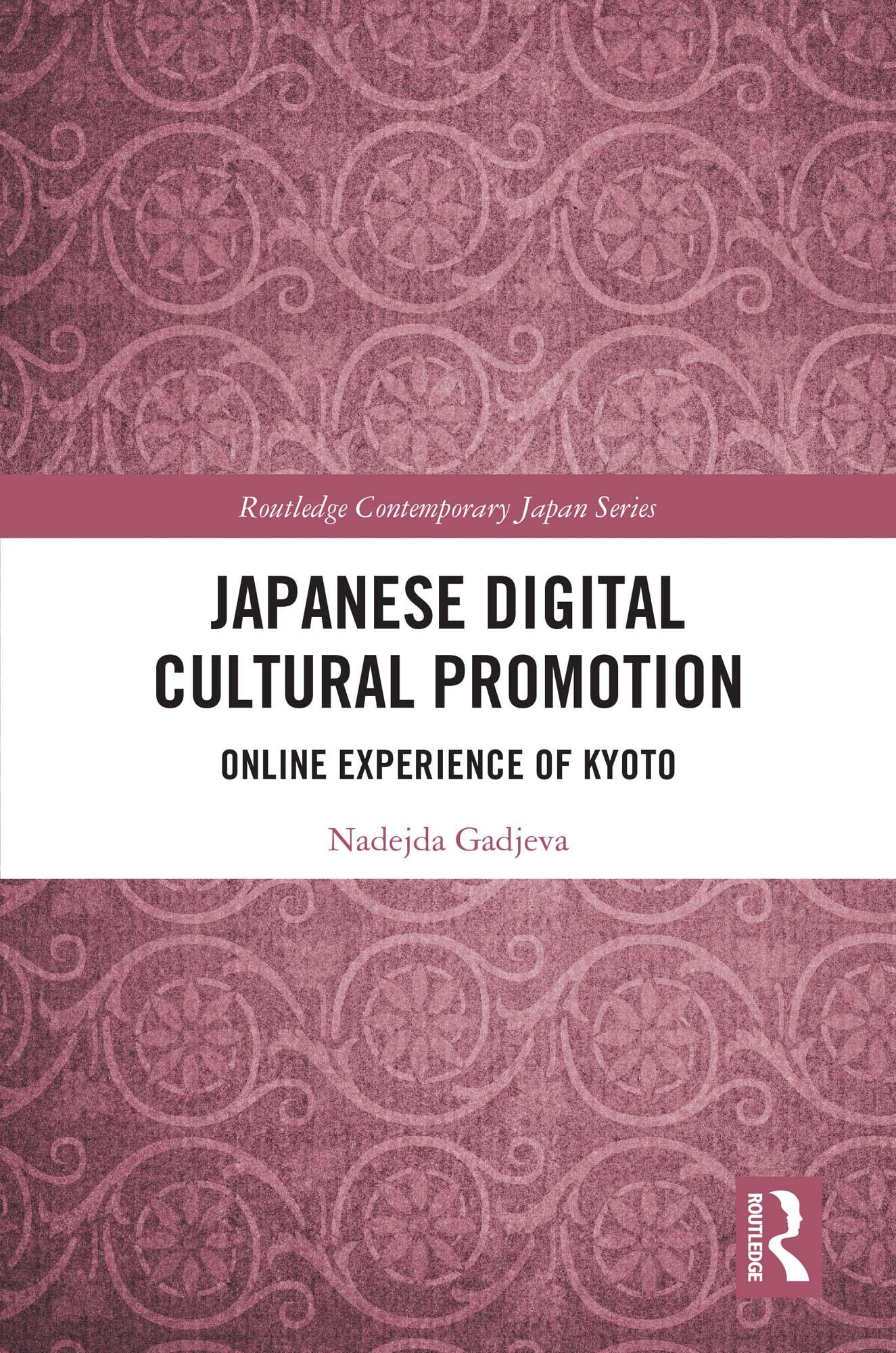
Gadjeva uses Kyoto as a case study to explore the innovative mechanisms being used to promote Japanese culture and cultural properties since the outbreak of COVID-19.
Beginning by setting out the main initiatives and actors involved in preserving, introducing, and utilizing Kyoto’s cultural heritage, Gadjeva proceeds to discuss alternative approaches using digital technologies. These tools include remote access virtual reality, augmented reality, augmented virtuality, and mixed reality. She looks at how such approaches have been applied to Kyoto’s digital museums, real-time online experiences, and other virtual projects presenting tangible, intangible, and folk heritage. In doing so she draws on a wide range of interviews with experts from the Japan Foundation, the Kyoto Art Center, and other related institutions to investigate the limitations and possible strategies for further development of these practices. She also interviews scholars, government officials, and experts from Europe about the prospects for further remote online experiences, applied both specifically to Kyoto and more broadly to cultural tourism. Based on the findings, the book discusses particular future challenges and suggests specific policies and project proposals for further remote online experiences of Kyoto’s cultural properties.
A valuable read for professionals and scholars of cultural and tourism studies, that will be of particular interest to those specializing in Japan.
Zahle einfach mit Karte, Klarna, Apple Pay oder Google Pay. Nicht zufrieden? Du hast immer ein 14-tägiges Widerrufsrecht. Lies mehr in unseren AGB. Hast du Fragen, schreib uns eine E-Mail an hello@memmo.org.
Memmo macht das Lernen einfacher – wo auch immer du bist. Bei uns findest du deine Kursbücher und smarte Lerntools an einem Ort: Zusammenfassungen, Quizzes, Podcasts und Lernkarten. Und Ted, dein Lernbuddy, beantwortet alles, was du wissen möchtest. Über 50.000 Studierende lernen bereits hier – gemacht, damit du schneller lernst und weniger Stress hast.