
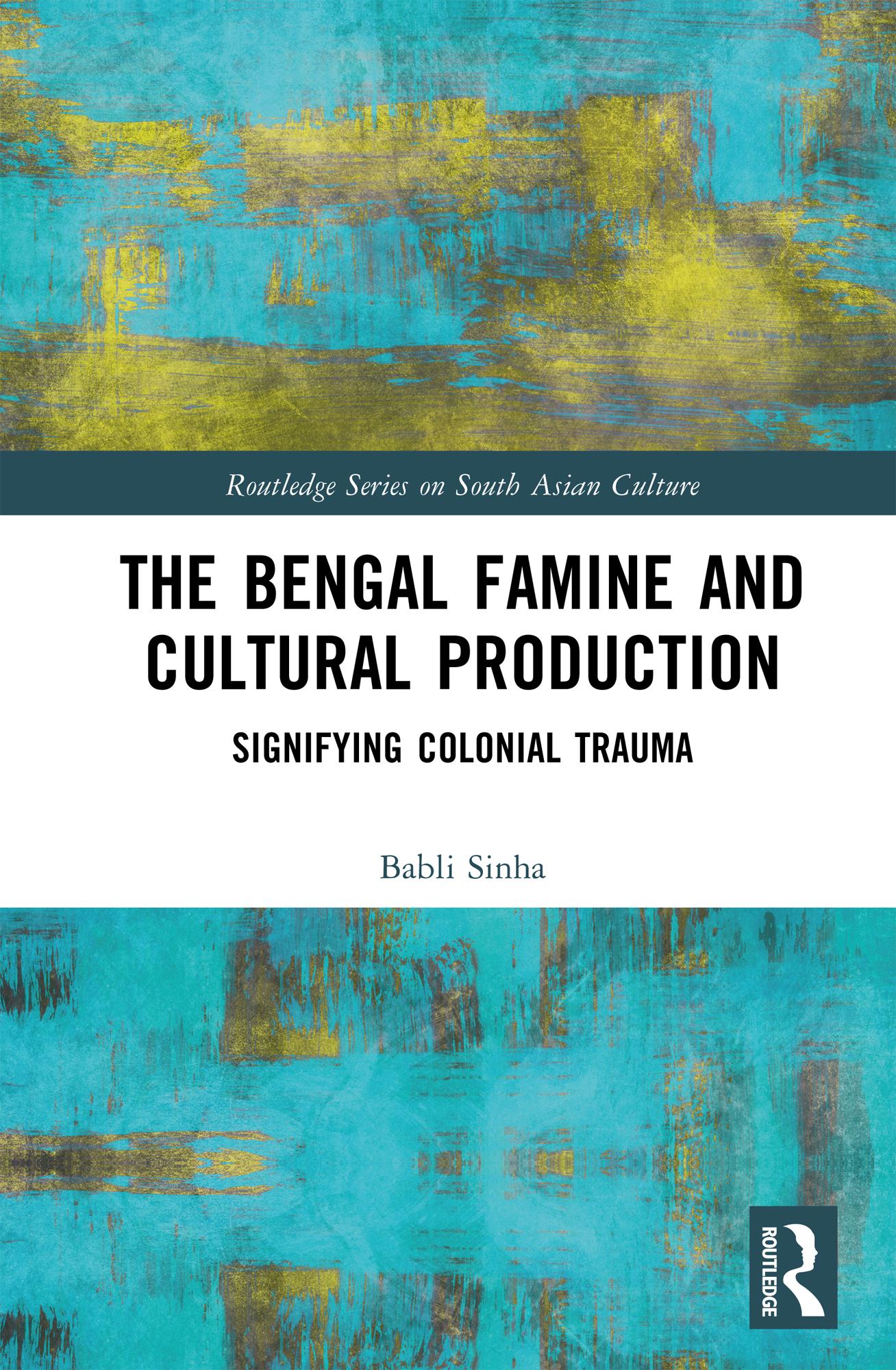
The Bengal Famine and Cultural Production: Signifying Colonial Trauma analyses the various modes of representation used by Anglophone authors and artists in response to the Bengal Famine of 1943.
Official imperial narratives blamed the famine on natural disaster, war, exploitation by merchants, and incompetent local officials rather than members of the imperial government and have remained dominant in the global public imaginary until recent years. The authors and artists referenced in this study appealed to elite Bengali, South Asian, and international audiences to resist imperial narratives that minimized or erased suffering and instead encouraged relief efforts, promoted nationalist movements, maintained collective memory, innovated ethical forms of representation, and prompted systemic change. They were part of an established tradition of English in the subcontinent as the language of empire and cosmopolitanism but are not accessible, widely taught, or well-known. The direct encounter with suffering was and remains insufficient for prompting systemic change or even engagement, and yet, the recognition of trauma is crucial for personal and collective well-being. The cultural production of famine writers and artists sought to integrate the suffering and agency of the destitute into narratives of Bengali and South Asian identity and of the Second World War.
It is crucial to the Humanities to recognize this body of work as a cultural counter-discourse to the biopower of empire and to engage these texts as relevant to theories of trauma. The book will be of interest to researchers in the field of South Asian history, the history of the Bengal famine, South Asian Anglophone literature, twentieth century art history, and trauma theory.
Zahle einfach mit Karte, Klarna, Apple Pay oder Google Pay. Nicht zufrieden? Du hast immer ein 14-tägiges Widerrufsrecht. Lies mehr in unseren AGB. Hast du Fragen, schreib uns eine E-Mail an hello@memmo.org.
Memmo macht das Lernen einfacher – wo auch immer du bist. Bei uns findest du deine Kursbücher und smarte Lerntools an einem Ort: Zusammenfassungen, Quizzes, Podcasts und Lernkarten. Und Ted, dein Lernbuddy, beantwortet alles, was du wissen möchtest. Über 50.000 Studierende lernen bereits hier – gemacht, damit du schneller lernst und weniger Stress hast.