
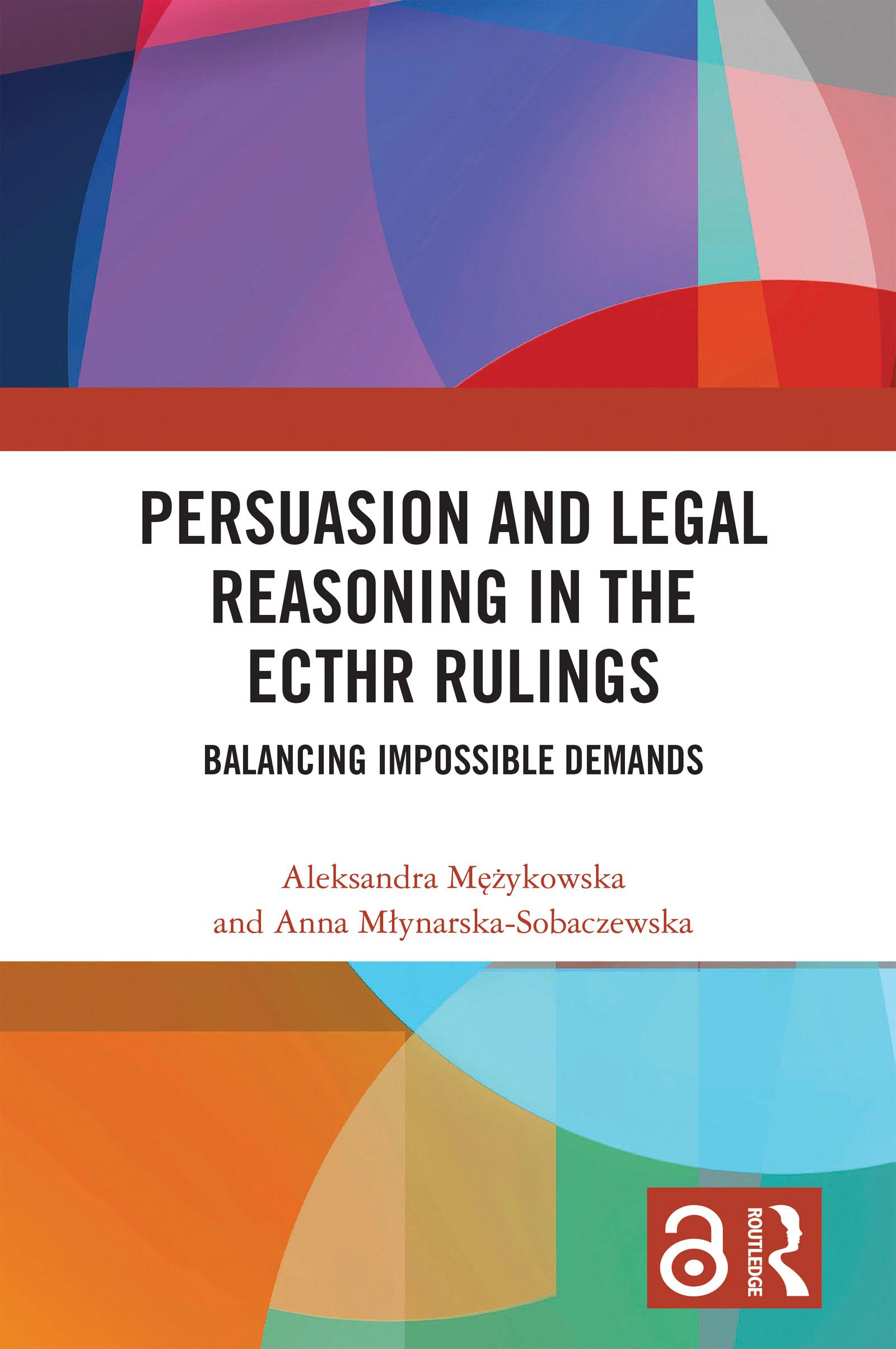
This book analyses the case law of the European Court of Human Rights (ECtHR) from the point of view of argumentative tools used by the Court to persuade the audience – States, applicants and public opinion – of the correctness of its rulings. The ECtHR judgments selected by the authors concern justification of some of the most difficult issues. These are matters related to human life, human dignity and the right to self-determination in matters concerning one’s private life. The authors looked for paths and repetitive patterns of argumentation and divided them into three categories of argumentative tools: authority, deontological and teleological. The work tracks how ECtHR judges aim to find a consensual, universal and, at the same time, pragmatic and axiologically neutral narrative on the collisions of rights and interests in the areas under discussion. It analyses whether the voice of the ECtHR carries the overtones of an ethical statement and, if so, to which arguments it appeals. The book will be of interest to academics and researchers working in the areas of jurisprudence, human rights law, and law and language.
Zahle einfach mit Karte, Klarna, Apple Pay oder Google Pay. Nicht zufrieden? Du hast immer ein 14-tägiges Widerrufsrecht. Lies mehr in unseren AGB. Hast du Fragen, schreib uns eine E-Mail an hello@memmo.org.
Memmo macht das Lernen einfacher – wo auch immer du bist. Bei uns findest du deine Kursbücher und smarte Lerntools an einem Ort: Zusammenfassungen, Quizzes, Podcasts und Lernkarten. Und Ted, dein Lernbuddy, beantwortet alles, was du wissen möchtest. Über 50.000 Studierende lernen bereits hier – gemacht, damit du schneller lernst und weniger Stress hast.