
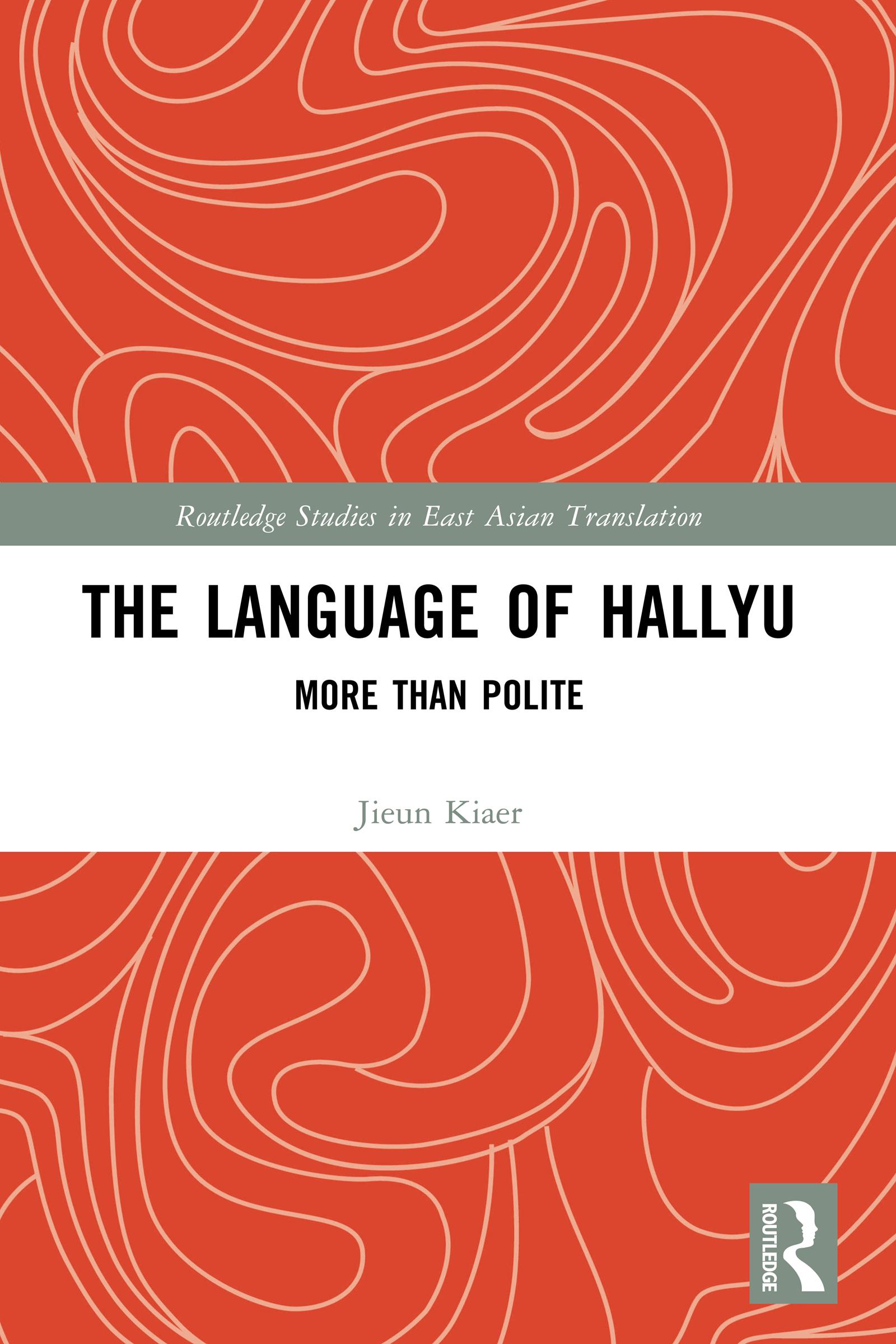
The Language of Hallyu will re-examine the language of the Korean Wave by looking at popular K-content. In doing so, it will expose the meanings that get lost in translation, hidden under subtitles.
Over the past decade, hallyu (the Korean wave) has exploded in popularity around the globe. K-films, K-drama, and K-pop were once small subcultures, known mostly by Korea’s East and Southeast Asian neighbours and Korean diaspora. Now, K-content has entered the international mainstream. Consequently, interest in Korean language has grown, while interest in language learning in general has decreased. Many textbooks emphasise that Korean is a ‘polite’ language, but this book will highlight that this is not the case.
The Language of Hallyu examines popular K-content, including Parasite (2019), Minari (2020), Squid Game (2021), and Pachinko (2022). The author introduces language stylistics to explain how Koreans style their language to suit every occasion. She argues that they do this via a process of visual scanning and social tuning, whereby visual clues are assessed in tangent with an individual’s sociocultural awareness. The author concludes by highlighting the danger of the jondaemal/banmal (polite/casual speech) divide, demonstrating that Korean language is so much more than polite.
This book will be of interest to students and researchers in Korean language and culture, particularly those interested in linguistics and pragmatics.
Zahle einfach mit Karte, Klarna, Apple Pay oder Google Pay. Nicht zufrieden? Du hast immer ein 14-tägiges Widerrufsrecht. Lies mehr in unseren AGB. Hast du Fragen, schreib uns eine E-Mail an hello@memmo.org.
Memmo macht das Lernen einfacher – wo auch immer du bist. Bei uns findest du deine Kursbücher und smarte Lerntools an einem Ort: Zusammenfassungen, Quizzes, Podcasts und Lernkarten. Und Ted, dein Lernbuddy, beantwortet alles, was du wissen möchtest. Über 50.000 Studierende lernen bereits hier – gemacht, damit du schneller lernst und weniger Stress hast.