
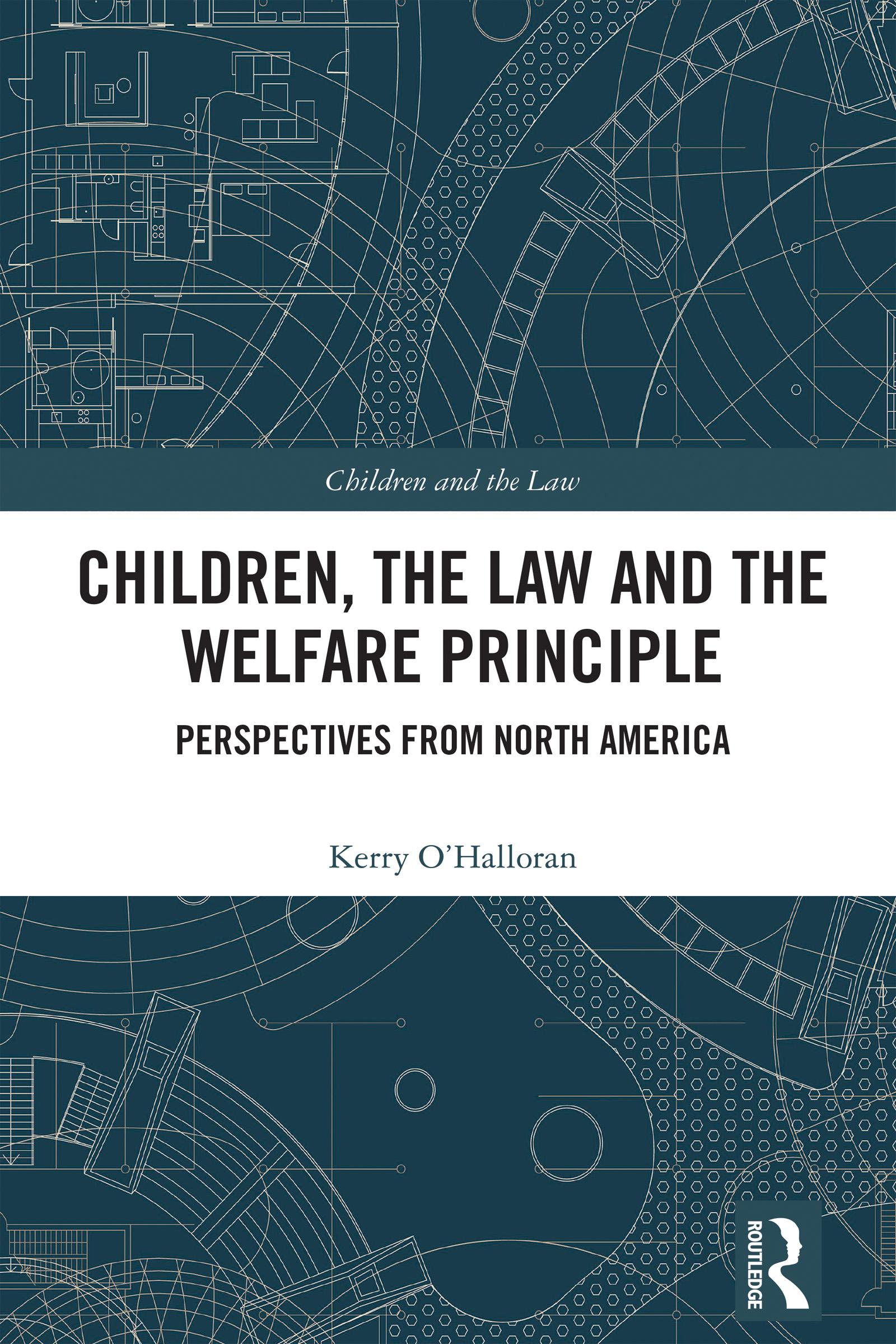
This book continues the themes addressed by its two predecessors in this mini-series by examining the role of the principle of the welfare interests of the child in the law of the U.S. and Canada. It provides a record of the key milestones in its development in each country and conducts a comparative analysis of the contemporary law relating to children in both. In doing so, it focuses also on the Indigenous communities – the AN/AI and the First Nations – of the U.S. and Canada respectively.
By identifying and analysing the functions of the principle in the public (care, protection and control, etc), private (matrimonial, adoption, etc) and hybrid (adoption from care, surrogacy, etc) sectors of family law, it builds a picture of the law relating to children in the two countries and reveals significant jurisdictional differences. By examining the legislation and related caselaw, it assesses the different effects of the same legal framework on the welfare of Indigenous and other children.
In addition to a digest of cases and legislation that identifies and tracks the role of this legal principle, lawyers, academics and other researchers will find a wealth of information on how it has evolved to reflect corresponding changes in social mores. For those interested in politics and social policy, there is much illuminating evidence of how the law has balanced this principle relative to others in both civil and criminal contexts.
Zahle einfach mit Karte, Klarna, Apple Pay oder Google Pay. Nicht zufrieden? Du hast immer ein 14-tägiges Widerrufsrecht. Lies mehr in unseren AGB. Hast du Fragen, schreib uns eine E-Mail an hello@memmo.org.
Memmo macht das Lernen einfacher – wo auch immer du bist. Bei uns findest du deine Kursbücher und smarte Lerntools an einem Ort: Zusammenfassungen, Quizzes, Podcasts und Lernkarten. Und Ted, dein Lernbuddy, beantwortet alles, was du wissen möchtest. Über 50.000 Studierende lernen bereits hier – gemacht, damit du schneller lernst und weniger Stress hast.