
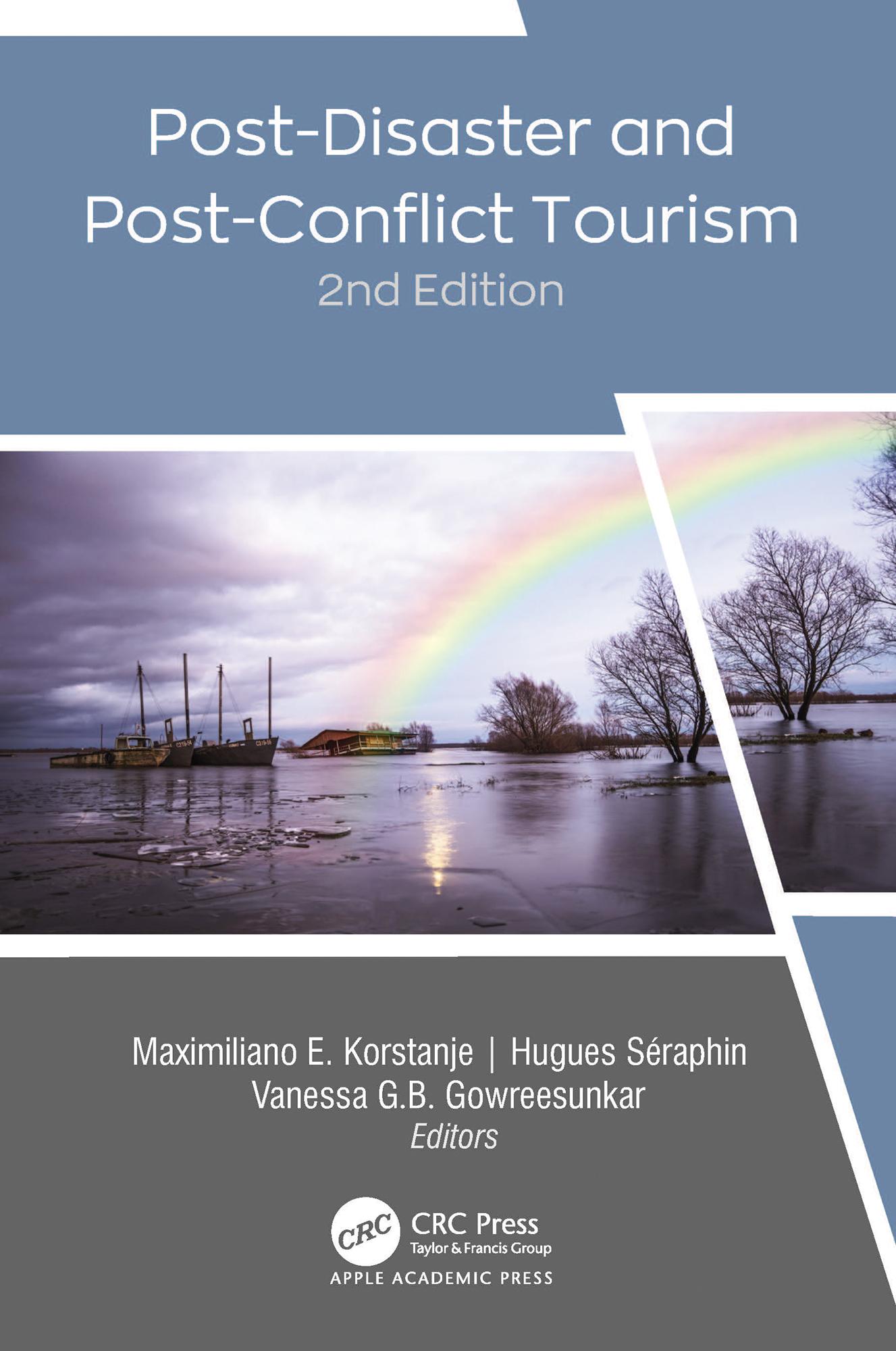
This new volume, Post-Disaster and Post-Conflict Tourism, now going into its 2nd edition, takes an in-depth look at how global geopolitical tensions and global threats affect the tourism industry and offers tools and strategies for meeting these challenges.
The book is updated with chapters that include new research, studies, and experiences, many of which consider the fall-out from the COVID-19 pandemic on tourism. It also includes five brand new chapters, for over 50 new pages of text.
With chapters by well-versed scholars who have worked as experts in post-disaster and post-conflict tourism, the book presents a host of case scenarios along with innovative strategies that can be implemented by postcolonial, post-conflict, and post-disaster destinations to encourage travel and tourism in these areas. Topics include using tourism as a vehicle for economic recovery, educating tourists at the pre-visit stage, developing and employing postcolonial branding and self-branding, using sports tourism and food events as a marketing strategy, the ethics revolving around post-disaster consumption, and much more. The new chapters discuss tourism in the age of the coronavirus pandemic and its dramatic disruptive effect on the tourism industry. The authors delve into post-COVID tourism marketing, health and wellness education and practices, ethical considerations for tourism operators, and more. A chapter also considers the challenges of sustainable supply chain management in tour operations.
With contributions from experts in this emerging field, this volume is a rich resource for travel and tourism professionals, policymakers, researchers, and others. It creates a bridge between the conceptual discussions around "dark consumption" (tourism directed to places that are identified with death and suffering) and the urgency to develop empirical models that support destination marketing organizations in a rapidly changing world.
Zahle einfach mit Karte, Klarna, Apple Pay oder Google Pay. Nicht zufrieden? Du hast immer ein 14-tägiges Widerrufsrecht. Lies mehr in unseren AGB. Hast du Fragen, schreib uns eine E-Mail an hello@memmo.org.
Memmo macht das Lernen einfacher – wo auch immer du bist. Bei uns findest du deine Kursbücher und smarte Lerntools an einem Ort: Zusammenfassungen, Quizzes, Podcasts und Lernkarten. Und Ted, dein Lernbuddy, beantwortet alles, was du wissen möchtest. Über 50.000 Studierende lernen bereits hier – gemacht, damit du schneller lernst und weniger Stress hast.