
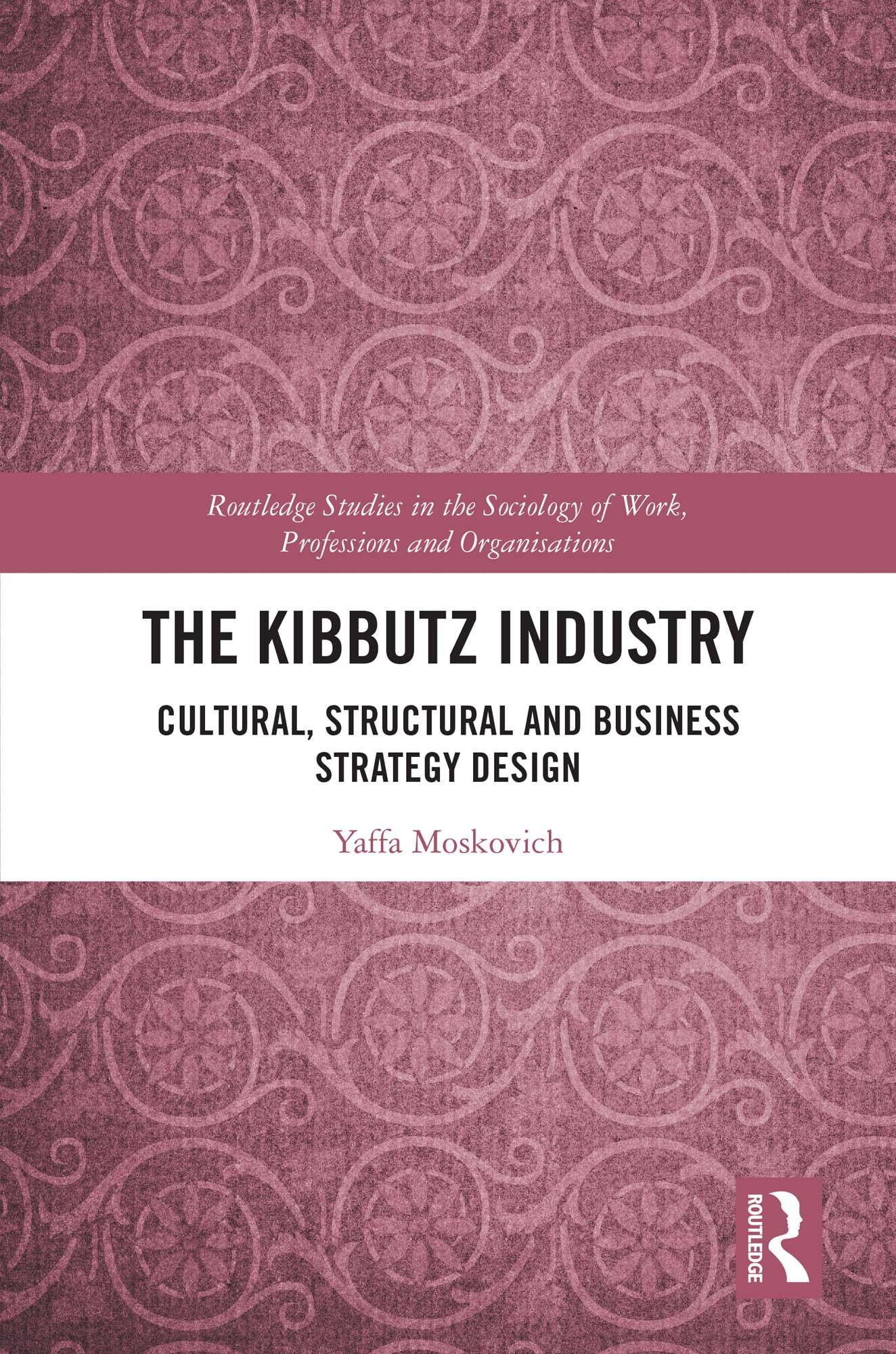
This book examines the changes in many kibbutz factories which have recently transformed from socialist entities, with egalitarian and cooperative relationships, to hierarchical and market-driven structures.
Focusing on five case studies from an ethnographic perspective, the book explores the reasons for this organizational change and examines its ideological, social, and economic causes. Ranging from organizational culture as a tool for economic success to the cooperative clan lifestyle and its organizational experience for improving human life and economic production, the author uncovers and investigates various hidden layers of the organizational culture in the kibbutz, revealing that cultural change in the factories was intended as a way of coping with a changing competitive environment. Adding new typologies for familial business types, demonstrating how hybrid organizational structures have promoted economic success, and examining the lesser-studied communal perspective, it shows how social development can be used to provide a deeper analysis of the kibbutz industry as a microcosm of the changes in communal lifestyle that have recently shifted toward materialism and capitalism. As such, The Kibbutz Industry will appeal to scholars and students with interests in the sociology of organization, business studies, human resource management, and organizational behavior.
Zahle einfach mit Karte, Klarna, Apple Pay oder Google Pay. Nicht zufrieden? Du hast immer ein 14-tägiges Widerrufsrecht. Lies mehr in unseren AGB. Hast du Fragen, schreib uns eine E-Mail an hello@memmo.org.
Memmo macht das Lernen einfacher – wo auch immer du bist. Bei uns findest du deine Kursbücher und smarte Lerntools an einem Ort: Zusammenfassungen, Quizzes, Podcasts und Lernkarten. Und Ted, dein Lernbuddy, beantwortet alles, was du wissen möchtest. Über 50.000 Studierende lernen bereits hier – gemacht, damit du schneller lernst und weniger Stress hast.