
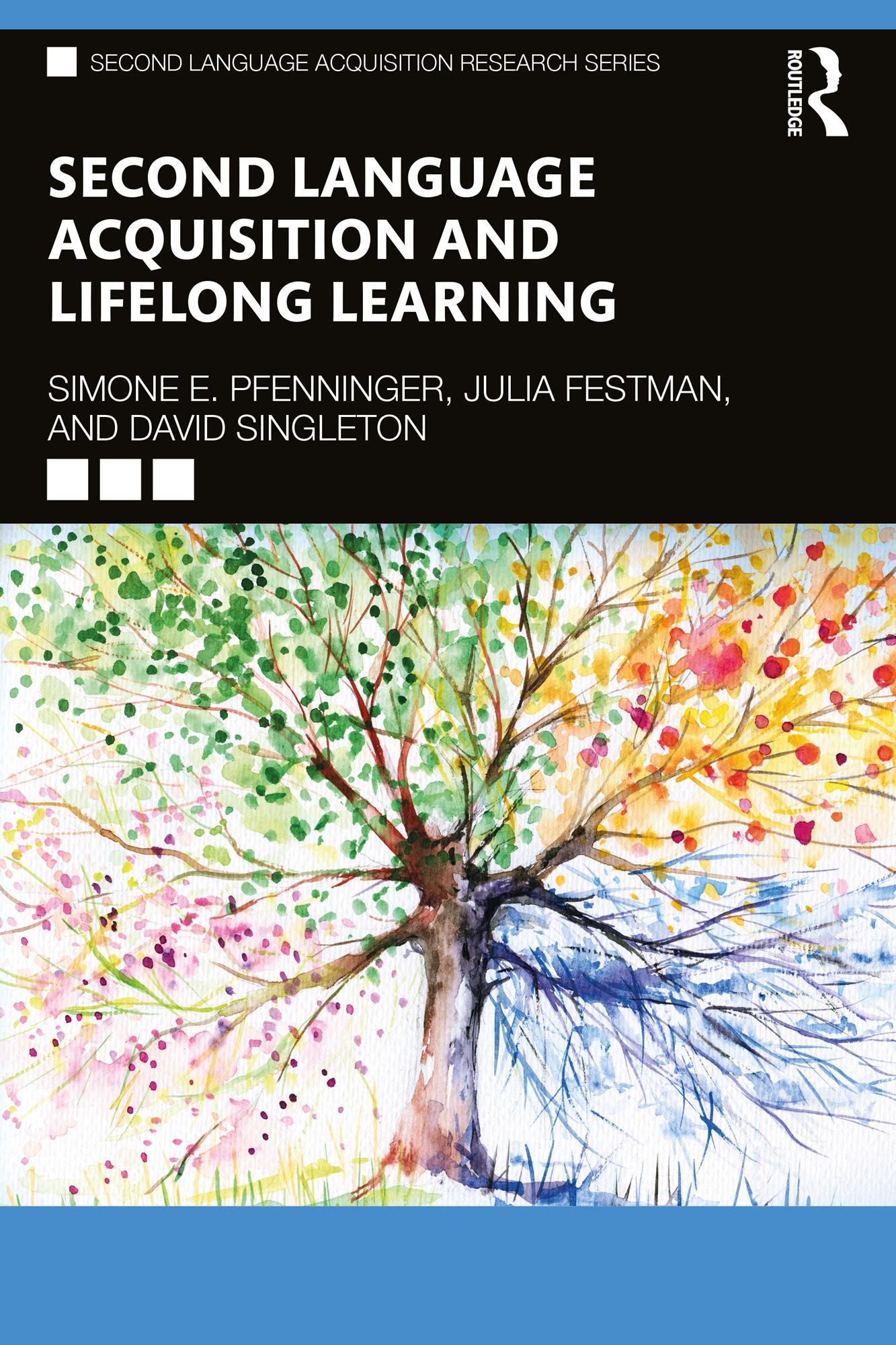
Language fundamentally defines and distinguishes us as humans, as members of society, and as individuals. As we go through life, our relationship with language and with learning shifts and changes, but it remains significant. This book is an up-to-date resource for graduate students and researchers in second language (L2) acquisition who are interested in language learning across the lifespan. The main goal is to survey and evaluate what is known about the linguistic-cognition-affect associations that occur in L2 learning from birth through senescence (passing through the stages of childhood, adolescence, adulthood, and third age), the extent to which L2 acquisition may be seen as contributing to healthy and active aging, the impact of the development of personalized, technology-enhanced communicative L2 environments, and how these phenomena are to be approached scientifically and methodologically. The effects of certain specific variables, such as gender, socio-economic background, and bilingualism are also analyzed, as we argue that chronological age does not determine the positioning of L2 learners across the lifespan: age is part of a complex web of social distinctions such as psychological and individual factors that intersect in the construction of a learner’s relative status and opportunities.
Zahle einfach mit Karte, Klarna, Apple Pay oder Google Pay. Nicht zufrieden? Du hast immer ein 14-tägiges Widerrufsrecht. Lies mehr in unseren AGB. Hast du Fragen, schreib uns eine E-Mail an hello@memmo.org.
Memmo macht das Lernen einfacher – wo auch immer du bist. Bei uns findest du deine Kursbücher und smarte Lerntools an einem Ort: Zusammenfassungen, Quizzes, Podcasts und Lernkarten. Und Ted, dein Lernbuddy, beantwortet alles, was du wissen möchtest. Über 50.000 Studierende lernen bereits hier – gemacht, damit du schneller lernst und weniger Stress hast.