
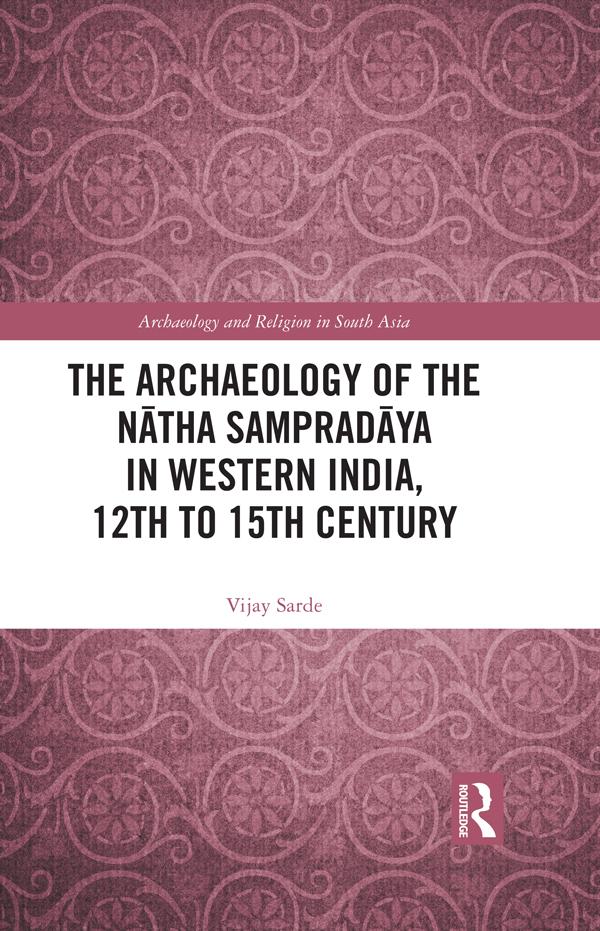
This book studies Nātha sampradāya through archaeological evidence for the first time. Drawing on a pioneering approach to the study of ascetic traditions, it investigates not only the nature of the Nātha sampradāya’s religious architecture but also examines the extent to which they shared space with other religious groups such as the devotees of Siva and Sakti, Buddhism, and Islam, especially with the Sufi tradition.
Focusing on western India, the book sifts through a variety of archaeological evidence and documentation of their temples, caves, and maṭhas. It critically analyses iconographic representations of ascetics on temple walls and sculptural representations of yogic postures or āsanas. Further, these representations are discussed within a pan-South Asian framework to highlight both the commonalities of the tradition across the subcontinent and the regional specificities, along with their chronological spread.
Breaking new ground, this volume will be of great interest to scholars and researchers of religion, especially Hinduism, history, archaeology, and South Asian studies.
Zahle einfach mit Karte, Klarna, Apple Pay oder Google Pay. Nicht zufrieden? Du hast immer ein 14-tägiges Widerrufsrecht. Lies mehr in unseren AGB. Hast du Fragen, schreib uns eine E-Mail an hello@memmo.org.
Memmo macht das Lernen einfacher – wo auch immer du bist. Bei uns findest du deine Kursbücher und smarte Lerntools an einem Ort: Zusammenfassungen, Quizzes, Podcasts und Lernkarten. Und Ted, dein Lernbuddy, beantwortet alles, was du wissen möchtest. Über 50.000 Studierende lernen bereits hier – gemacht, damit du schneller lernst und weniger Stress hast.