
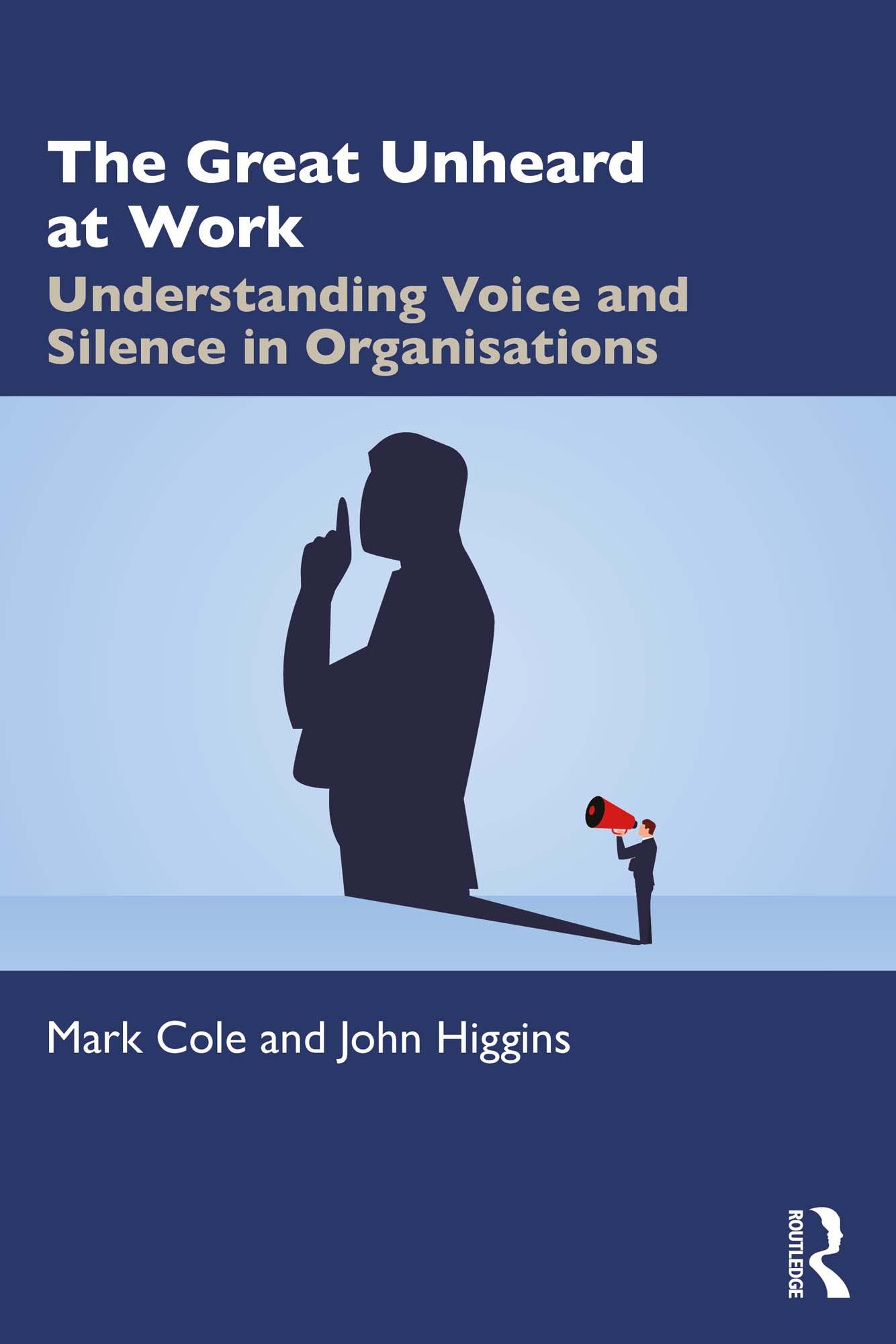
Silence always has something to say – it’s never neutral and speaks volumes if people are willing to hear. Our response to silence is often to dismiss or end it, to block it out with noise. Instead, silence needs to be taken seriously. This book explores the importance of understanding silence and shows how we can move from merely listening to truly hearing those around us.
The interplay of voice and silence in organisational life is not straightforward. We can feel pressured to speak and compelled to keep our silence. Knowing how to read silence, to make sense of its generative and degenerative capacity, is a rarely developed skill among managers and leaders at all levels – who have been brought up to see silence as evidence of compliance or a weakness to be addressed. But it is a critical skill for managers and employees alike. Written by two experts in organisational development, this book explores different types of silence and their implications for organisational practice, digging into the theoretical roots and engaging with real stories and voices. It provides everyone at work with an understanding of the different meanings of silence and how to engage well with it. When to stay with it, when to join in with it, and when to be struck by what’s not being said and do something about it.
The Great Unheard at Work is essential reading for corporate leaders, HR professionals in all sectors, business students, professionals, and anyone interested in leadership development.
Zahle einfach mit Karte, Klarna, Apple Pay oder Google Pay. Nicht zufrieden? Du hast immer ein 14-tägiges Widerrufsrecht. Lies mehr in unseren AGB. Hast du Fragen, schreib uns eine E-Mail an hello@memmo.org.
Memmo macht das Lernen einfacher – wo auch immer du bist. Bei uns findest du deine Kursbücher und smarte Lerntools an einem Ort: Zusammenfassungen, Quizzes, Podcasts und Lernkarten. Und Ted, dein Lernbuddy, beantwortet alles, was du wissen möchtest. Über 50.000 Studierende lernen bereits hier – gemacht, damit du schneller lernst und weniger Stress hast.