
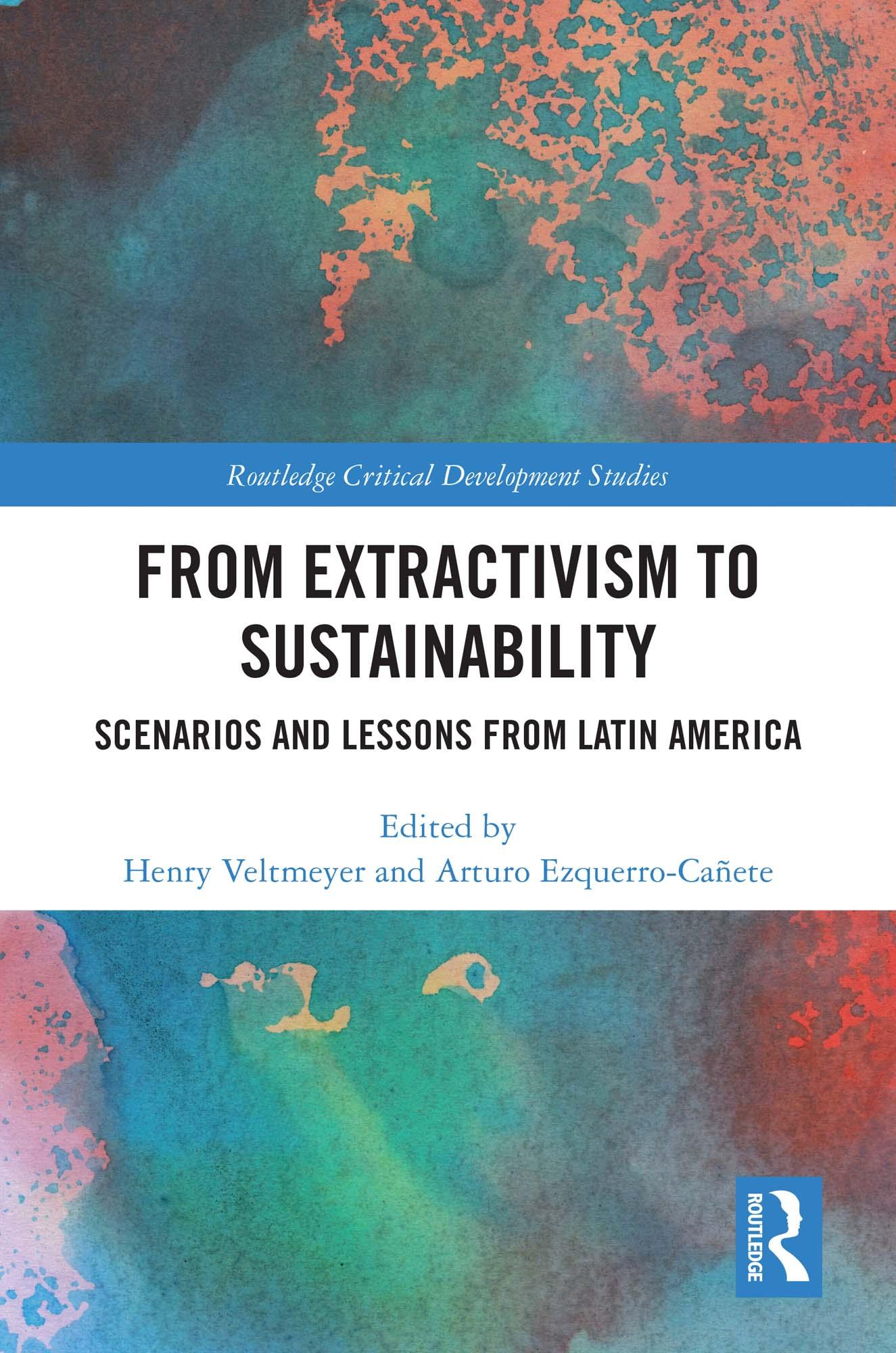
This book investigates how extractive capitalism has developed over the past three decades, what dynamics of resistance have been deployed to combat it, and whether extractivism can ever be transformed into being a part of a progressive development path.
It was not until the 20th century that the extraction of natural resources and raw materials took on a decidedly capitalist form, with the global north extracting primary commodities from the global south as a means of capital accumulation. This book investigates whether extractivism, despite its well-documented negative and destructive socioenvironmental impacts and the powerful forces of resistance that it has generated, could ever be transformed into a sustainable post-development strategy. Drawing on diverse sectoral forms of extractivism (mining, fossil fuels, agriculture), this book analyses the dynamics of both the forces of resistance generated by the advance of extractive capital and alternate scenarios for a more sustainable and liveable future. The book draws particularly on the Latin American experience, where both the propensity of capitalism towards crisis and the development of resistance dynamics to ‘extractive’ capital have had their greatest impact in the neoliberal era.
This book will be of interest to researchers and students across development studies, economics, political economy, environmental studies, Indigenous studies, and Latin American affairs.
Zahle einfach mit Karte, Klarna, Apple Pay oder Google Pay. Nicht zufrieden? Du hast immer ein 14-tägiges Widerrufsrecht. Lies mehr in unseren AGB. Hast du Fragen, schreib uns eine E-Mail an hello@memmo.org.
Memmo macht das Lernen einfacher – wo auch immer du bist. Bei uns findest du deine Kursbücher und smarte Lerntools an einem Ort: Zusammenfassungen, Quizzes, Podcasts und Lernkarten. Und Ted, dein Lernbuddy, beantwortet alles, was du wissen möchtest. Über 50.000 Studierende lernen bereits hier – gemacht, damit du schneller lernst und weniger Stress hast.