
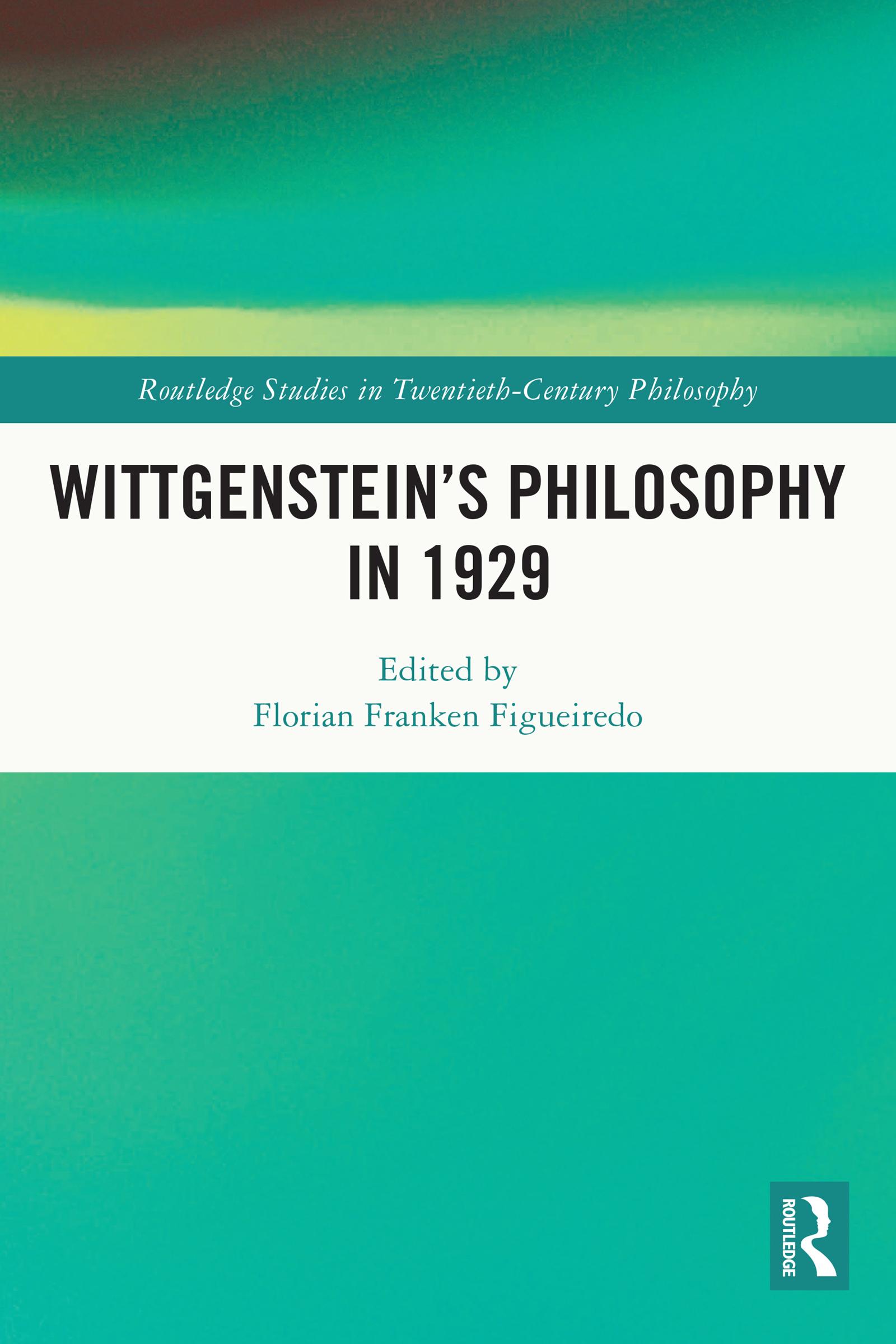
The book explores the impact of manuscript remarks during the year 1929 on the development of Wittgenstein’s thought. Although its intention is to put the focus specifically on the manuscripts, the book is not purely exegetical. The contributors generate important new insights for understanding Wittgenstein’s philosophy and his place in the history of analytic philosophy.
Wittgenstein’s writings from the years 1929-1930 are valuable, not simply because they marked Wittgenstein’s return to academic philosophy after a seven-year absence, but because these works indicate several changes in his philosophical thinking. The chapters in this volume clarify the significance of Wittgenstein’s return to philosophy in 1929. In Part 1, the contributors address different issues in the philosophy of mathematics, e.g. Wittgenstein's understanding of certain aspects of intuitionism and his commitment to verificationism, as well as his idea of "a new system". Part 2 examines Wittgenstein's philosophical development and his understanding of philosophical method. Here the contributors examine particular problems Wittgenstein dealt with in 1929, e.g. the colour-exclusion problem, and the use of thought experiments as well as his relationship to Frank Ramsey and philosophical pragmatism. Part 3 features essays on phenomenological language. These chapters address the role of spatial analogies and the structure of visual space. Finally, Part 4 includes one chapter on Wittgenstein’s few manuscript remarks about ethics and religion and relates it to his Lecture on Ethics.
Wittgenstein’s Philosophy in 1929 will be of great interest to scholars and advanced students working on Wittgenstein and the history of analytic philosophy.
Zahle einfach mit Karte, Klarna, Apple Pay oder Google Pay. Nicht zufrieden? Du hast immer ein 14-tägiges Widerrufsrecht. Lies mehr in unseren AGB. Hast du Fragen, schreib uns eine E-Mail an hello@memmo.org.
Memmo macht das Lernen einfacher – wo auch immer du bist. Bei uns findest du deine Kursbücher und smarte Lerntools an einem Ort: Zusammenfassungen, Quizzes, Podcasts und Lernkarten. Und Ted, dein Lernbuddy, beantwortet alles, was du wissen möchtest. Über 50.000 Studierende lernen bereits hier – gemacht, damit du schneller lernst und weniger Stress hast.