
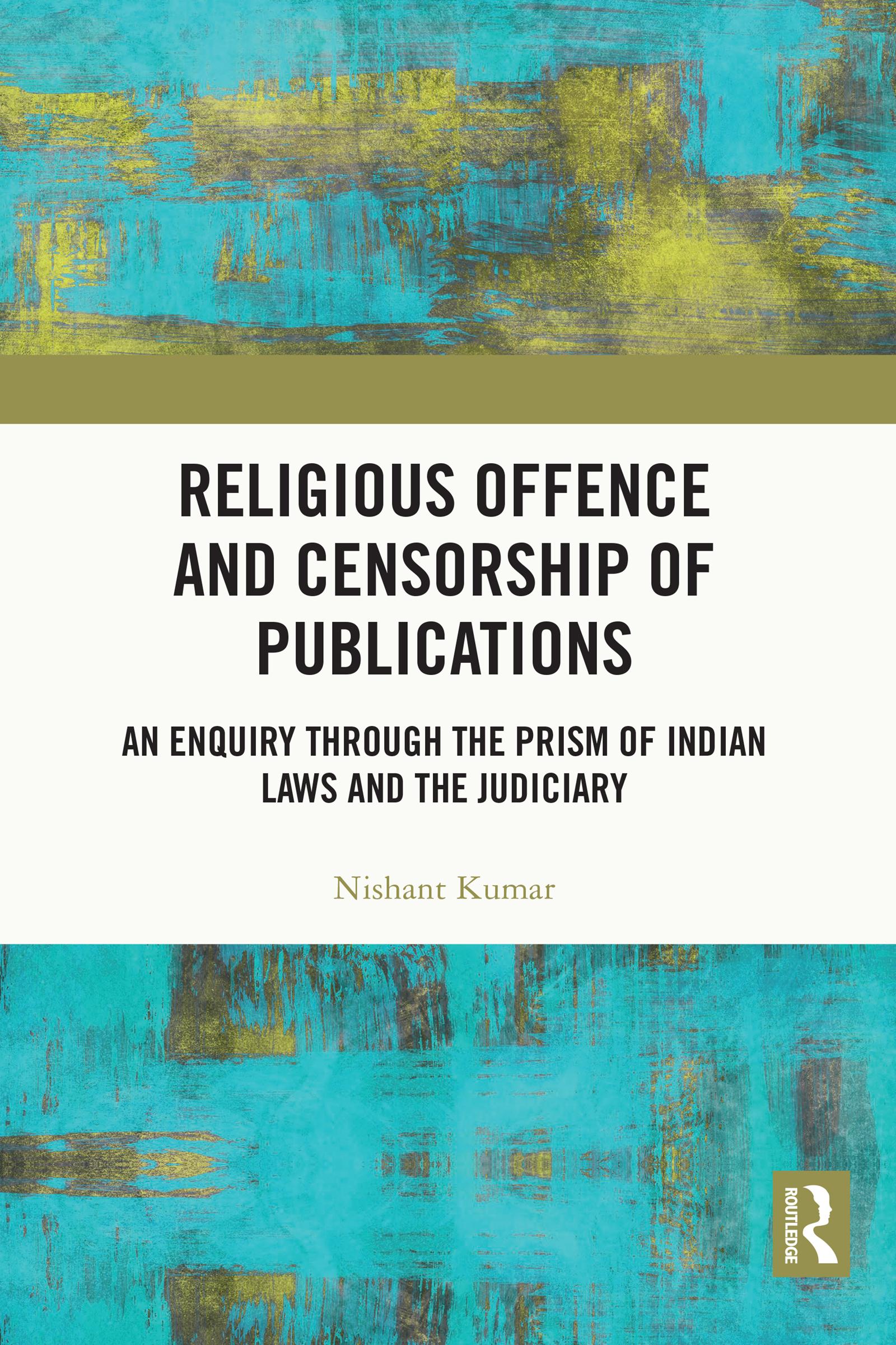
This book analyzes the role of laws and the judiciary in the process of censorship in India. It examines the rationales and observations produced by the judiciary when demands for censorship are directed against publications that allegedly offend religious sentiments. Focusing on a micro-level analysis of censorship of publications, it presents a hard case to understand the limitations of freedom of expression and the role played by the judiciary in defining its boundaries. The volume traces the evolution of laws governing freedom of expression since the colonial period and the context in which these laws were amended after Independence. It also explicates how the legal process – the structural and functional aspects of working of judiciary – affects the fate of freedom of expression in India. Employing comparative legal analysis, it tries to understand and situate the Indian case within the larger discourse of censorship and freedom of expression around the world, thereby marking its similarities and differences. In unravelling the politics of censorship, the author also examines the interaction among different stakeholders like government, non-state actors and the judiciary.
A tract for our times, this book will be of great interest to scholars and researchers of law, especially constitutional law and fundamental rights, politics, especially political theory and Indian politics, modern India and South Asian studies.
Zahle einfach mit Karte, Klarna, Apple Pay oder Google Pay. Nicht zufrieden? Du hast immer ein 14-tägiges Widerrufsrecht. Lies mehr in unseren AGB. Hast du Fragen, schreib uns eine E-Mail an hello@memmo.org.
Memmo macht das Lernen einfacher – wo auch immer du bist. Bei uns findest du deine Kursbücher und smarte Lerntools an einem Ort: Zusammenfassungen, Quizzes, Podcasts und Lernkarten. Und Ted, dein Lernbuddy, beantwortet alles, was du wissen möchtest. Über 50.000 Studierende lernen bereits hier – gemacht, damit du schneller lernst und weniger Stress hast.