
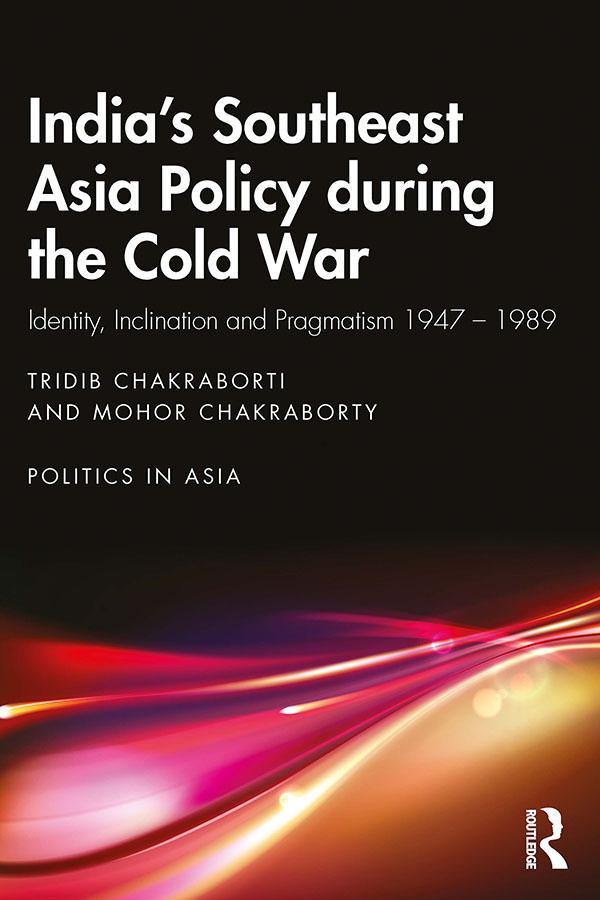
Over the course of four decades of the Cold War, Chakraborti and Chakraborty analyse India’s path from nonalignment towards realism and self-assertion, and finally to confidence-building and interdependence with respect to their neighbours in Southeast Asia.
What were the reasons for India’s shift from non-alignment to a more pragmatic approach to foreign relations in its relationships with both the non-Communist states of ASEAN and the Communist States of Indochina? How was this shift perceived by those countries? To what degree were Pakistan’s foreign and defence policies responsible for India’s changes in alignment throughout the Cold War? What lessons can we draw from these events, as the Indo-Pacific is again becoming a major arena of great power rivalry? In order to address these questions, Chakraborti and Chakraborty study the development of India’s foreign and security policies throughout the period, tracking the changes of stances between and within administrations. They evaluate how these decisions were driven by a combination of ideology, pragmatism and changes in priorities as the regional architecture developed over time.
A valuable read for scholars and students of India’s foreign relations and of Indo-Pacific geopolitics more broadly.
Zahle einfach mit Karte, Klarna, Apple Pay oder Google Pay. Nicht zufrieden? Du hast immer ein 14-tägiges Widerrufsrecht. Lies mehr in unseren AGB. Hast du Fragen, schreib uns eine E-Mail an hello@memmo.org.
Memmo macht das Lernen einfacher – wo auch immer du bist. Bei uns findest du deine Kursbücher und smarte Lerntools an einem Ort: Zusammenfassungen, Quizzes, Podcasts und Lernkarten. Und Ted, dein Lernbuddy, beantwortet alles, was du wissen möchtest. Über 50.000 Studierende lernen bereits hier – gemacht, damit du schneller lernst und weniger Stress hast.