
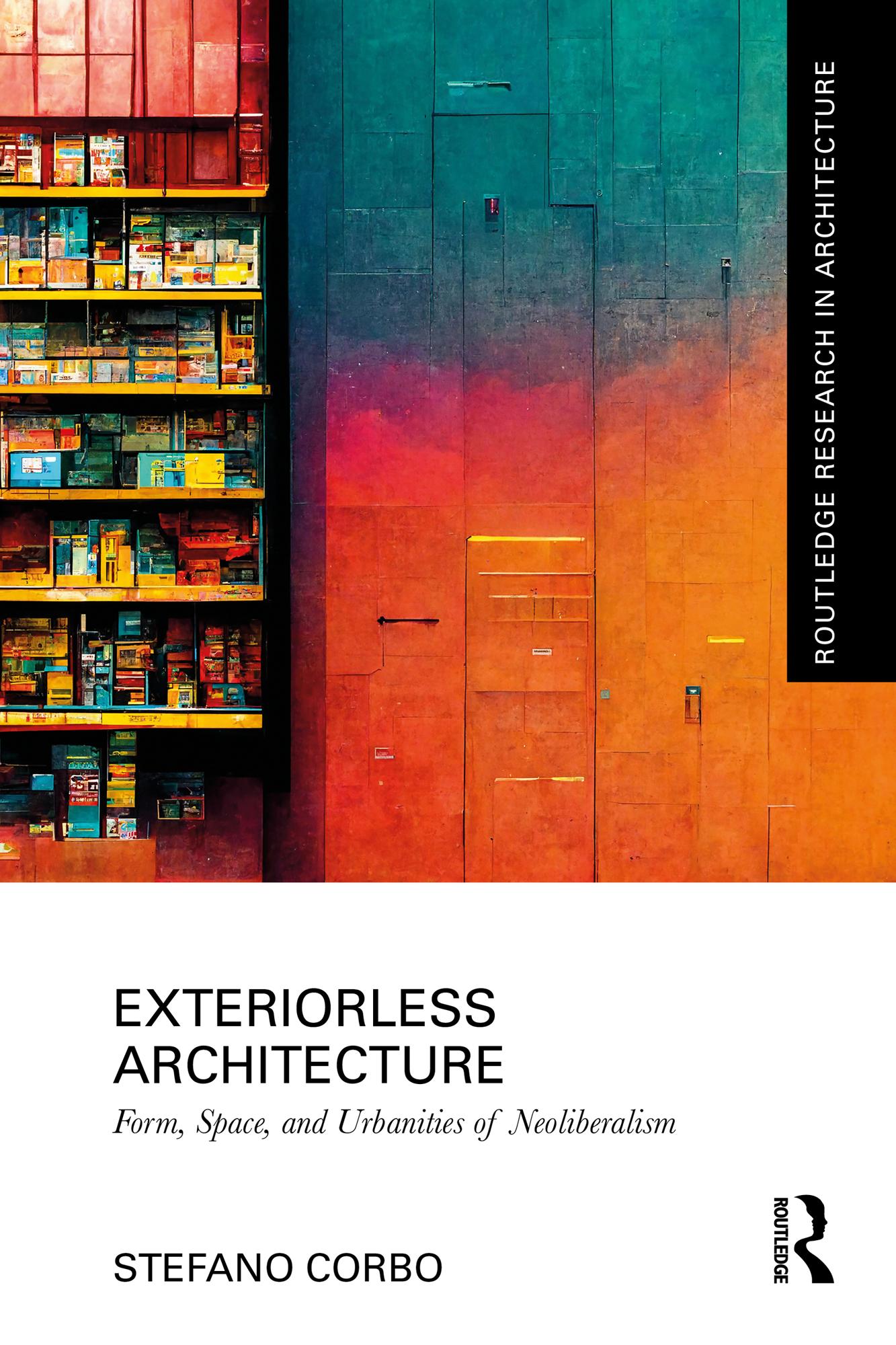
The current phase of capitalist development manifests itself through a very diverse range of spatial byproducts: data centers, warehouses, container terminals, logistics parks, and many others. Generally considered as mediocre and banal examples that sit outside of pre-established disciplinary canons, these architectural episodes are extremely relevant. They are relevant not for their aesthetic or historic qualities but for what they represent – for the system of values these spaces embed. They express specific power relations, exacerbate issues of labor, and generate dramatic processes of subjectivity. Most importantly, these architectures, despite their formal and typological heterogeneity, belong to a common paradigm: the EXTERIORLESS.
How can an architecture of the EXTERIORLESS be defined? How does it differentiate from examples and manifestations of the past? How do notions of legibility, form versus function, typological articulation come into play?
In situating the spatialities of contemporary capitalism within the larger debate on Anthropocene, Post-Anthropocene, and Capitalocene, the book attempts to answer those questions by delineating three main characteristics for an architecture of the EXTERIORLESS: its physical and symbolic role as interface; its ambiguous condition of being at the same time local and global, isolated and connected, compressed and expanded; and, lastly, its contribution to new forms of urbanity in absence of the traditional city. These three defining aspects constitute the main sections of the book. Each section includes two chapters covering a wide spectrum of themes and examples. In its tripartite organization, the book describes the influence that the experimental architecture of the 1960s has exerted on late-capitalist spatial byproducts; it analyzes the impact of logistics on the redesign of the territory; and it introduces the radical processes of urban transformation generated by the EXTERIORLESS.
Zahle einfach mit Karte, Klarna, Apple Pay oder Google Pay. Nicht zufrieden? Du hast immer ein 14-tägiges Widerrufsrecht. Lies mehr in unseren AGB. Hast du Fragen, schreib uns eine E-Mail an hello@memmo.org.
Memmo macht das Lernen einfacher – wo auch immer du bist. Bei uns findest du deine Kursbücher und smarte Lerntools an einem Ort: Zusammenfassungen, Quizzes, Podcasts und Lernkarten. Und Ted, dein Lernbuddy, beantwortet alles, was du wissen möchtest. Über 50.000 Studierende lernen bereits hier – gemacht, damit du schneller lernst und weniger Stress hast.