
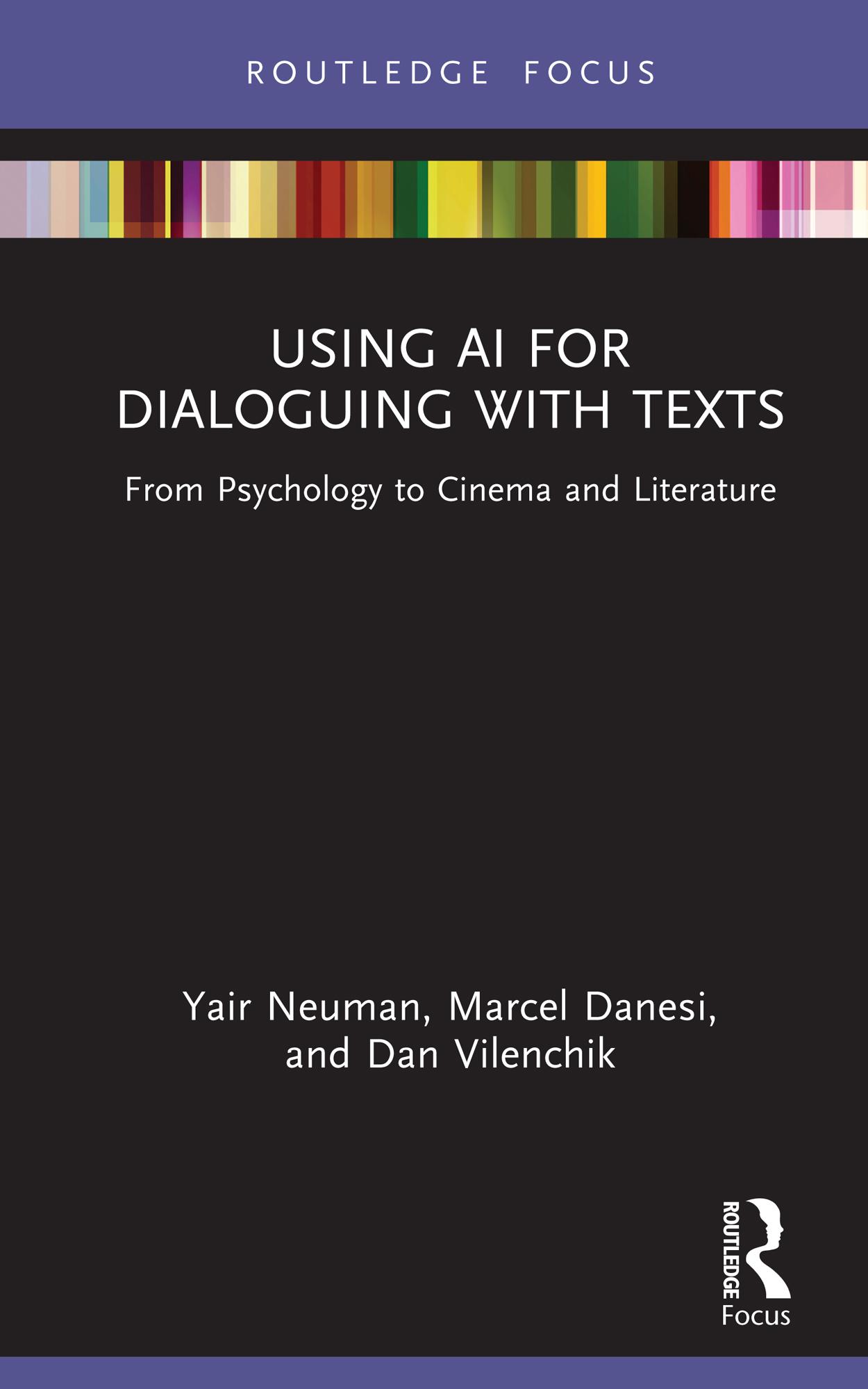
This concise volume offers an accessible introduction to state-of-the-art artificial intelligence (AI) language models, providing a platform for their use in textual interpretation across the humanities and social sciences.
The book outlines the affordances of new technologies for textual analysis, which has historically employed established approaches within the humanities. Neuman, Danesi, and Vilenchik argue that these different forms of analysis are indeed complementary, demonstrating the ways in which AI-based perspectives echo similar theoretical and methodological currents in traditional approaches while also offering new directions for research. The volume showcases examples from a wide range of texts, including novels, television shows, and films to illustrate the ways in which the latest AI technologies can be used for "dialoguing" with textual characters and examining textual meaning coherence.
Illuminating the potential of AI language models to both enhance and extend research on the interpretation of texts, this book will appeal to scholars interested in cognitive approaches to the humanities in such fields as literary studies, discourse analysis, media studies, film studies, psychology, and artificial intelligence.
Zahle einfach mit Karte, Klarna, Apple Pay oder Google Pay. Nicht zufrieden? Du hast immer ein 14-tägiges Widerrufsrecht. Lies mehr in unseren AGB. Hast du Fragen, schreib uns eine E-Mail an hello@memmo.org.
Memmo macht das Lernen einfacher – wo auch immer du bist. Bei uns findest du deine Kursbücher und smarte Lerntools an einem Ort: Zusammenfassungen, Quizzes, Podcasts und Lernkarten. Und Ted, dein Lernbuddy, beantwortet alles, was du wissen möchtest. Über 50.000 Studierende lernen bereits hier – gemacht, damit du schneller lernst und weniger Stress hast.