
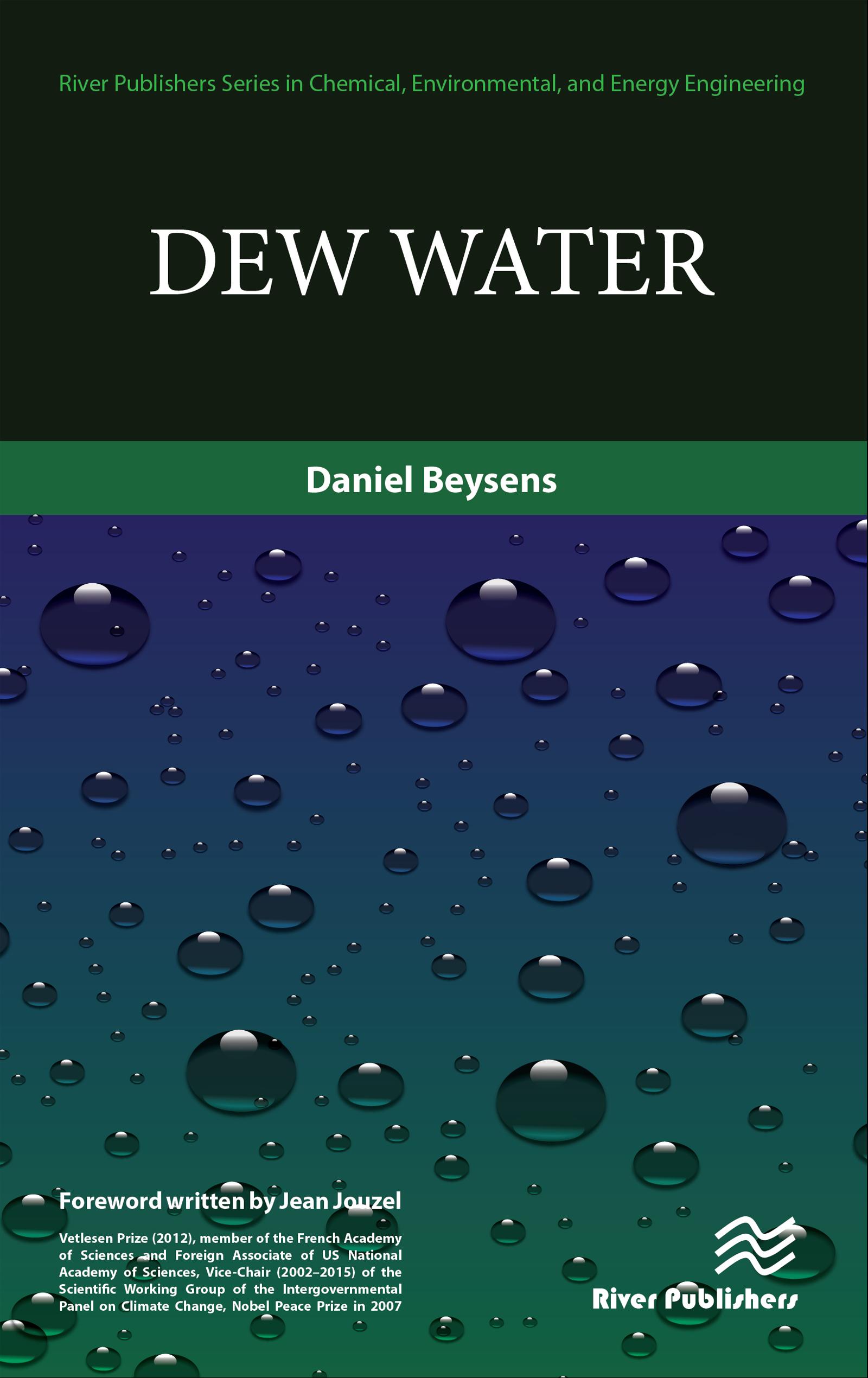
The world’s ever-increasing need for fresh water has led to the use of non-conventional sources such as rain and fog water collection. Although rain water collection is relatively simple, the supply is often erratic. Passive fog water collection has been used in several parts of the world but is only relevant to certain geographical locations. Dew occurrence, however, is far more widespread, can form in most climates and geographic settings, show high frequency and prevalence throughout the year. During the past 20 years, dew collection has therefore been investigated as a serious supplemental source of fresh water. Dew Water offers a thorough review of dew, its formation characteristics and potential for dew collection, for audiences that include policy-makers, non-governmental organizations involved in development aid and sustainable development, engineers, urban planners, researchers and students.After providing a background on atmospheric water, humid air, and sky and materials emissivity, the book deals with dew formation and its estimation with a focus on the use of meteorological data. Dew measurement techniques are reviewed and discussed as well as dew collection by passive means. Computational fluid dynamics technique is described for better design of dew collectors. Dew quality (chemistry, biology) is assessed in view of potable water quality. Costs and economic aspects are also considered.
Zahle einfach mit Karte, Klarna, Apple Pay oder Google Pay. Nicht zufrieden? Du hast immer ein 14-tägiges Widerrufsrecht. Lies mehr in unseren AGB. Hast du Fragen, schreib uns eine E-Mail an hello@memmo.org.
Memmo macht das Lernen einfacher – wo auch immer du bist. Bei uns findest du deine Kursbücher und smarte Lerntools an einem Ort: Zusammenfassungen, Quizzes, Podcasts und Lernkarten. Und Ted, dein Lernbuddy, beantwortet alles, was du wissen möchtest. Über 50.000 Studierende lernen bereits hier – gemacht, damit du schneller lernst und weniger Stress hast.
Das könnte dir auch gefallen
Buch kaufen0