
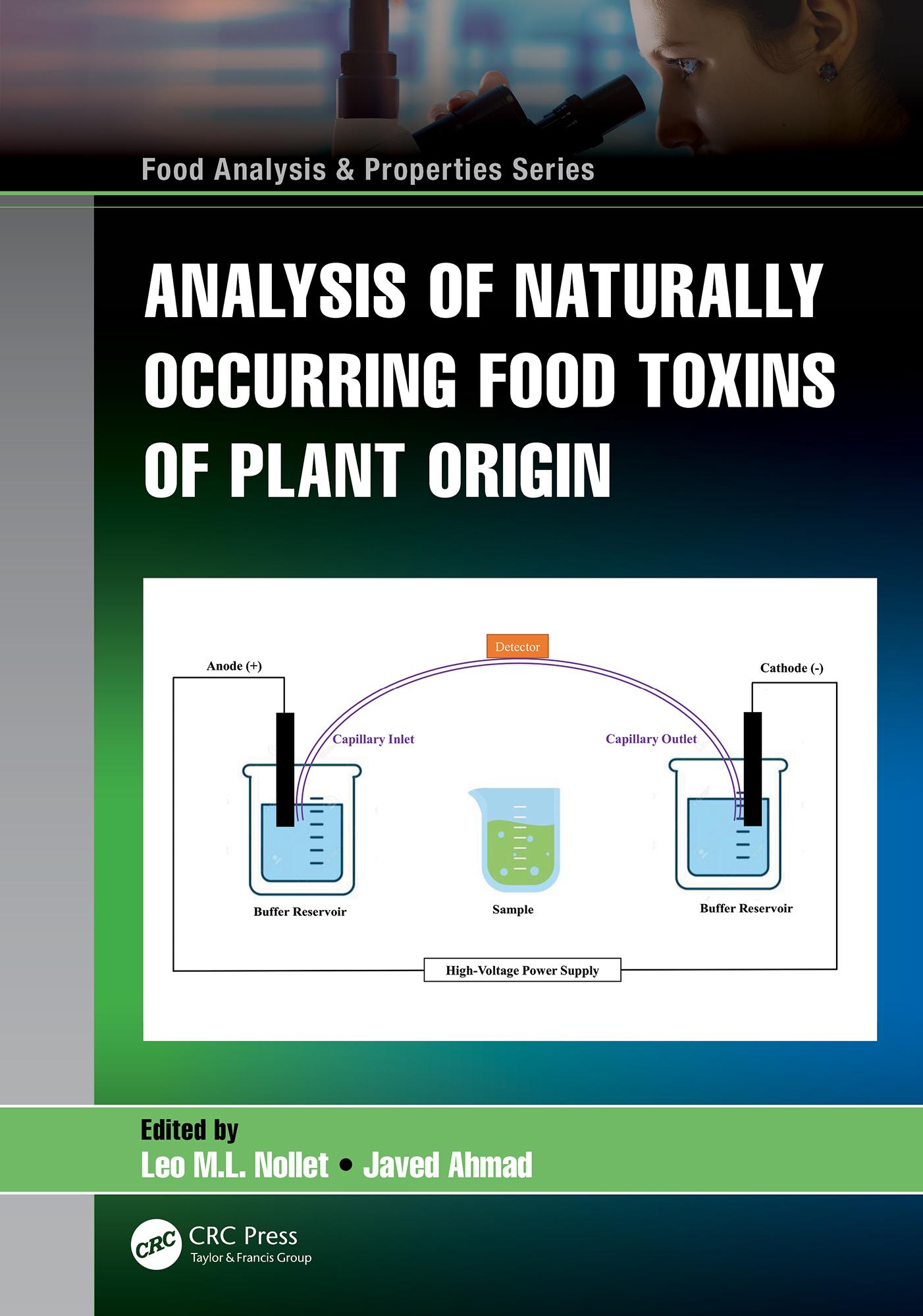
Natural toxins are toxic compounds that are naturally produced by living organisms. These toxins are not harmful to the organisms themselves, but they may be toxic to other creatures, including humans, when eaten. These chemical compounds have diverse structures and differ in biological function and toxicity. Some toxins are produced by plants as a natural defense mechanism against predators, insects, or microorganisms, or as a consequence of infestation with microorganisms, such as mold, in response to climate stress (such as drought or extreme humidity). Well-known groups of natural toxins of plant origin are: cyanogenic glycosides, pyrrolizidine alkaloids, furocoumarins, lectins, and glycoalkaloids. These plant-origin natural toxins can cause a variety of adverse health effects and pose a serious health threat to both humans and livestock.
Analysis of Naturally Occurring Food Toxins of Plant Origin is divided into three sections that provide a detailed overview of different classes of food toxins that are naturally found in plants, including various analytical techniques used for their structural characterization, identification, detection, and quantification. This book provides in-depth information and comprehensive discussion over quantitative and qualitative analysis of natural toxins in plant-based foods.
Key Features:
• Provides a detailed overview of different classes of natural toxins found in plants.
• Explains how IR, NMR, and mass spectrometry are utilized in characterization and identification.
• Describes applicability of HPLC, LC-MS, GC-MS, and HPTLC techniques for detection and quantification.
• Discusses progress in the field related to capillary electrophoresis, ELISA, and biosensors for quantitative application of these techniques.
Also available in the Food Analysis and Properties Series:
Nutriomics: Well-being through Nutrition, edited by Devarajan Thangadurai,Saher Islam,Leo M.L. Nollet, Juliana Bunmi Adetunji (ISBN: 9780367695415)
Bioactive Peptides from Food: Sources, Analysis, and Functions, edited by Leo M.L. Nollet and Semih Ötleş (ISBN: 9780367608538)
Mass Spectrometry in Food Analysis, edited by Leo M.L. Nollet and Robert Winkler (ISBN: 9780367548797)
For a complete list of books in this series, please visit our website at:
www.crcpress.com/Food-Analysis--Properties/book-series/CRCFOODANPRO
Zahle einfach mit Karte, Klarna, Apple Pay oder Google Pay. Nicht zufrieden? Du hast immer ein 14-tägiges Widerrufsrecht. Lies mehr in unseren AGB. Hast du Fragen, schreib uns eine E-Mail an hello@memmo.org.
Memmo macht das Lernen einfacher – wo auch immer du bist. Bei uns findest du deine Kursbücher und smarte Lerntools an einem Ort: Zusammenfassungen, Quizzes, Podcasts und Lernkarten. Und Ted, dein Lernbuddy, beantwortet alles, was du wissen möchtest. Über 50.000 Studierende lernen bereits hier – gemacht, damit du schneller lernst und weniger Stress hast.