
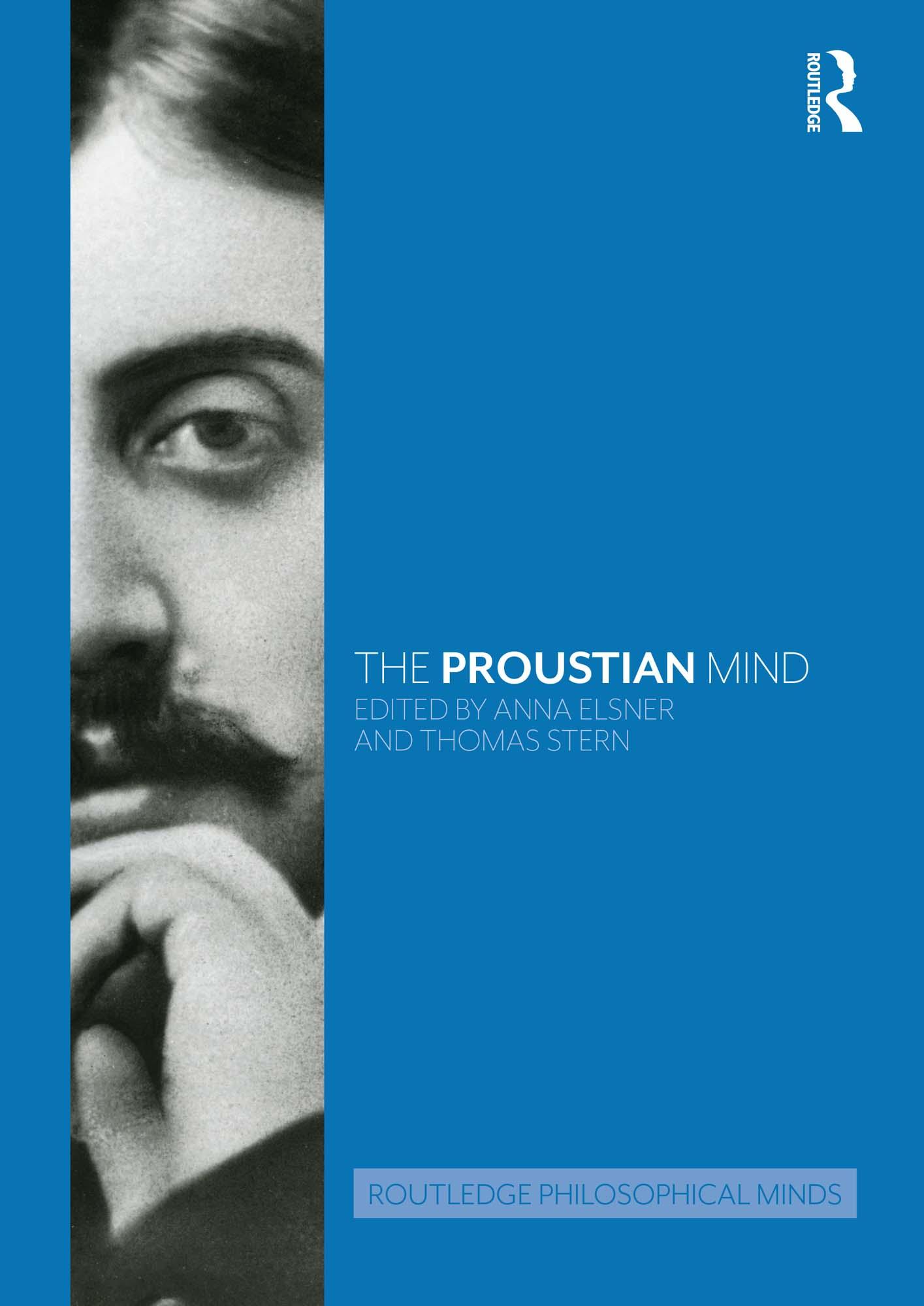
When Marcel Proust started to work on In Search of Lost Time in 1908, he wrote this question in his notebook: ‘Should I make it a novel, a philosophical study, am I a novelist?’ Throughout his famous multi-volume work, Proust directly engages several philosophers, and few novels are as thoroughly saturated with philosophical themes and concepts as In Search of Lost Time.
The Proustian Mind is an outstanding reference source to the rich philosophical range of Proust’s work and the first major volume of its kind. Including 31 chapters by an international team of contributors, the volume is divided into seven clear parts:
- Proust’s life and works
- metaphysics and epistemology
- mind and language
- aesthetics
- ethics
- gender and sexuality
- predecessors, contemporaries and successors.
Within these sections, key Proustian themes are explored from a philosophical standpoint, including time, the self, memory, imagination, jealousy, beauty, love, subjectivity and desire. The final section considers Proust in relation to important philosophers such as Schopenhauer, Nietzsche, Bergson, Merleau-Ponty, Sartre, de Beauvoir and Deleuze.
The Proustian Mind is essential reading for those studying aesthetics, philosophy of literature, phenomenology and ethics, and will also be of interest to those in literature studying modernism, French literature and the relationship between literature and philosophy.
Zahle einfach mit Karte, Klarna, Apple Pay oder Google Pay. Nicht zufrieden? Du hast immer ein 14-tägiges Widerrufsrecht. Lies mehr in unseren AGB. Hast du Fragen, schreib uns eine E-Mail an hello@memmo.org.
Memmo macht das Lernen einfacher – wo auch immer du bist. Bei uns findest du deine Kursbücher und smarte Lerntools an einem Ort: Zusammenfassungen, Quizzes, Podcasts und Lernkarten. Und Ted, dein Lernbuddy, beantwortet alles, was du wissen möchtest. Über 50.000 Studierende lernen bereits hier – gemacht, damit du schneller lernst und weniger Stress hast.