
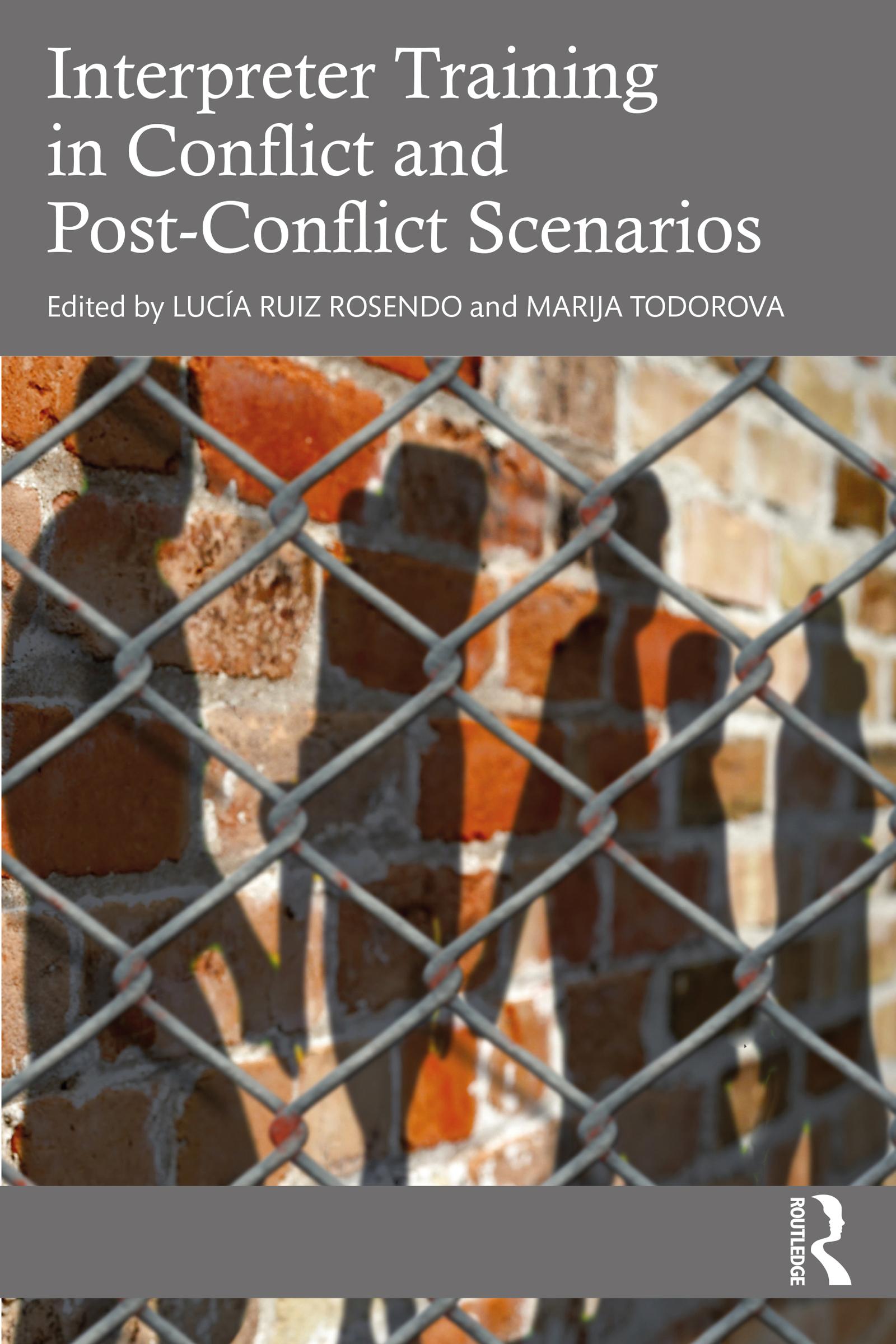
The role of interpreters in conflict situations is of increasing real world importance. There are ethical, cultural, and professional issues that have yet to be explored, and there is a need for specialised training that addresses the specific contexts in which interpreters perform their duties, considering the situated nature of interpreting in these contexts.
This volume is structured around interpreter training in different contexts of conflict and post-conflict, from military operations and international tribunals to asylum-seeking and refugee, humanitarian, and human rights missions. Themes covered include risk management and communication, ethics and professional demeanour, language technology and its use, intercultural mediation, training in specific contexts, such as conflict resolution and negotiation, and working with trauma. Chapters are authored by experts from around the world with a range of different profiles: military personnel, scholars, the staff of international organisations, and representatives from refugee and asylum-seeker-assisting institutions.
Interpreter Training in Conflict and Post-Conflict Scenarios is key reading both for students and scholars researching interpreting in conflict zones and conflict-related scenarios and for practising and trainee interpreters and mediators working for international organisations and the military.
Zahle einfach mit Karte, Klarna, Apple Pay oder Google Pay. Nicht zufrieden? Du hast immer ein 14-tägiges Widerrufsrecht. Lies mehr in unseren AGB. Hast du Fragen, schreib uns eine E-Mail an hello@memmo.org.
Memmo macht das Lernen einfacher – wo auch immer du bist. Bei uns findest du deine Kursbücher und smarte Lerntools an einem Ort: Zusammenfassungen, Quizzes, Podcasts und Lernkarten. Und Ted, dein Lernbuddy, beantwortet alles, was du wissen möchtest. Über 50.000 Studierende lernen bereits hier – gemacht, damit du schneller lernst und weniger Stress hast.