
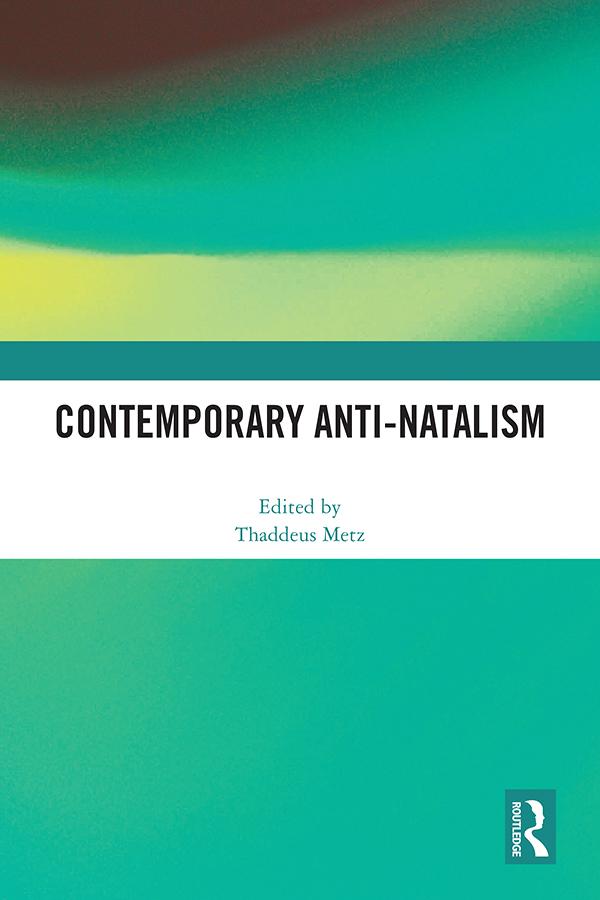
Given the pain, discomfort, anxiety, heartbreak, and boredom that most humans experience in their lives, is it morally permissible to create them? Some philosophers lately have answered ‘No’, contending that it is wrong to create a new human life when one could avoid doing so, because it would be bad for the one created. This view is known as ‘anti-natalism’. Some contributors to this volume argue that anti-natalism is true because: agents have a prima facie duty to prevent suffering; it is immoral to violate another’s right not to be harmed without having consented to it; and it is a serious wrong to exploit the weakness of a poorly off being to become a biological parent. Others here argue against anti-natalism on the ground, for instance, that many of our lives are not so bad and in fact are quite good and that the logic of anti-natalism absurdly entails pro-mortalism, the view that we should kill off as many people as possible. This book explores these and related issues concerning the evaluative question of how to judge the worthwhileness of lives and the normative question of what basic duties entail for the creation of new lives. Excepting one, all the chapters in this book were originally published in the South African Journal of Philosophy.
Zahle einfach mit Karte, Klarna, Apple Pay oder Google Pay. Nicht zufrieden? Du hast immer ein 14-tägiges Widerrufsrecht. Lies mehr in unseren AGB. Hast du Fragen, schreib uns eine E-Mail an hello@memmo.org.
Memmo macht das Lernen einfacher – wo auch immer du bist. Bei uns findest du deine Kursbücher und smarte Lerntools an einem Ort: Zusammenfassungen, Quizzes, Podcasts und Lernkarten. Und Ted, dein Lernbuddy, beantwortet alles, was du wissen möchtest. Über 50.000 Studierende lernen bereits hier – gemacht, damit du schneller lernst und weniger Stress hast.