
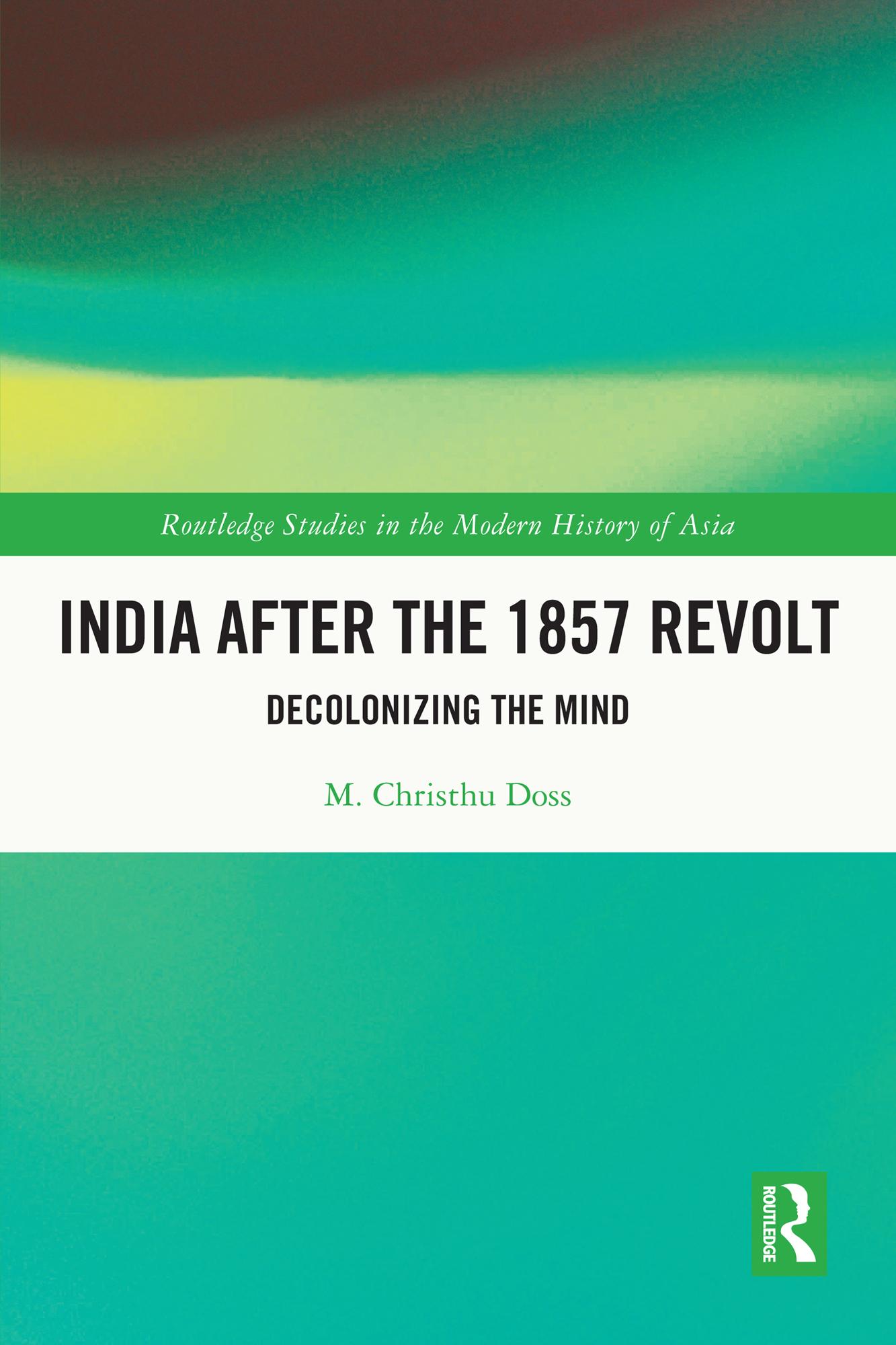
Weaving together the varied and complex strands of anti-colonial nationalism into one compact narrative, Christhu Doss takes an incisive look at the deeper and wider historical process of decolonization in India.
In India after the 1857 Revolt, Doss brings together some of the most cutting-edge thoughts by challenging the cultural project of colonialism and critically examining the multi-dimensional aspects of decolonization during and after the 1857 revolt. He demonstrates that the deep-rooted popular discontent among the Indian masses followed by the revolt generated a distinctive form of decolonization movement—redemptive nationalism that challenged both the supremacy of the British Raj and the cultural imperatives of the controversial proselytizing missionary agencies. Doss argues that the quests for decolonization (of mind) that got triggered by the revolt were further intensified by the Indocentric national education; the historic Chicago discourse of Swami Vivekananda; the nonviolent anti-colonial struggles of Mahatma Gandhi; the seditious political activism displayed by the Western Gandhian missionary satyagrahis; and the de-Westernization endeavours of the sandwiched Indian Christian nationalists.
A compelling read for historians, political scientists and sociologists, it is refreshingly an indispensable guide to all those who are interested in anticolonial struggles and decolonization movements worldwide.
Zahle einfach mit Karte, Klarna, Apple Pay oder Google Pay. Nicht zufrieden? Du hast immer ein 14-tägiges Widerrufsrecht. Lies mehr in unseren AGB. Hast du Fragen, schreib uns eine E-Mail an hello@memmo.org.
Memmo macht das Lernen einfacher – wo auch immer du bist. Bei uns findest du deine Kursbücher und smarte Lerntools an einem Ort: Zusammenfassungen, Quizzes, Podcasts und Lernkarten. Und Ted, dein Lernbuddy, beantwortet alles, was du wissen möchtest. Über 50.000 Studierende lernen bereits hier – gemacht, damit du schneller lernst und weniger Stress hast.