
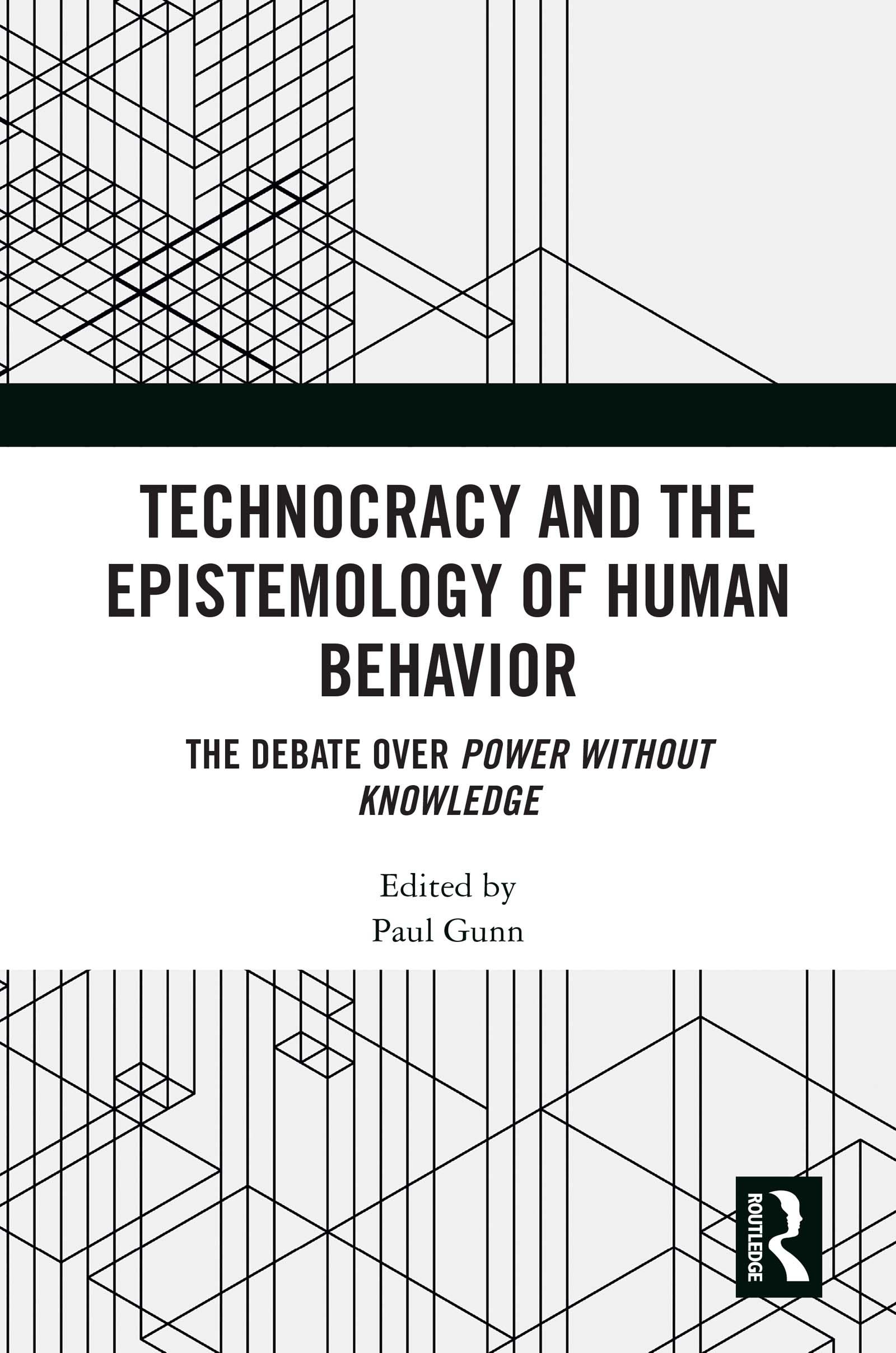
In Power Without Knowledge: A Critique of Technocracy (2019), Jeffrey Friedman presented a sweeping reinterpretation of modern politics and government as technocratic, even in many of its democratic dimensions. Building on a new definition of technocracy as governance aimed at solving social and economic problems, Friedman showed that the epistemic demands that such governance places on political elites and ordinary people alike may be overwhelming if technocrats fail to attend to the ideational heterogeneity of the human beings whose control is the object of technocratic power. Yet a recognition of ideational heterogeneity considerably complicates the task of predicting behavior, which is essential to technocratic control—as Friedman demonstrated with pathbreaking critiques of the homogenizing strategies of neoclassical economics, positivist social science, behavioral economics, and populist democratic politics.
In Technocracy and the Epistemology of Human Behavior, thirteen political theorists, including Friedman himself, debate the implications of Power Without Knowledge for social science, modern governance, the politics of expertise, post-structuralism, anarchism, and democratic theory; and Friedman responds to his critics with an expansive defense of his vision of contemporary politics and his political epistemology of ideationally diverse human beings.
This book was originally published as a special issue of the Critical Review.
Zahle einfach mit Karte, Klarna, Apple Pay oder Google Pay. Nicht zufrieden? Du hast immer ein 14-tägiges Widerrufsrecht. Lies mehr in unseren AGB. Hast du Fragen, schreib uns eine E-Mail an hello@memmo.org.
Memmo macht das Lernen einfacher – wo auch immer du bist. Bei uns findest du deine Kursbücher und smarte Lerntools an einem Ort: Zusammenfassungen, Quizzes, Podcasts und Lernkarten. Und Ted, dein Lernbuddy, beantwortet alles, was du wissen möchtest. Über 50.000 Studierende lernen bereits hier – gemacht, damit du schneller lernst und weniger Stress hast.