
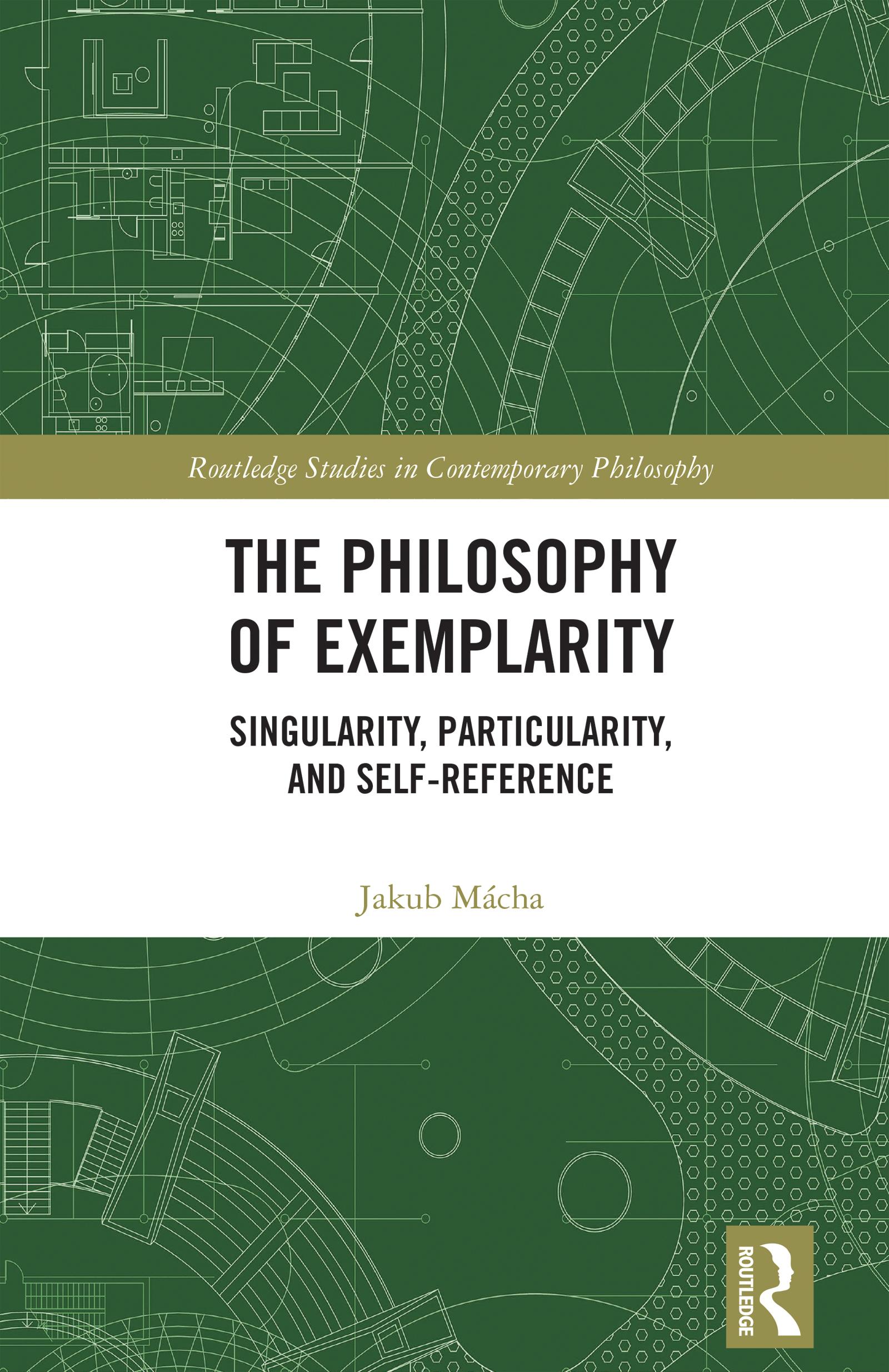
This book offers an original philosophical perspective on exemplarity. Inspired by Wittgenstein’s later work and Derrida’s theory of deconstruction, it argues that examples are not static entities but rather oscillate between singular and universal moments.
There is a broad consensus that exemplary cases mediate between singular instances and universal concepts or norms. In the first part of the book, Mácha contends that there is a kind of différance between singular examples and general exemplars or paradigms. Every example is, in part, also an exemplar, and vice versa. Furthermore, he develops a paracomplete approach to the logic of exemplarity, which allows us to say of an exemplar of X neither that it is an X nor that it is not an X. This paradox is structurally isomorphic to Russell’s paradox and can be addressed in similar ways. In the second part of the book, Mácha presents four historical studies that exemplify the ideas developed in the first part. This part begins with Plato’s Forms, understood as standards/paradigms, before considering Kant’s theory of reflective judgment as a general epistemological account of exemplarity. This is then followed by analyses of Hegel’s conceptual moment of particularity and Kuhn’s concept of paradigm. The book concludes by discussing the speculative hypothesis that all our knowledge is based on paradigms, which, following the logic of exemplarity, are neither true nor false.
The Philosophy of Exemplarity will be of interest to scholars and advanced students working in philosophy of language, logic, history of philosophy, and literary theory.
Zahle einfach mit Karte, Klarna, Apple Pay oder Google Pay. Nicht zufrieden? Du hast immer ein 14-tägiges Widerrufsrecht. Lies mehr in unseren AGB. Hast du Fragen, schreib uns eine E-Mail an hello@memmo.org.
Memmo macht das Lernen einfacher – wo auch immer du bist. Bei uns findest du deine Kursbücher und smarte Lerntools an einem Ort: Zusammenfassungen, Quizzes, Podcasts und Lernkarten. Und Ted, dein Lernbuddy, beantwortet alles, was du wissen möchtest. Über 50.000 Studierende lernen bereits hier – gemacht, damit du schneller lernst und weniger Stress hast.